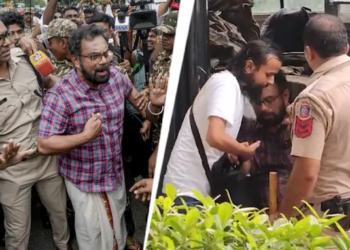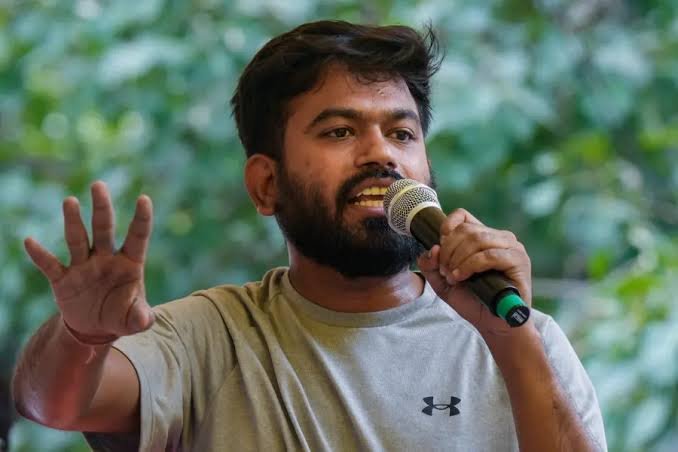
In an emotional video message, Dipke thanked thousands of protesters who sustained the agitation for over a month, apologised for missing the final day due to typhoid, and said the government’s concessions marked “just the beginning” of a much larger movement.
BY PC Bureau
New Delhi, July 26, 2026: Hours after the Cockroach Janta Party (CJP) formally ended its 37-day protest at Jantar Mantar following the resignation of Union Education Minister Dharmendra Pradhan, founder Abhijeet Dipke made it clear that the movement’s journey is far from over.
In a calm yet reflective video message posted on X early Sunday, the 30-year-old leader said he was finally able to sleep peacefully after more than a month of relentless agitation, but urged supporters not to view the government’s concessions as the end of the campaign.
“I could go to sleep and wake up in my bedroom without thinking about what to do next or what would happen till evening,” Dipke said. “There is no panic anymore.”
Calling the past 37 days “really, really difficult”, Dipke spoke about the physical and emotional toll of leading the nationwide protest. Suffering from typhoid and a high fever in the final days of the agitation, he apologised for being unable to personally thank the thousands of supporters gathered at Jantar Mantar when the protest concluded.
“To everyone who stayed at Jantar Mantar for 37 days, I want to thank each and every one of you. I really, really, really appreciate what you did for this country,” he said.
READ: RSS Hollowed Out Education, Bigger Agitation Ahead, Says Rahul Gandhi
CJP Founder @abhijeet_dipke releases a video thanking everyone who made the huge victory of the youth possible.
He also thanks all critics for helping him improve, and eventually deliver on the promise of the Cockroach Janta Party’s first campaign. #ANewDay pic.twitter.com/1JQNozymLo
— Cockroach is Back (@Cockroachisback) July 26, 2026
Dipke also acknowledged the movement’s critics, saying their questions and scrutiny had helped sharpen both its demands and its strategy.
“Even those who criticised us helped us improve. I think that’s one of the reasons we were able to deliver,” he said.
Yet the dominant message of his address was that the struggle was entering a new phase rather than reaching its conclusion.
“This is just the beginning,” Dipke declared. “The Cockroach Janata Party has a long way to go.”
From Satire to a National Movement
The CJP was born in May as a satirical response to a remark by the Chief Justice of India, but rapidly evolved into one of the country’s most visible youth-led protest movements.
What began as an online campaign soon transformed into a nationwide mobilisation, drawing thousands of students and young people to Delhi’s Jantar Mantar. Supporters proudly embraced the label “cockroaches”, turning a term of derision into a symbol of resilience.
For over five weeks, protesters occupied the capital’s iconic demonstration site, demanding accountability for alleged irregularities in the NEET examination, the resignation of Education Minister Dharmendra Pradhan, and sweeping reforms to India’s examination system. The movement gathered momentum as public anger over repeated examination controversies continued to grow.
Sustained public pressure eventually forced the Centre to concede several of the protesters’ demands. On Saturday, Pradhan resigned, the government accepted a number of key demands put forward by the CJP, and assured demonstrators that no punitive legal action would be taken against participants. The announcement paved the way for the formal suspension of the agitation later that day.
Beyond the Protest
The movement is already being viewed as one of the most significant Gen Z mobilisations in recent years, uniting students across the country around concerns over transparency, accountability and fairness in India’s competitive examination system.
With its immediate objectives achieved, attention has shifted to the future of the CJP and its leadership. Political observers are increasingly asking whether Dipke and other prominent faces of the agitation will eventually enter electoral politics or continue functioning as an independent pressure group advocating institutional reforms.
Dipke, however, avoided engaging with those questions in his video message. Instead, he focused on expressing gratitude to supporters and emphasising that the organisation’s mission extends well beyond the events at Jantar Mantar.
As thousands of protesters return home after 37 days in the national capital, the agitation may have ended, but the larger political story appears to be only beginning. Whether the Cockroach Janta Party can transform the momentum of the streets into sustained public influence will determine if its extraordinary rise becomes a lasting force in Indian politics or remains a remarkable chapter in the country’s protest history.