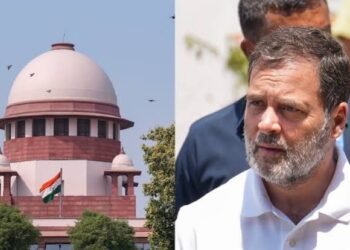
The absence comes two years after Rahul Gandhi was seated behind Olympic medallists at the 2024 Red Fort ceremony, triggering a fierce Congress-BJP row over the Leader of Opposition’s protocol status.
BY PC Bureau
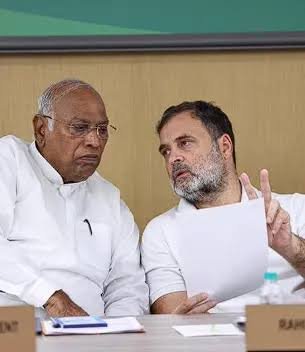
August 15, 2026: Congress president Mallikarjun Kharge and Leader of Opposition in the Lok Sabha Rahul Gandhi stayed away from the Independence Day celebrations at Delhi’s Red Fort on Saturday, marking their second consecutive absence from the Prime Minister’s flagship August 15 ceremony.
Prime Minister Narendra Modi led the 80th Independence Day celebrations from the historic Red Fort, where he unfurled the national flag and addressed the nation. The absence of the two senior Congress leaders was notable because both hold key constitutional positions as leaders of the Opposition in the Rajya Sabha and Lok Sabha respectively.
The Congress leadership, however, marked Independence Day separately at party premises, continuing a pattern in which the party’s senior leadership has chosen its own ceremony when relations with the government have been particularly strained.
The latest absence comes against the backdrop of repeated disputes between the Opposition and the government over protocol, seating arrangements and the treatment of constitutional office-holders at national ceremonies.
A repeat of 2025
Rahul Gandhi and Kharge had also skipped the Red Fort Independence Day ceremony in 2025. Instead, Gandhi attended the flag-hoisting ceremony at Indira Bhawan, while Kharge unfurled the Tricolour at the Congress headquarters. Neither had given a detailed public explanation for their absence from the Red Fort event, although reports at the time linked Gandhi’s decision to the controversy over his seating at the 2024 ceremony.
The BJP attacked the Congress leaders over their absence in 2025, portraying it as a boycott of a national celebration. BJP spokesperson Shehzad Poonawalla accused Gandhi of putting political opposition to the Modi government above participation in a national event.
The repeated absence in 2026 is therefore likely to reignite the political debate over whether attendance at such ceremonies should be treated as a constitutional obligation, a political convention or a matter of individual choice.
The 2024 seating controversy
The roots of the dispute go back to Independence Day 2024, when Rahul Gandhi attended the Red Fort ceremony but was seated in the fifth row, behind members of the Indian contingent that had competed at the Paris Olympics.
Gandhi was then the Leader of the Opposition in the Lok Sabha and, under the Table of Precedence, holds a status equivalent to that of a Union Cabinet minister.
The seating arrangement triggered an immediate political controversy. Congress leaders argued that the Leader of the Opposition should have been given a place in the front row and accused the government of deliberately slighting a constitutional office.
Contemporary reports described Gandhi as being seated in the second-last row of the VIP enclosure, with Olympic medallists seated ahead of him.
The Defence Ministry defended the arrangement, saying the seating plan had been modified to accommodate and honour the Olympic contingent. The government’s explanation was that the special positioning of the athletes was part of the event’s arrangements rather than an attempt to diminish the Leader of the Opposition.
But the explanation failed to end the controversy.
For the Congress, the issue went beyond one chair. It argued that the treatment of the Leader of the Opposition reflected a broader disregard for parliamentary institutions and the constitutional status of the Opposition.
Government changes seating plan in 2026
The controversy was significant enough that the government addressed the issue before this year’s Independence Day ceremony.
On August 10, Defence Secretary RK Singh said Rahul Gandhi had been invited to the Red Fort celebrations and would be seated according to the official Table of Precedence.
Under that arrangement, the Leader of the Opposition is positioned immediately after Union Cabinet ministers.
The clarification appeared designed to put to rest speculation that Gandhi could again be placed in a relatively distant row.
The fact that the government publicly clarified his seating position before the ceremony itself showed how politically sensitive the 2024 controversy had become.
Republic Day brought another protocol row
The dispute was not confined to Independence Day.
At the Republic Day celebrations in January 2026, Rahul Gandhi and Kharge did attend the parade, but another seating controversy erupted after both were placed in the third row.
The Congress objected that the Leader of the Opposition and the Congress president should have received greater precedence. The BJP rejected the charge and accused the Congress of displaying a sense of entitlement.
The incident was significant because it showed that the disagreement over ceremonial protocol had become a recurring feature of relations between the government and the Opposition.
Importantly, the 2026 Republic Day episode was not a boycott: Gandhi and Kharge attended the parade and later the President’s ‘At Home’ reception.
This is not the first time Congress leaders have stayed away
There is also a longer historical precedent for senior Congress leaders missing the Red Fort ceremony.
In 2023, Congress president Mallikarjun Kharge did not attend the Independence Day function at the Red Fort. He instead hoisted the national flag at the Congress headquarters and said democracy and the Constitution were under threat. He explained that time constraints were also a factor in his decision not to attend the Red Fort event.
READ: From Sonia to Meloni: The Italian Connection Comes Back to Haunt BJP
In the same year, Sonia Gandhi and Rahul Gandhi were also absent from the Red Fort ceremony. Congress leaders instead marked Independence Day at the party headquarters.
There have also been earlier instances of Opposition leaders staying away from or protesting against official ceremonial arrangements.
In 2018, for example, Rahul Gandhi, then Congress president, attended the Republic Day parade but was seated in the sixth row. Congress objected to the arrangement and alleged that it represented a deliberate slight. Gandhi himself, however, said he was not bothered about where he was seated.
The episode demonstrated that disputes over ceremonial precedence are not unique to the present government or to the current Congress leadership.
Protocol versus political symbolism
At the heart of the recurring disputes is the distinction between formal protocol and political symbolism.
The Table of Precedence determines the relative ranking of constitutional and official positions at state functions. It is intended to ensure that ceremonial arrangements are governed by office rather than personal or political considerations.
The Leader of the Opposition in the Lok Sabha enjoys the rank of a Union Cabinet minister for purposes of precedence. That makes the position particularly significant at national ceremonies.
But ceremonial seating can also be affected by the nature of a particular event. In 2024, for instance, the government said Olympic medallists were deliberately given prominent places to honour their achievements.
That tension — between rigid precedence and the symbolic requirements of a ceremony — has repeatedly produced political friction.
Absence becomes a political statement
The decision by Rahul Gandhi and Kharge to stay away from the Red Fort ceremony for a second consecutive year is therefore unlikely to be viewed merely as a scheduling matter.
For the Congress, participation in national celebrations can be marked through its own flag-hoisting ceremonies and tributes to freedom fighters. The party has repeatedly emphasised that its commitment to Independence Day is not dependent on attendance at a government-organised function.
For the BJP, however, the absence of the two principal Opposition leaders from the Prime Minister’s national ceremony provides an opportunity to question their commitment to national institutions and symbols.
The controversy thus becomes part of the larger political contest between the government and Opposition — one in which even the seating of a leader, the empty chair of a senior politician or attendance at a ceremonial function can acquire political significance.
The larger irony is that the Independence Day ceremony at the Red Fort is intended to represent the Republic above partisan politics. Yet, over the years, its guest list, seating arrangements and absences have repeatedly become extensions of the political battle outside its gates.