



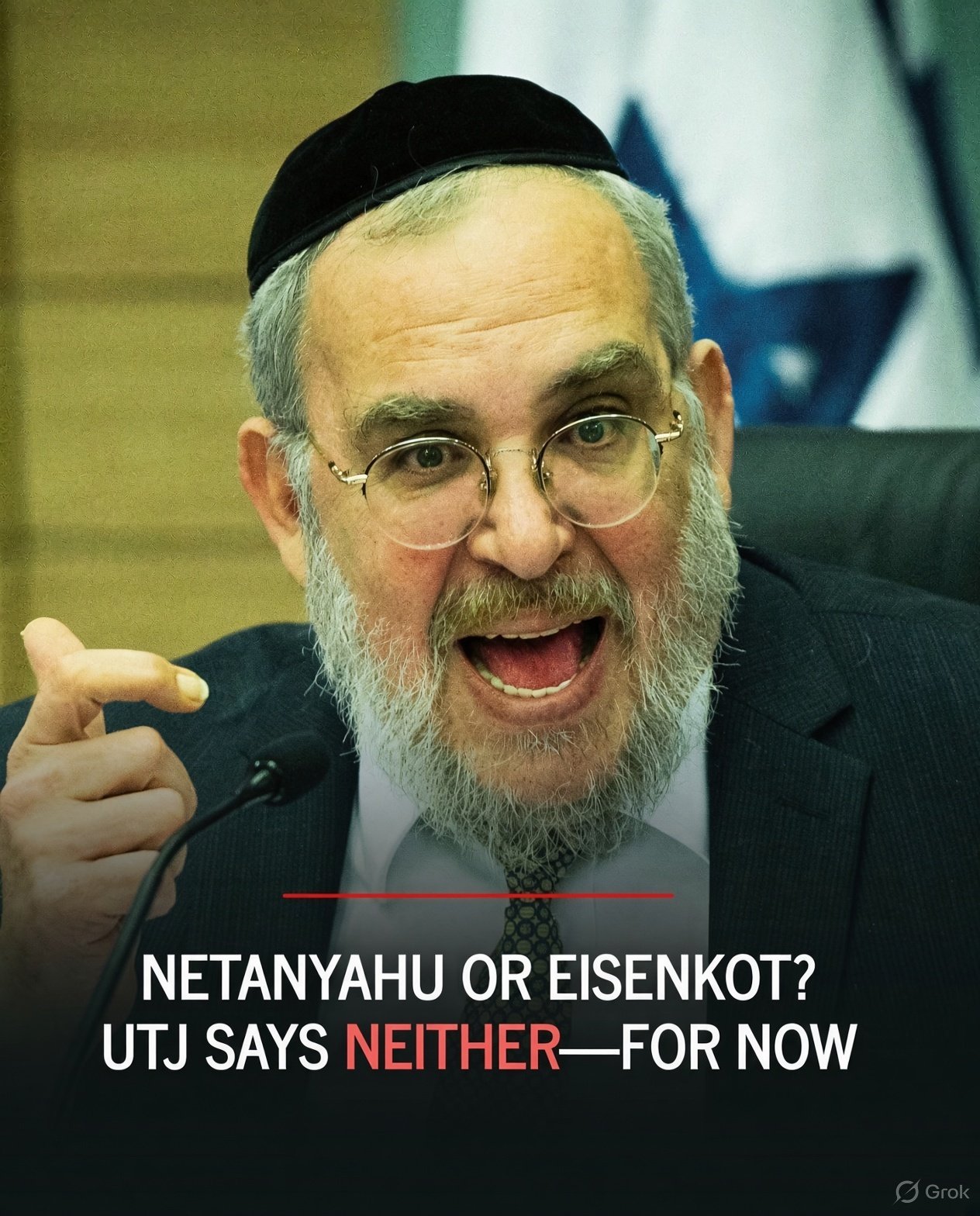
The seven-seat UTJ alliance has broken ranks with Netanyahu over his failure to secure legislation exempting ultra-Orthodox yeshiva students from compulsory military service.
BY PC Bureau
November 5: United Torah Judaism (UTJ), Israel’s ultra-Orthodox Ashkenazi political alliance, has refused to recommend Benjamin Netanyahu or any other candidate to President Isaac Herzog for the mandate to form the next government. The decision marks a significant break with a political ally that has backed Netanyahu for much of the past 17 years.
UTJ, which won seven seats in the October 27 election, had been a dependable member of Netanyahu political camp since 2009. Its decision to abstain from endorsing either candidate followed instructions from its rabbinical leadership, including Rabbis Dov Landau and Moshe Hillel Hirsch of the Degel HaTorah faction. The party’s Hasidic Agudat Yisrael faction also declined to recommend a candidate.
The move has complicated Netanyahu efforts to return to office. The final election results left his bloc with 53 seats, short of the 61 required for a parliamentary majority. The opposition bloc led by former army chief Gadi Eisenkot secured 48 seats, while Arab-led parties won the remaining 19.
Herzog has begun consultations with political parties before deciding whom to invite to form a government.
READ: Analysis: How Bihar Voters Were Taken for a Ride
Although the number of recommendations is an important consideration, the president is not bound by a simple numerical majority and must assess who has the best chance of forming a coalition.
The central issue behind UTJ’s break with Netanyahu is the long-running dispute over military service exemptions for ultra-Orthodox yeshiva students. Haredi parties have demanded legislation protecting religious students from compulsory military service. They have grown increasingly frustrated with Netanyahu’s failure to deliver a lasting exemption framework.
UTJ representatives, including Yitzhak Pindrus, made clear during consultations that their priority was securing the status of Torah students through legislation, without sanctions. The party has not committed itself to either political camp, leaving room for negotiations.
The other major ultra-Orthodox party, Shas, has continued to back Netanyahu, as have Likud, Religious Zionism and Otzma Yehudit.
Eisenkot, leader of the centrist Yashar party, has emerged as a potential beneficiary of UTJ’s decision. His supporters include Yashar, the Democrats, B’Yachad, Yisrael Beytenu and Ra’am. The opposition camp is reported to have secured around 56 recommendations, although this remains below the 61-seat threshold needed for a majority.
Eisenkot has outlined conditions for potential coalition partners, including recognition of Israel as a Jewish and democratic state, commitment to its Declaration of Independence and mandatory national or military service for all citizens. He has also called for the elimination of Hamas’s military and governing capabilities.
UTJ’s decision does not guarantee support for Eisenkot. But it weakens Netanyahu’s immediate prospects and gives the ultra-Orthodox alliance greater bargaining power in negotiations over military service exemptions and the formation of the next government.






Comments 1