The observation came as the Supreme Court heard Roopam’s challenge to the Allahabad High Court order that quashed Chaudhary’s NSA detention and directed recovery of ₹5 lakh compensation from the salaries of officials involved
BY PC Bureau
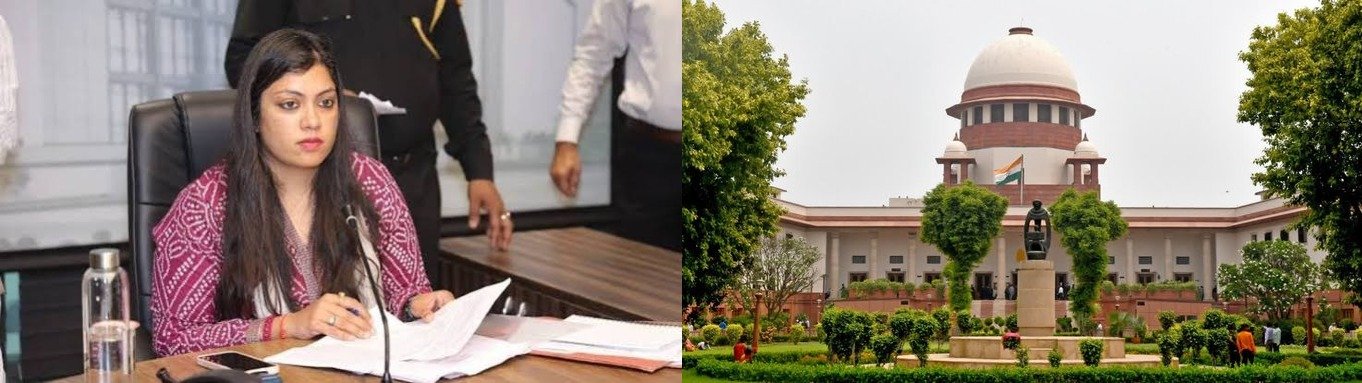
New Delhi: The Supreme Court on Wednesday observed that Gautam Buddha Nagar District Magistrate Medha Roopam could not be removed from the decision-making chain in the National Security Act detention of Delhi University student activist Akriti Chaudhary, if the statutory process leading to the detention order involved multiple authorities.
The observation came as the court heard Roopam’s challenge to an Allahabad High Court order that had quashed Chaudhary’s detention and directed that ₹5 lakh be recovered from the DM’s salary and paid to the student as compensation.
A bench of Justices S.C. Sharma and N.K. Singh reserved its judgment.
Senior advocate Mukul Rohatgi, appearing for Uttar Pradesh, submitted that the DM had acted on reports that had already passed through several levels, including the SHO, DCP and Commissioner.
Solicitor General Tushar Mehta, appearing for Roopam, argued that several stages preceded the detention order and that the DM’s role was to consider the material and form an opinion within the statutory framework.
The bench observed that if the detention process operated through a statutory chain involving different authorities, the District Magistrate could not simply be excluded from that chain while examining responsibility for the eventual order.
The observation is significant because the Allahabad High Court had imposed personal financial liability on Roopam after holding Chaudhary’s preventive detention illegal.
High Court had quashed detention
The Allahabad High Court, in its September 2 judgment, quashed Chaudhary’s nearly five-month detention under the NSA, holding that the material relied upon by the authorities was insufficient and that the detention order reflected a failure to properly apply the mind.
The court directed that ₹5 lakh be paid to Chaudhary as compensation, with the amount recovered from the salaries of officials held responsible for the detention process. It also directed recovery from other officials involved, “right down to the SHO”, and ordered that the court’s displeasure be recorded in their service records.
The High Court used strong language in criticising the authorities’ conduct, describing the State’s version as a “concocted story” and the DM’s conduct as “worthy of derision”. It also warned against what it described as continued “despotic” conduct by public officials.
READ: ‘Impeach Him, Prosecute Him’: Opposition Steps Up Attack on Gyanesh Kumar
Dispute over DM’s responsibility
The Supreme Court hearing has now focused attention on how responsibility should be distributed when an NSA detention order is the outcome of a multi-level statutory process.
Roopam’s side has argued that the detention material was not generated by the DM but was placed before her after scrutiny at several administrative and police levels.
The High Court, however, had held that the District Magistrate had an independent responsibility to examine the material before authorising preventive detention.
The Supreme Court’s observation that the DM remained part of the decision-making chain does not, by itself, decide whether she was personally liable for the unlawful detention. That question will be settled in the final judgment.
Chaudhary’s detention
Chaudhary, a Delhi University history graduate and student activist, was arrested after workers’ protests in Noida in April 2026 over wage increases and parity with Haryana rates.
The protests turned violent on April 13. Police subsequently invoked the NSA, alleging that Chaudhary had instigated stone-pelting and arson.
The High Court found the material inadequate to justify preventive detention and ordered her release from NSA custody unless she was required in another criminal case.
The Supreme Court has now reserved its judgment on Roopam’s challenge to the High Court’s order, including the direction for recovery of compensation from her salary.