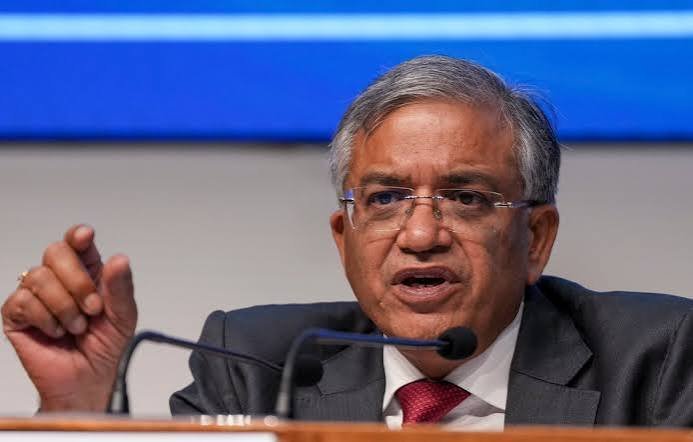
The Election Commission disputed claims of an internal split, saying final decisions were taken unanimously. The disclosures have nevertheless intensified scrutiny of the poll panel’s internal decision-making.
BY PC Bureau
New Delhi/ September 23: Demands for the removal of Chief Election Commissioner Gyanesh Kumar intensified on Wednesday after an Indian Express investigation reported that the two other Election Commissioners, Sukhbir Singh Sandhu and Vivek Joshi, recorded at least 14 objections over 10 months to decisions and orders concerning electoral rolls and the Special Intensive Revision (SIR).
According to the report, the objections covered the addition and deletion of voters, restoration of names, changes to Form 6 used by new voters, appeals against roll decisions and the management of electoral-roll software. Four objections were reportedly recorded on a single day. Some of the measures were described in the reported correspondence as “unauthorised” and “illegal”.
The report triggered a fresh political offensive against Kumar, with Opposition parties including the Congress, Trinamool Congress, CPI(M), Samajwadi Party and Shiv Sena (UBT) calling for his removal and, in some cases, judicial intervention in the SIR process.
Opposition revives removal demand
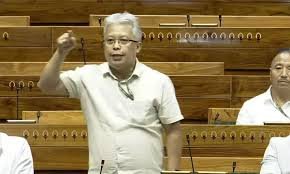
CPI(M) MP John Brittas described the reported differences as evidence of a breakdown in the functioning of the three-member Commission and called for Parliament to begin the removal process against Kumar. He also urged the Supreme Court to intervene in the SIR exercise.
TMC Rajya Sabha leader Derek O’Brien said more than 60 Opposition MPs had earlier signed a notice seeking Kumar’s removal and called for that motion to be brought forward again following the latest disclosures.
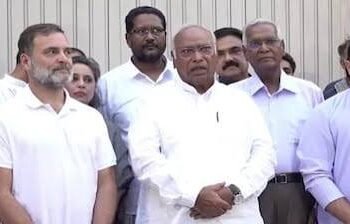
Congress leaders also demanded action. Congress general secretary K.C. Venugopal called for Kumar’s removal, while party communications in-charge Jairam Ramesh said Congress MP Abhishek Singhvi would address the issue. Congress MP Manish Tewari said that, if the facts reported were correct, the disclosures raised questions about how decisions were being taken within the Commission.
LIVE: Congress party briefing by Shri @DrAMSinghvi at Congress Office New Delhi https://t.co/HwHEXF1Snc
— Congress (@INCIndia) September 23, 2026
Samajwadi Party chief Akhilesh Yadav called the report serious and urged the Supreme Court to take suo motu cognisance. Other Opposition leaders, including RJD MP Manoj Jha and Rajya Sabha MP Kapil Sibal, also questioned the functioning of the Commission.
READ: Opinion: Why SC Hearing on CEC Immunity Needs Urgency
What the objections reportedly covered
The Indian Express investigation said Joshi objected to changes in Form 6 that required new applicants to indicate whether their own, or their parents’ or grandparents’, names appeared in the previous SIR roll. Joshi reportedly argued that the statutory form could not be changed without amending the Registration of Electors Rules, 1960. Sandhu subsequently described the change as “unauthorised and illegal” and sought its removal.
The two Commissioners also reportedly raised concerns about the centralisation of the electoral-roll database and access to the systems used by election officials. The investigation referred to issues involving ERONet, voter deletions and restorations, appeals in West Bengal and a Goa case in which 97 voters reportedly found eligible were not reflected in the final roll because of a software-related problem.
In another development, Sandhu and Joshi reportedly wrote separately to Cabinet Secretary T.V. Somanathan over a work-allocation order that they believed could further concentrate control over the Commission’s IT and electoral-roll systems.
The disclosures therefore raise questions not only about individual decisions but also about the internal functioning of the constitutional election body.
ECI disputes suggestion of a split
The Election Commission, however, has rejected the suggestion that the reported objections amounted to a split over adopted decisions.
EC sources said all decisions of the Commission, including those relating to SIR, were taken with the approval of all three Commissioners. They acknowledged that Sandhu and Joshi had raised issues concerning voter deletions and the handling of electoral data, but said these observations should not be treated as formal dissent against decisions adopted by the Commission.
The distinction is significant. The reported correspondence establishes that the two Commissioners raised objections; it does not, by itself, establish that Kumar acted illegally or committed an offence. Nor does it establish that the Commission’s final decisions were taken without the required approval.
What happens to a removal motion?
The Opposition has generally referred to the process as “impeachment”, but the Constitution provides for the removal of the CEC, following the procedure applicable to the removal of a Supreme Court judge.
Article 324(5) says the CEC cannot be removed from office except in the same manner and on the same grounds as a Supreme Court judge. Under the relevant law, a removal motion can be initiated with the signatures of at least 100 Lok Sabha members or 50 Rajya Sabha members.
However, reaching that threshold does not itself remove the CEC. The Speaker of the Lok Sabha or Chairman of the Rajya Sabha must first decide whether to admit the motion. If admitted, an inquiry is conducted under the Judges (Inquiry) Act. The charges must ultimately be established on grounds of proved misbehaviour or incapacity, after which both Houses must pass the required removal address before the President issues the removal order.
This distinction is important in the present controversy because Opposition parties had already attempted to initiate such a process in March 2026. Notices signed by 130 Lok Sabha MPs and 63 Rajya Sabha MPs were submitted seeking Kumar’s removal. Both the Lok Sabha Speaker and Rajya Sabha Chairman subsequently refused to admit the notices.
The latest disclosures therefore do not automatically reopen the earlier proceedings. A fresh removal motion would have to follow the constitutional and statutory procedure.