The Kuki-Zo civil body has accused NSCN-IM and ZUF-Kamson, along with Langka village volunteers, of involvement in the Lasan attack. The allegations have not been independently established.
BY PC Bureau
September 23: Hours after the killing of 36-year-old electrician Paojangam Chongloi in Lasan village along Manipur’s IT Road was reported, the case has taken a new turn with the village chief seeking a Zero FIR at Kangpokpi police station and the Committee on Tribal Unity (CoTU) saying the Kuki-Zo community will not claim the body until those accused of the killing are brought to justice.
In a written complaint submitted to Kangpokpi police, Lasan village chief Goukhomang Lhouvum alleged that armed cadres of the NSCN-IM, accompanied by volunteers from Langka village, attacked Lasan, Songpibung and T. Kholmun at around 4 a.m. on September 23. The three villages fall under Tamei police station in Tamenglong district.
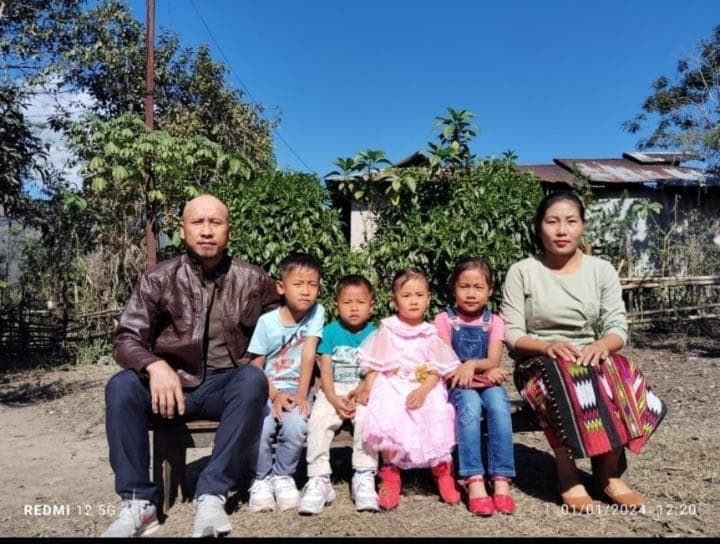
The complaint identifies Chongloi as a civilian lineman working on a 33-kV power line, rather than a volunteer. It says he was staying overnight at Lasan while on electrical duty.
Lhouvum has sought registration of a Zero FIR under Sections 103, 109, 311 and 333 of the Bharatiya Nyaya Sanhita, 2023, and Section 25(1-C) of the Arms Act, with the case to be forwarded to Tamei police station and the Superintendent of Police, Tamenglong.
Lasan, Songpibung Kuki Villages Come Under Heavy Attack by Kacha-Naga NSCN-IM ZUF-K
23 Sep 2026: Lasan and Songpibung Kuki villages along the IT Road in Kangpokpi district came under heavy attack in the early hours of Wednesday, with an electric lineman losing his life. pic.twitter.com/uvvd7Ms6rz
— KUKI HILLS (@Nampi_Romeokuki) September 23, 2026
The village chief said Kangpokpi was approached because residents could not safely travel to Tamei to report the incident or transport the body. He also sought police protection to move Chongloi’s remains to Kangpokpi District Hospital for inquest and post-mortem.
The complaint alleges that movement through the Tamei-Tamenglong area would pose a security risk to Kuki residents. These claims are part of the village authority’s complaint and have not been independently established.
READ: Patna HC: Removing Salwar Not Attempt to Rape; SC Steps In
CoTU refuses to claim body
The Committee on Tribal Unity (CoTU) has separately escalated the issue, saying Chongloi’s remains would not be claimed by the Kuki-Zo community until those responsible were brought to justice.
CoTU alleged that the killing was carried out by the NSCN-IM and ZUF-Kamson group, while also referring to alleged involvement of volunteers from Langka village. The organisation described Chongloi as the latest Kuki-Zo civilian killed in attacks along the IT Road and demanded action against the groups it named.
Those allegations have not yet been established through an official investigation.
CoTU also linked the case to what it described as seven other Kuki-Zo bodies awaiting justice, turning the handling of Chongloi’s remains into a broader demand for accountability for earlier killings.
The Kuki Civic Action Committee (KCAC) has separately demanded an impartial and time-bound investigation, saying Chongloi was killed while performing his duty repairing an electricity line. It also called for the identification, arrest and prosecution of those responsible, irrespective of their organisational or political affiliation.
Fresh test for authorities
The immediate issue is now whether Kangpokpi police will register the requested Zero FIR, facilitate its transfer to Tamei police station and arrange secure transportation of the body for post-mortem.
The development comes against a backdrop of continuing disputes over movement along the IT Road. CoTU had on September 21 backed a Kuki Students’ Organisation demand for unrestricted movement of essential commodities to the Twilang area and warned of further mobilisation if restrictions were not lifted.
The latest allegations against NSCN-IM, ZUF-Kamson and Langka village volunteers remain allegations made by the village authority and Kuki organisations. No official investigation establishing responsibility for Chongloi’s killing was available at the time of publication.
The case therefore moves beyond the initial report of the killing to a more immediate question: will the authorities register the case, secure the evidence and body, conduct the post-mortem and establish responsibility for the attack?