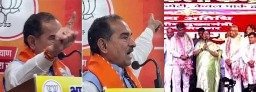
In a detailed statement, the NSCN/GPRN said the 2015 Framework Agreement cannot be reduced to an arrangement within the Indian constitutional framework. It argued that the agreement envisages a “new relationship” based on sharing sovereign powers and said the final political agreement should emerge from the negotiations rather than from the Constitution of India.
BY PC Bureau
September 25— The NSCN-IM has insisted that the Indo-Naga peace process is a political negotiation between the Government of India and the NSCN as “two sovereign entities”, saying any final settlement must uphold what it describes as the letter and spirit of the 2015 Framework Agreement and the 2002 Amsterdam Joint Communiqué.
In a detailed statement issued by its External Publicity Wing, the NSCN/GPRN said the negotiations, which began on August 1, 1997, were initiated at the Prime Ministerial level, without preconditions and outside India, and have since involved more than 600 rounds of talks in third countries, India and Naga areas.
The organisation said the peace process marked a departure from New Delhi’s earlier position that the Naga issue was an internal matter of India. It maintained that the Amsterdam Communiqué’s recognition of the Naga “unique history and situation” and the 2015 Framework Agreement’s references to “sovereignty”, “sovereignty lies with the people” and a “new relationship” based on sharing sovereign powers establish the political basis of the negotiations.
The NSCN-IM said its interpretation of the Framework Agreement means that the final settlement cannot simply be an arrangement within the existing Indian constitutional framework. It insisted that the Naga national flag and constitution, or Yehzabo, are non-negotiable, while the sovereign powers or competencies must be determined through the political negotiations.
The organisation also reiterated its opposition to attempts to bring its Framework Agreement together with the NNPGs’ Agreed Position through a common draft, citing its earlier position that agreements signed under the Constitution of India are not acknowledged by the NSCN/GPRN.
It accused the Government of India and its agencies of seeking to dilute what it calls the letter and spirit of the 2015 agreement and said the negotiations must continue on the basis of its interpretation of that accord.
The NSCN-IM further called for a third-party guarantor for any final political agreement, arguing that this was necessary in view of what it described as the Government of India’s failure to demonstrate sufficient political will to implement the Framework Agreement.
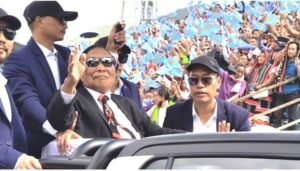
The statement also invoked the legacy of late chairman Isak Chishi Swu and General Secretary Th. Muivah, saying the leadership had consistently defended Naga sovereignty and national principles.
It concluded by reiterating its commitment to “Nagalim for Christ”, Naga “unique history”, sovereignty and freedom, sovereign territory, national flag and national constitution, declaring that the Naga national flag and national constitution are non-negotiable.
READ: Nagaland: Jamir’s Village Draws Line Against NSCN (I-M)
THE INDO-NAGA POLITICAL PEACE PROCESS BETWEEN THE GOVERNMENT OF INDIA (GOI) AND THE NATIONAL SOCIALIST COUNCIL OF NAGALIM (NSCN) AS “TWO SOVEREIGN ENTITIES”
1) August 1, 1997, Indo-Naga political peace process between the GoI and the NSCN.
From August 1, 1997, the Indo-Naga political peace process between the Government of India (GoI) and the National Socialist Council of Nagalim (NSCN) started at the highest Prime Minister level, without pre-condition and outside India in a third country. Accordingly, more than 600 rounds of political talks were held in several third countries, India and Nagalim, without any pre-condition and at the highest Prime Minister level.
The principle underlying the nature of this political negotiation is the shift in the decades-old position of the Indian state that Nagalim was an “internal matter” of India, that justified India’s military approach to the Indo-Naga issue and attracted national and international advocates for its ruthless military approach to the Indo-Naga political conflict. The whole state structure was systematically mobilized and integrated to inflict “legitimate state violence” in the Naga areas in the name of “law and order”. India’s armed forces were given unlimited powers through the systematic invocation of the Armed Forces Act to crush the Nagas and their struggle for freedom.
The ongoing Indo-Naga political peace process between the GoI and NSCN is a U-turn from its early “military way solution” on account of the successful national movement and armed resistance of the NSCN against the armed forces of India and Myanmar (erstwhile Burma) and the subsequent categorical admission by India’s leadership and its General of the futility of sustaining a military solution to the Naga political issue.
After the formation of the NSCN in 1980, the noteworthy milestone achievements from the battlefield to the negotiating table must be attributed exclusively to the statesmanship of Th. Muivah, General Secretary, NSCN/GPRN, and late NSCN/GPRN Chairman, Isak Chishi Swu. Significantly, since 1997, the underlying principle of the ongoing Indo-Naga political peace process between the GoI and NSCN is the political peace negotiation with the NSCN as a sovereign entity.
2) July 11, 2002, Amsterdam Joint communiqué.
After a period of 5 years, the Amsterdam Joint communiqué of July 11, 2002, was signed, which officially recognized the “unique history and situation” of Nagalim. Among other things, in a nutshell, the substance of the “uniqueness of Nagalim history” is that Nagalim was/is never a part of India or Myanmar (erstwhile Burma). The spirit behind the principles of the ongoing Indo-Naga political peace process between the GoI and NSCN is to conclude a political agreement between two sovereign entities. The Chief political negotiator, Th. Muivah, General Secretary, NSCN/GPRN, has repeatedly stated the Naga political solution shall be according to the uniqueness of Nagalim history, since Nagalim was/is never a part of India or Myanmar (erstwhile Burma). The Indo-Naga political solution cannot come via “the others” type of relationship or system within a sovereign country, as Nagalim is sovereign.
3) August 3, 2015, Framework Agreement.
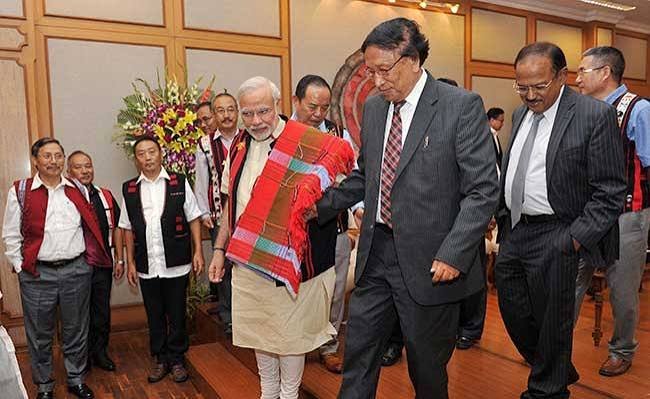
In 2010, after 13 years of political negotiation, in acknowledgment of the truth that without the recognition of Nagalim sovereignty there can be no acceptable and honorable solution with Nagalim, the Government of India (GoI) came with the proposal recognizing the sovereignty of Nagalim through its representative RS. Pandey. The consequent outcome of that proposal was the Framework Agreement of August 3, 2015, as “two entities”, recognizing and acknowledging Nagalim “unique history and position” and “sovereignty lies with the people” and a “new relationship” based on sharing of “sovereign powers”.
The Framework Agreement of August 3, 2015, signed by late Chairman Isak Chishi Swu and Th. Muivah, General Secretary, NSCN/GPRN, after 18 years of political negotiation, is a solution-oriented political framework aimed at concluding an acceptable and honorable political agreement between the GoI and the NSCN. The “sharing of sovereign power” with India is not a relationship within India.
4) Political negotiation based on recognition of “sovereignty”.
As per our understanding, no Westphalian sovereign states will negotiate their sovereignty; nonetheless, if a political negotiation does take place on the foundation of “sovereignty” with peoples and nations, it is concluded and recognized to be the highest level of political negotiation between states and the peoples or nations fighting for sovereignty.
The Indo-Naga political negotiation that began on August 1, 1997, is unique because the central principle is that it is a political negotiation of “two sovereign entities”. Among others, the talks that began at the highest Prime Minister level, without pre-condition and outside India in a third country, the Amsterdam Joint communiqué of July 11, 2002, which officially recognized Nagalim “sovereign unique history”, and the Framework Agreement of August 3, 2015, in recognition of Nagalim “unique history and position” and “sovereignty”, are clear evidence that the Indo-Naga political peace process between the GoI and the NSCN is being held on the foundation of “sovereignty”.
Therefore, the ongoing Indo-Naga political negotiation based on “sovereignty” between the GoI and the NSCN is one of the highest political negotiations in the contemporary century between a Westphalian state and peoples or nations.
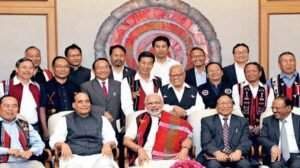
5) From conscious denial of the political nature of the Indo-Naga to official admission that the Indo-Naga conflict is a “Political conflict” by the GoI, in the ongoing Indo-Naga political peace process between the GoI and the NSCN.
More than 6 decades after the unilateral declaration of Nagalim independence on August 14, 1947, and the subsequent plebiscite of May 16, 1951, for Nagalim sovereignty, the Indian state, which had dismissed the Nagalim national movement as its “internal matter” and therefore a “secessionist” movement, has now OFFICIALLY ADMITTED AND RECOGNIZED NAGALIM “UNIQUE HISTORY AND SITUATION” AND “SOVEREIGNTY” with the signing of the Amsterdam Joint communiqué of July 11, 2002, and the Framework Agreement of August 3, 2015. Therefore, the Amsterdam Joint communiqué of July 11, 2002, and the Framework Agreement of August 3, 2015, are unparalleled official agreements between the GoI and the NSCN considering the official recognition of Nagalim “Unique history and situation” and “sovereignty”. Among others, the two Agreements are a recognition and acknowledgement of the letter and spirit of the August 14, 1947, Nagalim independence declaration and the subsequent plebiscite of May 16, 1951, for Nagalim sovereignty.
6) The “letter” of the Framework Agreement of August 3, 2015.
The Framework Agreement of August 3, 2015, is the outcome of more than one year of negotiation, wherein every sentence was debated and negotiated. For example, while negotiating the first sentence, “The political conflict is about six decades old”, both parties came with their own position, and it was concluded only after weeks of negotiation. The GoI Representative RN. Ravi’s proposal was more or less, “the conflict in Nagaland”, suggesting Nagas for causing the conflict, whereas the Chief political negotiator, Th. Muivah, General Secretary, NSCN/GPRN, proposal was essentially, “the conflict between India and Nagalim”, signifying a conflict of “two entities”. In the end, the agreed formulation recognized that the Indo-Naga conflict is a political conflict of India and Nagalim and not an “internal matter” of India. The GoI also flatly refused to recognize and acknowledge its own proposal of 2010 on “shared sovereignty” and suggested the use of “power” instead of “sovereignty”. However, the Chief political negotiator, Th. Muivah, General Secretary, NSCN/GPRN, held his ground and after a long negotiation, the outcome was the Framework Agreement of August 3, 2015, recognizing and acknowledging Nagalim “unique history and position” and “sovereignty” of Nagalim.
Among others, in a nutshell, the Framework Agreement of August 3, 2015, has officially recognized and acknowledged the following:
i. That the Indo-Naga conflict is not India’s “internal matter” but a “political conflict” of “two entities”.
ii. The sovereignty of Nagalim is officially acknowledged with the recognition and acknowledgement of the “unique history and position” of Nagalim.
iii. “Sovereignty lies with the people” is an official recognition and acknowledgement of Nagalim Sovereignty.
iv. “New relationship” based on “sharing sovereign power as defined in the competencies”. Therefore, nothing is final on the Naga issue, including the formation of the present Nagaland state in 1963 and the Shillong Accord of 1975. A “New relationship”, yet to be defined, shall be decided and finalized from the ongoing political negotiation by the new political agreement.
v. “Enduring inclusive new relationship” means that the “political agreement” shall be for all Nagas, wherever we are.
vi. “An enduring inclusive new relationship of peaceful co-existence of the two entities” reiterated that the Framework Agreement of August 3, 2015, is of “Two entities”.
7) The “spirit” of the Framework Agreement of August 3, 2015.
i. The Indo-Naga conflict is not the “internal matter” or the “internal law and order” issue of India. Among others, the underlying principles of the Indo-Naga political negotiation between the GoI and the NSCN since 1997, the subsequent November 18, 2002, Milan, Italy MoU, the Amsterdam Joint Communiqué of July 11, 2002, and the Framework Agreement of August 3, 2015, are official affirmation that the Indo-Naga conflict is a political conflict of “two entities”.
ii. The recognition of the “unique history and position” of Nagalim, over and above the wide range of uniqueness of Nagalim history, the political implication of this recognition is that “Nagalim was/is never a part of India and Myanmar (erstwhile Burma).”
iii. “Sovereignty lies with the people”: “Sovereignty” represents the identity and history of peoples and nations. “Flag and constitution” are powerful political symbols that unite and recognize a people and nation. Since sovereignty is constitutive of identity, the official recognition and acknowledgement of “Sovereignty” clearly implies the recognition and acknowledgement of Nagalim “national flag” and Nagalim “national constitution”.
iv. “The sovereign power as defined in the competencies” are “competencies or sovereign powers” that shall be concluded from the political negotiation and not from the constitution of India.
v. These “sovereign powers” concluded from the political negotiation shall constitute the constitution which shall be called Yehzabo/Nagalim constitution. Therefore, the “sovereign powers” are not borrowed from the constitution of India. The Yehzabo/Nagalim constitution is not a “basic law”.
vi. Nagalim shall be sovereign in all matters of her own affairs, as mutually agreed upon.
8) Conclusion
It is quite normal that in the political negotiation both parties must exercise several strategies for their own advantage. In that regard, the Indo-Naga political negotiation between the GoI and the NSCN is also comparable to any other political negotiation around the world.
Much fear has been shared from different corners regarding the Indo-Naga political negotiation and the “competencies” as defined in the political negotiation. It is understandable, as everyone is zealous for Nagalim and its sovereign existence. The Chief political negotiator, Th. Muivah, General Secretary, NSCN/GPRN, and the NSCN/GPRN are also committed to conclude an honorable and acceptable political agreement together with the Naga people that does not compromise and betray the Naga people’s mandate on Nagalim unique history and sovereignty.
In that regard, the following points must be understood together within the Naga family:
i. The different concerns raised may be on account of, first, the lack of understanding of the political negotiation, which is understandable, and, second, the treacherous part is the policy and strategy of the GoI, which has betrayed the Framework Agreement of August 3, 2015, as they are not in a position to implement the letter and spirit of the Framework Agreement of August 3, 2015, as “two entities” with a “sovereign” and recognizing the Nagalim national flag and Nagalim national constitution.
ii. The strategy and policy of the GoI and its Agencies is the area of concern where we must be sufficiently warned. Through various initiatives, the GoI, which has betrayed the Framework Agreement of August 3, 2015, has tried to dismantle the Framework Agreement of August 3, 2015. An example of the strategy used by the GoI and its Agencies is the so-called “Common draft” of the Forum for Naga Reconciliation (FNR) to be concluded from the “Framework Agreement of August 3, 2015” and the “Agreed Position” of the NNPG’s. In this regard, the NSCN/GPRN has made its official position very clear that, “The Nagas do not acknowledge any agreements signed under the constitution of India.” (MIP Press Statement, 18th January 2023)
iii. The Framework Agreement of August 3, 2015, is the outcome of the political negotiation between the GoI and the NSCN as “two entities” with the official recognition and acknowledgement of “Nagalim sovereignty”.
iv. In the ongoing political negotiation, the “sovereign powers” are being negotiated according to the letter and spirit of the Framework Agreement of August 3, 2015, and the foundation of the political agreement with the GoI shall be according to the Nagalim National principles and the political position of the Chief political negotiator, Th. Muivah, General Secretary, NSCN/GPRN, who has declared them on various occasions, including November 7, 2024, to uphold and defend the “Nagalim unique history”, “Nagalim sovereignty and freedom”, “Nagalim sovereign territory”, “Nagalim sovereign national flag” and “Nagalim sovereign national constitution”, to the last, come what may.
v. In view of the betrayal of the letter and spirit of the Framework Agreement of August 3, 2015, by the GoI and its loss of political will to implement it, the approach of the political negotiation must move forward prudently, upholding and protecting the letter and spirit of the Framework Agreement of August 3, 2015.
vi. The non-negotiable Nagalim national principles in the ongoing Indo-Naga political negotiation between the GoI and the NSCN:
a) The Nagalim national flag and Nagalim national constitution.
b) The “sovereign powers” concluded from the political negotiation shall constitute the constitution which shall be called Yehzabo/Nagalim constitution. The Yehzabo/Nagalim constitution is not a “basic law”.
c) The political agreement is concluded from the political negotiation and not the constitution of India.
d) The final political agreement shall be implemented and enforced under the Nagalim national flag and Nagalim national constitution.
e) Nagalim shall be sovereign in all matters of her own affairs.
f) The “sovereign powers” or “competencies” that are being negotiated shall be according to the letter and spirit of the Framework Agreement of August 3, 2015, upholding and defending Nagalim unique history and sovereignty.
g) In view of the betrayal of the letter and spirit of the Framework Agreement of August 3, 2015, it is imperative for a third-party guarantor in the event of an honorable and acceptable political agreement.
h) Likewise, for all the other “sovereign powers” or “competencies” being negotiated in the ongoing political negotiation, the NSCN/GPRN leaders who are in negotiation with the GoI shall negotiate keeping the Nagalim National principles and the letter and spirit of the Framework Agreement of August 3, 2015, on top of the negotiation agenda, including Nagalim national flag and National constitution.
i) The NSCN/GPRN leadership, Late Chairman Isak Chishi Swu and General Secretary, Th. Muivah, had assured that in the event of a final political Agreement with the GoI, the NSCN/GPRN shall come to the Naga people.
j) The NSCN/GPRN leadership, Late Chairman Isak Chishi Swu and General Secretary, Th. Muivah, have protected and defended the Nagalim national principles on sovereignty before and after 1980 and in the ongoing political negotiation with the GoI, and it is our bounden duty to protect, defend and uphold their leadership and the sacred foundation laid down by them and remain committed to the following Nagalim national principles, to the last, come what may:
i. Nagalim for Christ.
ii. Uphold and defend the leadership of late Chairman-President Isak Chishi Swu, late Vice-Chairman-President, Khodao Yanthan, late Vice-Chairman, Brig. Kholi, and the Chief political negotiator, Th. Muivah, General Secretary-Ato Kilonser, NSCN/GPRN.
iii. Uphold and defend the letter and spirit of the Amsterdam Joint Communiqué of July 11, 2002, and the Framework Agreement of August 3, 2015, whereby Nagalim unique history and situation and sovereignty are officially recognized and acknowledged, duly recognizing and acknowledging the sovereign Nagalim national flag and sovereign Nagalim constitution.
iv. The sovereign Nagalim national flag and sovereign Nagalim national constitution are non-negotiable.
KUKNALIM