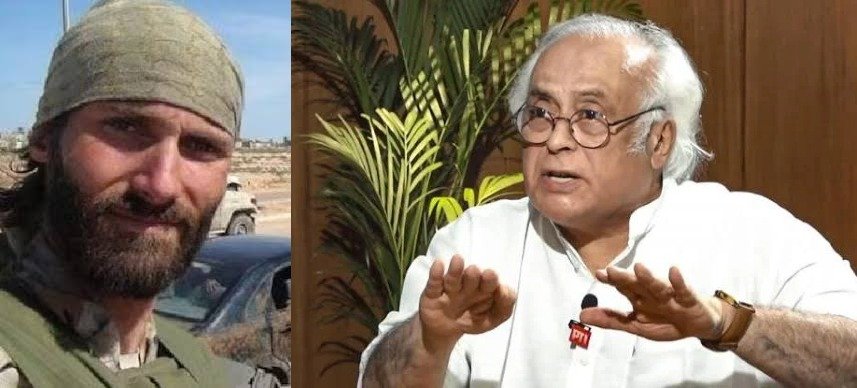
The Congress has alleged that US pressure influenced the handling of the case and asked what India received in return.
BY PC Bureau
NEW DELHI, September 25— The case of US national Matthew Aaron VanDyke has undergone a striking transformation in six months—from an arrest under India’s anti-terror law over an alleged conspiracy involving Myanmar-based armed groups to a situation in which the chargesheet filed by the National Investigation Agency does not invoke the UAPA, the accused has secured default bail and a Delhi court has now permitted him to return to the United States for a month.
The development, reported on Thursday, has triggered a political controversy, with the Congress alleging that US pressure may have played a role in the handling of the case. There is, however, no publicly established evidence so far that the US government pressured India to drop the UAPA provisions or secure VanDyke’s departure. The NIA has maintained that its UAPA investigation is continuing and that a supplementary chargesheet could follow.
The legal sequence is nevertheless striking.
Arrested as a UAPA accused
VanDyke was arrested by the NIA on March 13, 2026, at Kolkata airport. Six Ukrainian nationals were arrested the same day at Delhi and Lucknow airports.
The case was initially registered under Section 18 of the Unlawful Activities (Prevention) Act, which deals with conspiracy, advocacy, abetment or incitement relating to a terrorist act.
According to the NIA’s allegations, the seven foreign nationals had entered India in December 2025, travelled through Assam and Mizoram and subsequently crossed into Myanmar through an unauthorised route. The agency alleged that they were connected with a planned training programme for Myanmar-based ethnic armed groups involving drone warfare, drone operations, assembly and jamming technology.
The NIA further alleged that drones and accessories had been brought through India and that the journey was part of a larger conspiracy involving armed groups, including organisations with links to insurgent groups in India’s Northeast. These remain allegations under investigation and have not been established by a trial.
VanDyke and the six Ukrainians were subsequently kept in judicial custody in Tihar Jail.
READ: NSCN-IM Insists Flag, Constitution Non-Negotiable in Naga Peace Talks
Our #CompromisedPM does it again.
Last night, a US national Matthew VanDyke accused of plotting terrorist acts was released and allowed to return to his country.
• Mar 13: A group of foreign nationals, including VanDyke, was arrested by the National Investigation Agency…
— Jairam Ramesh (@Jairam_Ramesh) September 25, 2026
The 180-day deadline changes the case
The crucial turning point came in September.
Under the applicable provisions, the NIA had an extended period of up to 180 days to complete the investigation in the UAPA case. The 180-day period from VanDyke’s March 13 arrest ended on September 8.
On that very day, the NIA filed its chargesheet.
But the chargesheet did not invoke the UAPA.
Instead, the seven were chargesheeted under Sections 21 and 23 of the Immigration and Foreigners Act, 2025, concerning unauthorised entry and other immigration/visa violations. The NIA told the court that its investigation into the alleged UAPA offences was continuing and that it needed additional time to ascertain and verify the facts before deciding whether further action under the anti-terror law was warranted.
That distinction became critical.
The NIA had initially arrested VanDyke under the UAPA, but when the statutory investigation period expired, the first chargesheet before the court contained only immigration offences.
Court calls the chargesheet “piecemeal”
VanDyke then sought default bail, arguing that the NIA had failed to complete the UAPA investigation within the statutory period.
On September 18, Special NIA Judge Prashant Sharma granted him default bail.
The court described the chargesheet as “piecemeal”, noting that it dealt with the Immigration and Foreigners Act while further investigation into the UAPA offences was continuing.
The court held that the filing of an incomplete chargesheet could not deprive the accused of the statutory right to default bail. VanDyke had been in custody for more than 180 days without a UAPA chargesheet being filed.
The ruling did not amount to an acquittal or a judicial finding that the original terror allegations were false.
The NIA’s UAPA investigation, according to the agency, remained open.
Then the immigration case was compounded
Another development further weakened the immediate legal restrictions on VanDyke.
The immigration offences under Sections 21 and 23 of the Immigration and Foreigners Act were compoundable before the Foreigners Regional Registration Office (FRRO).
VanDyke paid ₹5.5 lakh to compound those offences, according to reports. The payment related to the immigration violations and not to any finding concerning the still-pending UAPA investigation.
The six Ukrainian nationals similarly paid penalties in connection with the immigration offences and obtained default bail/discharge in respect of those charges.
Thus, by the third week of September, the immediate immigration case had effectively been dealt with while the much more serious UAPA investigation remained pending.
From Tihar to an airport abroad
VanDyke subsequently approached the Delhi court seeking permission to travel to the United States to meet his family.
On September 24, Special NIA Judge Prashant Sharma allowed VanDyke and the six Ukrainian nationals to travel to their respective home countries for one month.
The court required them to provide their overseas residential details and contact information so that the investigating agency could reach them if necessary.
Significantly, the court recorded that the NIA did not contend that their physical presence in India would be required in the near future to complete the investigation. The court also said it could not direct the NIA to complete its investigation within a particular period.
The seven were therefore allowed to leave India even though the NIA says its UAPA investigation has not been formally closed.
Congress asks: Was there US pressure?
The sequence has now become a political issue.
Congress general secretary Jairam Ramesh questioned the circumstances in which the UAPA provisions disappeared from the September 8 chargesheet and VanDyke subsequently obtained permission to return to the US.
Ramesh asked whether the NIA had dropped the terror charges after investigation or whether the Modi government had acted “at the instance of US authorities”.
“Obviously, US pressure determined this outcome, but what did India get in return?” he asked, while also questioning how the foreign nationals had originally been allowed to enter India and travel through the Northeast to Myanmar.
Congress leader Pawan Khera separately alleged that VanDyke had entered Mizoram without the required permit, crossed into Myanmar and provided weapons training to armed groups, and questioned why he was now being allowed to return to the United States.
The Congress allegations, however, remain political allegations. The publicly available court record does not establish that Washington intervened in the case or that India’s legal decisions were taken in exchange for a US concession.
What does India expect in return?
That is now the central political question raised by the Congress—but it remains unanswered on the available record.
There is no publicly documented quid pro quo between India and the United States connected to VanDyke’s release or travel permission.
What the record does establish is that the NIA initially treated the matter as a UAPA case involving an alleged terrorist conspiracy; after 180 days, its first chargesheet invoked only immigration provisions; the court consequently granted default bail; the immigration offences were subsequently compounded; and the court then allowed the accused to leave India for a month while the UAPA investigation remains pending.
The contrast between the initial allegations and the present legal position is therefore likely to remain the focus of scrutiny.
In March, VanDyke was arrested as an accused in a terror-conspiracy investigation. In September, the NIA’s chargesheet did not contain the anti-terror provisions. He obtained default bail not because a court acquitted him, but because the investigation under the UAPA had not been completed within the statutory period.
And on Thursday, the same court permitted him to leave India.
The unanswered issue is not simply why VanDyke was allowed to go home. It is why the NIA, after six months of investigating allegations serious enough to invoke Section 18 of the UAPA at the time of arrest, was unable to put those allegations into its first chargesheet before the statutory deadline.