BY PC Bureau
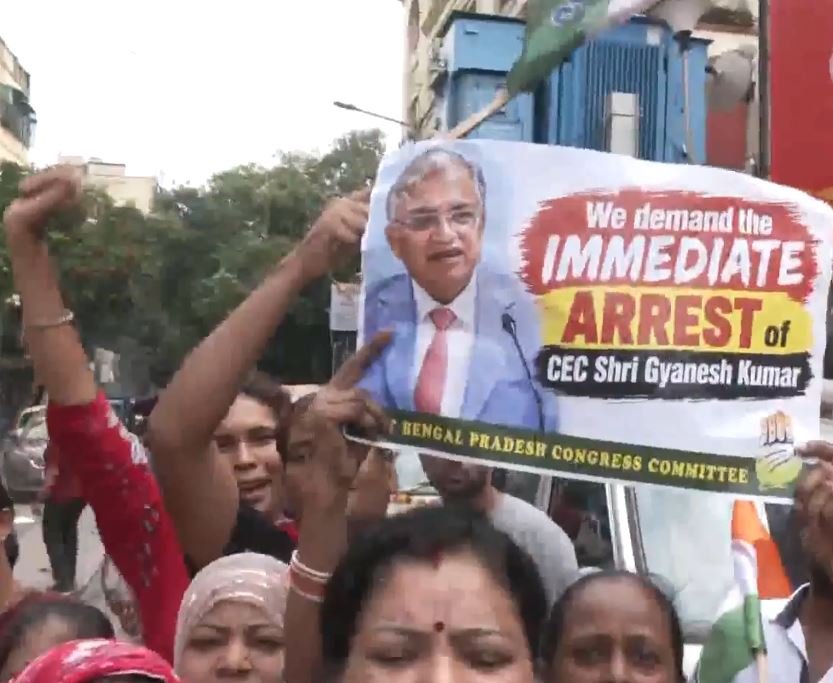
NEW DELHI, September 25: The Congress and its youth wing staged protests across several cities on Friday demanding the resignation and removal of Chief Election Commissioner Gyanesh Kumar and, in several demonstrations, his arrest and prosecution over the Election Commission’s Special Intensive Revision (SIR) of electoral rolls.
The nationwide mobilisation followed an Indian Express investigation reporting that Election Commissioners Sukhbir Singh Sandhu and Vivek Joshi had recorded at least 14 objections over 10 months to decisions and orders they said were taken without their knowledge. Their concerns included changes to Form 6 for new voter registration, deletion and restoration of names, access to electoral-roll databases and the handling of appeals in West Bengal.
The report said the two Commissioners had also raised concerns about what they described as the “gradual centralisation” of electoral-roll databases and questioned whether statutory election officials at the state and constituency levels retained proper access to the systems used to maintain voter lists. The objections were copied to Kumar.
The Election Commission is a three-member constitutional body. Under the 2023 law governing the appointment, service conditions and tenure of the CEC and Election Commissioners, Commission business is to be transacted as far as possible unanimously, with differences decided by majority. The reported objections have therefore triggered a wider debate over the functioning of the poll panel rather than merely a political dispute over SIR.
Delhi Protest
Citizens’ protest at Jantar Mantar demanding arrest of Gyanesh Kumar. Vote Chori is Deshdroh.
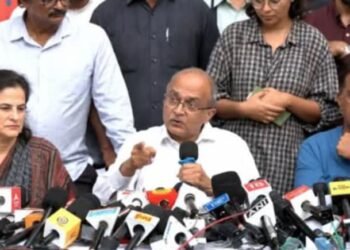
Hundreds of protesters including Com. Dipankar Bhattacharya, Yogendra Yadav, Adv. Prashant Bhushan, Neha, Anjali Bharadwaj, Purushottam Sharma, Rajiv Dimri, Ravi Rai and many others at… pic.twitter.com/XlK7mhY1ul— CPIML Liberation (@cpimlliberation) September 25, 2026
In Delhi, Indian Youth Congress workers marched towards Jantar Mantar and the Election Commission, demanding Kumar’s resignation and arrest. Protesters carried banners and placards and some wore masks depicting Kumar with his hands shown as being in chains.
IYC president Uday Bhanu Chib led the demonstration. Police and security personnel were deployed in large numbers, with barricades and detention vehicles positioned around the protest area. Jantar Mantar was also heavily barricaded ahead of the demonstrations.
Separately, the All India Students’ Association organised a citizens’ protest and public meeting at Jantar Mantar, with participants including AISA president Neha Bora, activist Yogendra Yadav, RJD MP Manoj Jha, CPI(ML) Liberation general secretary Dipankar Bhattacharya and lawyer Prashant Bhushan.
Patna: Water Cannons
In Patna, Congress workers led by Bihar Congress president Rajesh Ram marched towards the state Election Commission office. Protesters raised slogans accusing the poll panel of being compromised and demanded Kumar’s resignation.
Police used water cannons after protesters attempted to cross barricades during the march.
🔥 Massive protest erupt across various cities against CEC Gyanesh Kumar, with Congress workers demanding his resignation.
📍Chandigarh : Police use water cannons on Congress workers.
Gyanesh Kumar Gupta’s “Gupt Yojana” exposed. pic.twitter.com/aAjipYReAS
— Priya Purohit (@Priyaa_Purohit) September 25, 2026
Manipur: Effigy Burnt, Tear Gas Fired
In Imphal, Manipur Congress workers led by Pradesh Congress Committee president Okram Ibobi Singh protested outside the Chief Electoral Officer’s office at Lamphelpat.
The protesters burnt an effigy of Kumar and raised slogans demanding his resignation and arrest. The Congress also alleged that the SIR process was disproportionately affecting younger, including Gen Z, voters.
The demonstration later turned confrontational, following which police used tear-gas shells. Reports from the state said the protest was among the more heated demonstrations of the day.
READ: Congress Attacks Modi Govt Over VanDyke Reprieve, Alleges US Pressure
Kolkata: Congress March Stopped
In Kolkata, West Bengal Congress chief Subhankar Sarkar led a rally from the Calcutta University area towards the state Chief Electoral Officer’s office.
Police stopped the march at B.B. Ganguly Street, where protesters burnt an effigy and raised slogans demanding Kumar’s arrest. Sarkar said the agitation would continue until the party’s demands were addressed.
The protests in West Bengal come amid an already intense political dispute over SIR and electoral-roll changes, with opposition parties questioning the process and the Election Commission defending the legality of its procedures.
Lucknow and Other States
Congress workers stage protest in Lucknow demanding the resignation of Gyanesh Kumar. pic.twitter.com/19WvqcOeej
— Desh Ka Verdict (@DeshKaVerdict) September 25, 2026
Congress workers also protested in Lucknow, demanding Kumar’s resignation over alleged irregularities in the electoral process and SIR. Police installed multiple layers of barricades along routes leading from the Congress headquarters towards key government locations.
Similar demonstrations were reported in Chandigarh, Guwahati, Dehradun, Jammu and Bhopal, among other places. In Chandigarh, police used water cannons and detained Punjab Congress president Amarinder Singh Raja Warring and others after protesters attempted to breach barricades.
In Guwahati, Assam Congress president Gaurav Gogoi and several party leaders were detained after attempting to cross barricades while marching towards the Chief Electoral Officer’s office.
The Congress had asked its state units to organise marches to state election offices as part of the nationwide campaign.
What Triggered the Escalation?
The protests gained momentum after the Indian Express reported that Sandhu and Joshi had formally objected 14 times during the previous 10 months to decisions they said were taken without their knowledge.
Among the issues cited were the modification of Form 6 for new voters, centralised access to electoral-roll data, appeals relating to voter deletions in West Bengal and software-related difficulties in Goa. The investigation reported that 97 voters in Goa whom Electoral Registration Officers had found eligible were unable to be restored because the software lacked the required mechanism at the relevant stage.
The report has also intensified questions about the internal functioning of the three-member Commission. India Today reported that despite the objections, the three Commissioners continued to appear together at several public briefings during the period in which the objections were recorded.
Kumar, a 1988-batch Kerala cadre IAS officer, took charge as the 26th Chief Election Commissioner on February 19, 2025. Before becoming CEC, he had served as Election Commissioner from March 2024 and as Union Cooperation Secretary. The Election Commission’s official profile confirms his appointment and career details.
Congress Escalates Political Offensive
Congress leaders have described the SIR controversy as part of what they call “vote chori” and have demanded Kumar’s immediate resignation and removal. The party has also sought scrutiny of decisions taken by the Election Commission.
Congress sources have said the Opposition is preparing a parliamentary motion seeking Kumar’s removal, with legal experts involved in drafting the proposed notice.
The protests mark an escalation in the Opposition’s campaign against the Election Commission, coming days after the reported internal objections by two of its three members became public.
The Election Commission, meanwhile, maintains that SIR is intended to ensure that eligible citizens remain on the rolls while ineligible entries are excluded. Its official documents describe the exercise as being conducted under constitutional and statutory provisions, with the stated objective of ensuring that no eligible citizen is left out and no ineligible person is included.
The immediate political confrontation is therefore centred on two competing claims: the Opposition’s allegation that the electoral-roll revision and the Commission’s functioning have compromised voter rights, and the Election Commission’s position that the revision is a lawful exercise designed to improve the accuracy and integrity of electoral rolls.