The unresolved killings are deepening a sense of impunity in Manipur, where condemnations and FIRs have repeatedly failed to produce arrests, charges or trials.
BY Navin Upadhyay
September 15:
From Litan in March to Leisangphai on September 15, the same disturbing pattern has emerged in Manipur’s hills. Civilians are shot, bodies are recovered, governments condemn the killings, police register cases and investigations are announced, but the perpetrators frequently remain unidentified. Community organisations name suspected armed groups, while the official record continues to use formulations such as “unknown armed persons” or “unidentified gunmen”.
The issue is not whether every allegation made by a community organisation is correct. Allegations must be tested against evidence and established in court. The more troubling question is why so many killings of civilians continue to end without publicly identified perpetrators, arrests or completed prosecutions. A government capable of deploying security forces, recovering bodies and announcing investigations must also be capable of answering the most basic question after a murder: who killed them?
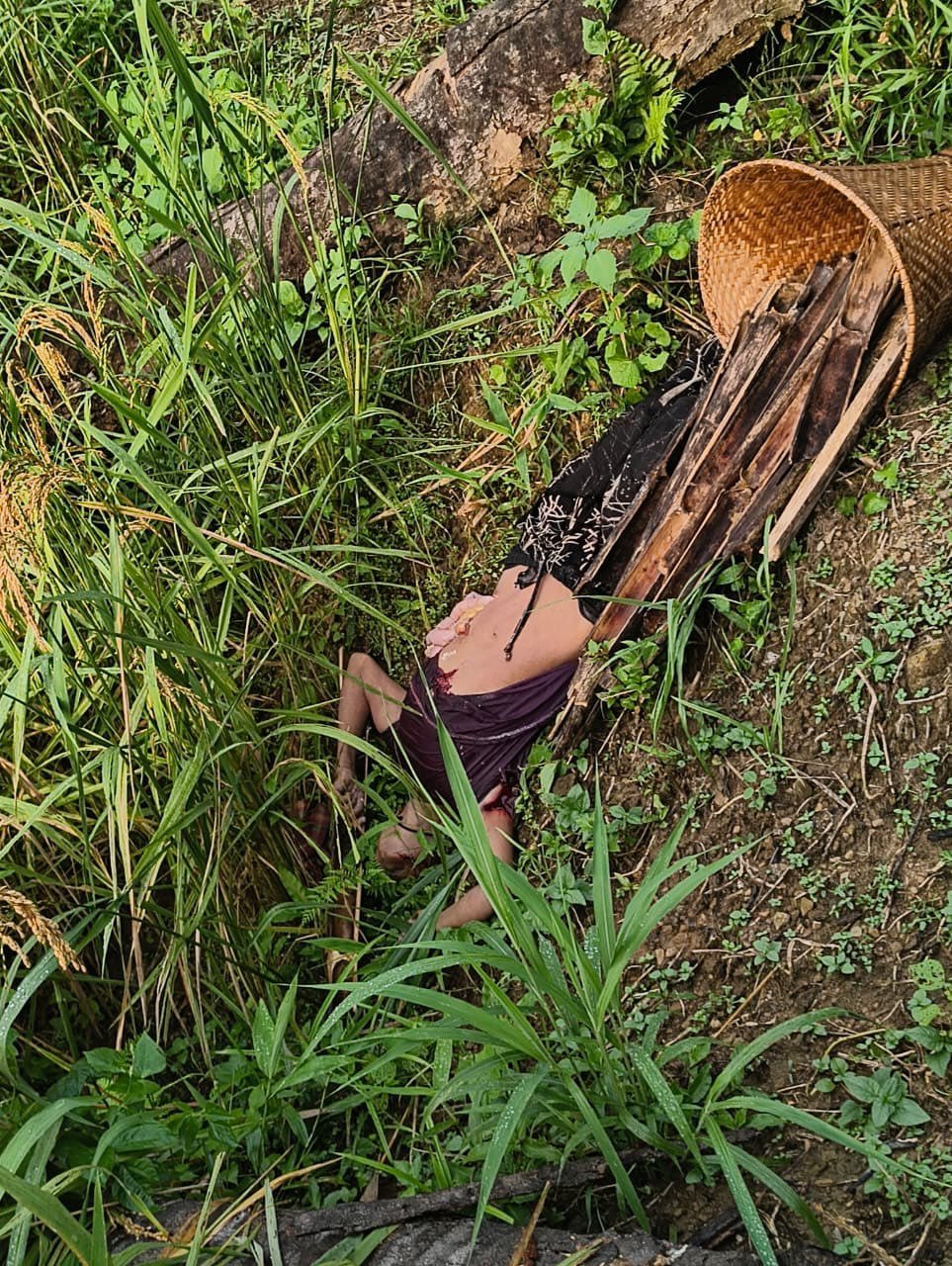
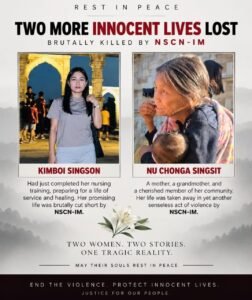
The latest killings underline the problem. On September 15, two Kuki-Zo women were shot dead at Leisangphai in Tamenglong. Phalneichong Sitlhou, also known as Chonga, was gathering firewood, while Kimjalhing Singson, also known as Kimneo, had recently completed her nursing course and returned home to help her parents with farming. Both were unarmed civilians engaged in ordinary work.
Police described the attackers as unidentified, while community organisations alleged the involvement of cadres linked to NSCN-IM and ZUF-K. Those allegations have not been independently established.
The Leisangphai killings came barely two days after four Kuki-Zo civilians were killed in separate incidents at Tollen in Tamenglong and Longpi in Noney. The victims included a couple and a pregnant woman, while a six-year-old boy was seriously injured in the Tollen attack. Again, investigations were announced and the perpetrators remained unidentified, while Kuki-Zo organisations alleged the involvement of Naga armed groups.
For the families of the victims, however, an investigation permanently stuck at “unknown gunmen” offers little comfort. The state cannot accept allegations as fact, but neither can it allow the identity of attackers to remain unresolved indefinitely. Its responsibility is to establish the truth, irrespective of the community of the victims or the identity of the accused.
🚨 #BREAKING: 𝗧𝘄𝗼 𝗨𝗻𝗮𝗿𝗺𝗲𝗱 𝗞𝘂𝗸𝗶 𝗪𝗼𝗺𝗲𝗻 𝗞𝗶𝗹𝗹𝗲𝗱 𝗶𝗻 𝗙𝗿𝗲𝘀𝗵 𝗝𝗶𝗿𝗶𝗯𝗮𝗺 𝗔𝘁𝘁𝗮𝗰𝗸
Jiribam, Manipur | September 15, 2026: Two unarmed Kuki women were reportedly shot dead at Leisangphai, also known as Muktokhal, in Jiribam District on Tuesday… pic.twitter.com/TYOepjMzeN
— 𝐂𝐇𝐈𝐊𝐈𝐌-𝐓𝐄-𝐀𝐖𝐆𝐈𝐍 (@chinkukimizogin) September 15, 2026
The May 13 killing of three Thadou church leaders offers another example of how unresolved violence can trigger a chain reaction. Rev. Dr Vumthang Sitlhou, Rev. Kaigoulun Lhouvum and Pastor Paogoulen Sitlhou were killed in an ambush between Kotzim and Kotlen in Kangpokpi while returning from a Baptist gathering associated with reconciliation and peacebuilding. Survivors described automatic gunfire targeting their vehicles. The attackers were reported as unidentified.
What followed was another cycle of violence involving retaliatory abductions, a hostage crisis and the subsequent killing of six Naga men. The Kuki-Zo Council later described the killing of the Naga men as a grave mistake.
Those deaths cannot be weighed against the deaths of the three church leaders as though one could justify or cancel the other. They demonstrate the same failure: when the state does not bring perpetrators to justice, communities begin constructing their own narratives of guilt and retribution. An individual crime can then rapidly become part of a wider communal conflict.
This makes the accumulation of unresolved cases more dangerous than the crime statistics alone suggest. Every unidentified shooter becomes another unresolved grievance; every unresolved grievance feeds collective suspicion; and collective suspicion makes the next attack easier to justify.
The Kuki-Zo Council has repeatedly accused NSCN-IM and ZUF-K of involvement in attacks on Kuki-Zo civilians. Whether those allegations stand up in court is for investigators and the judicial process to establish. But if security agencies have evidence linking particular cadres or commanders to attacks, they have a duty to pursue it. If the evidence does not support the allegations, the government has an equally important duty to establish what actually happened.
Instead, public discourse risks remaining trapped between accusation and denial while criminal cases disappear from public view.
The issue is particularly sensitive in the case of NSCN-IM, which has been under a ceasefire with the Government of India since 1997 and signed the Framework Agreement with New Delhi in 2015. The ceasefire and Framework Agreement do not establish the group’s responsibility for any particular attack in Manipur. But they raise a legitimate accountability question: if cadres associated with an organisation covered by a ceasefire are accused of operating armed camps outside the framework and attacking civilians in another state, what mechanism investigates such allegations and holds individuals responsible if evidence supports them?
READ: Interview: ‘Why Is There No Action Against NSCN-IM?’ Asks KNO Leader Seilen Haokip
READ: Manipur’s Killing Fields: Two More Kuki-Zo Women Butchered; Govt Missing
The same principle must apply to every armed group in Manipur. A ceasefire, a Suspension of Operations agreement or political negotiations cannot create immunity from criminal law. Nor should the absence of a political agreement justify arbitrary action against civilians or cadres.
Manipur has a substantial security presence, state police, central armed forces, intelligence agencies, monitoring mechanisms and multiple layers of administrative authority. The government can move forces into troubled areas, conduct searches, recover bodies and announce investigations. What remains less convincing is the record of completed accountability.
A state cannot measure success merely by the number of forces deployed after an attack. Investigations must produce evidence that can lead to arrests and prosecutions, while courts must ultimately have cases they can try. Without that chain, security operations become episodic responses rather than effective law enforcement.
There is also a serious danger in perceptions of selective justice. If Kuki-Zo communities believe their civilians can be killed without perpetrators being identified, arrested or prosecuted while members of Kuki armed groups face raids and arrests, distrust will deepen. If Naga communities believe crimes against their civilians are ignored or treated differently, the same distrust will emerge on their side.
The deeper question, therefore, is whether the same standard of law applies to everyone.
The government may legitimately reject allegations against a particular armed group if investigators find insufficient evidence. It may prosecute individuals associated with an armed organisation when evidence establishes their involvement. What it cannot afford is a situation in which suspected perpetrators are repeatedly named by affected communities while official cases remain indefinitely stuck at unidentified attackers.
That is how impunity is perceived, even when the government insists that investigations are continuing.
The Kuki-Zo Council has demanded that the Centre and the Manipur government protect civilians, identify perpetrators and take lawful action against armed groups attacking civilians. Its criticism that condolences cannot substitute for governance is politically pointed, but the underlying demand is difficult to dispute: civilians are entitled to protection, and those who kill them are entitled to due process—but only after they are identified and brought within the criminal justice system.
The government has repeatedly said that violence will not derail Manipur’s return to normalcy. But normalcy cannot mean simply reducing attacks while leaving old murders unresolved. Nor can peace mean asking communities to forget killings for which nobody has been held accountable.
A functioning peace process requires confidence in the institutions enforcing the law. Every unresolved civilian killing weakens that confidence. Every suspected armed group that appears able to operate without consequence strengthens the perception that political calculations matter more than criminal accountability.
The victims were not combatants. They were church leaders, farmers, women gathering firewood, a young nursing graduate helping her family and civilians working in their fields. Their ordinary lives are precisely what makes these killings so disturbing.
From Litan to Leisangphai, Manipur has accumulated too many names, dates and crime scenes. The government cannot undo those deaths, but it can still demonstrate that the state is capable of finding those responsible.
The test is no longer another condemnation after another killing. It is whether investigations eventually produce names, evidence, arrests and trials—regardless of which community the victims or accused belong to.
Until that happens, the most damaging message is not merely that the killers remain unidentified. It is that, in parts of Manipur, they may have come to believe they can remain unidentified.