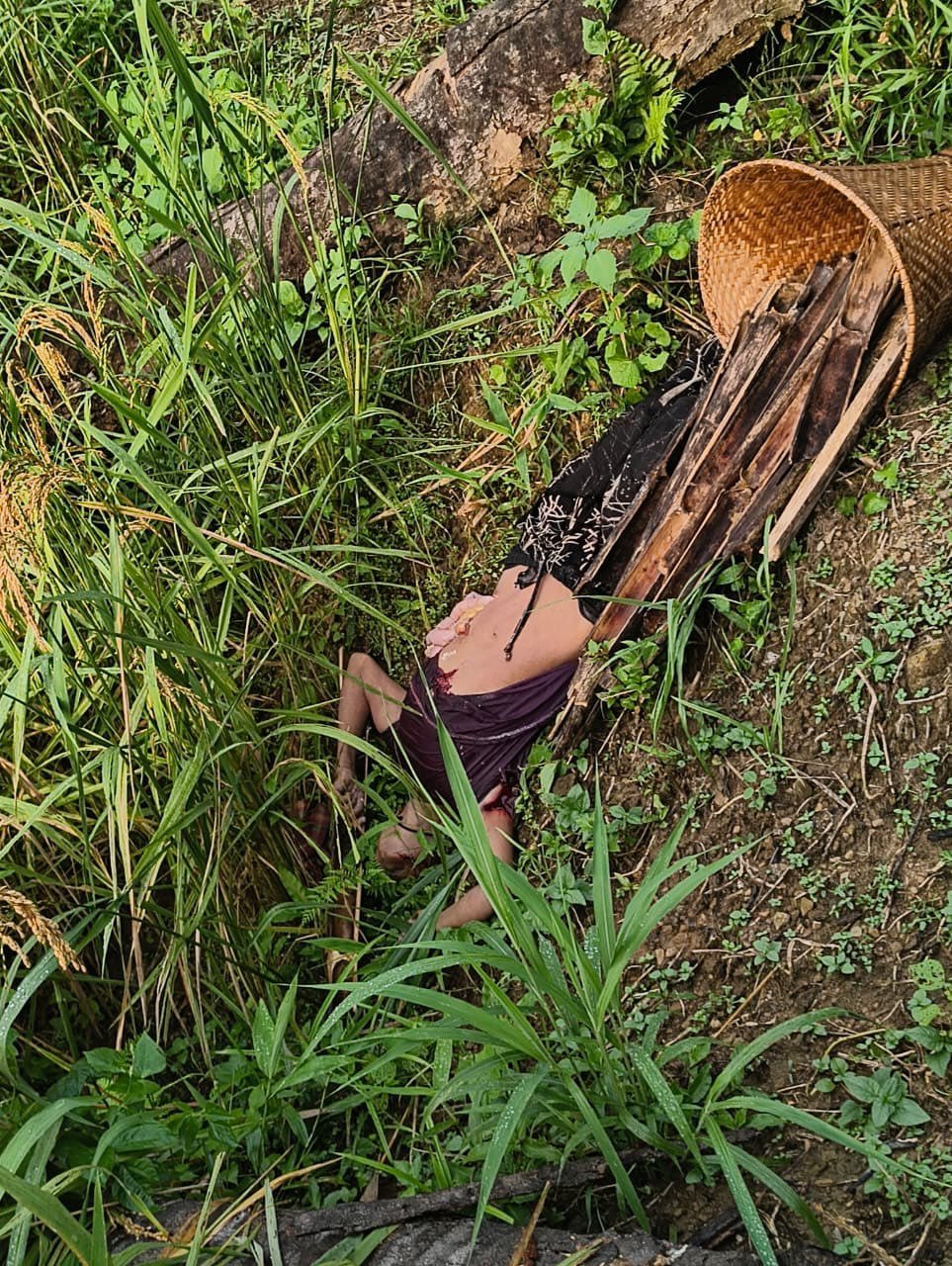
Local accounts said farmhouses were set on fire and other villagers who had gone to the fields remained unaccounted for. Police said the gunmen were unknown. Community bodies have named the NSCN-IM and ZUF-K. The state has not produced a single accused.
The Kuki-Zo Council (KZC) did not mince words. In its statement, KZC/SIP/PR/067, issued from its Lamka headquarters on September 15, 2026, and signed by spokesperson Ginza Vualzong, Secretary for Information and Publicity, the council said the repeated killing of Kuki-Zo civilians had become “an unacceptable and alarming pattern.”
These deaths, it said, “can no longer be dismissed as isolated incidents.” The KZC “strongly condemns the latest killings and demands immediate government action.”
It set out the sequence without euphemism. Barely a day after four Kuki-Zo civilians, including two women, were killed in Tamenglong and Noney, two more Kuki-Zo women from Leisangphai were “reportedly shot dead by cadres of the NSCN-IM and ZUF-K.”
The victims were named in full: Mrs Phalneichong @ Chonga Sitlhou, 70, and Ms Kimjalhing @ Kimneo Singson, 28.
Manipur : Two Kuki women were brutally killed in Leisangphai Village by NSCN-IM terrorists while gathering firewood and rice. How many more Kuki lives must be lost before the State & Central government act? We demand immediate protection, justice and accountability. @HMOIndia pic.twitter.com/e0DJ9bXWNR
— Neng Khongsai KUKI (@KhongsaiChanu) September 15, 2026
Chonga Sitlhou was gathering firewood on her farm when she was killed. Kimneo Singson, who had recently completed her nursing course and returned home to help her parents with farming, was shot dead at the same location.
The council refused to treat them as collateral.
“Both were unarmed women engaged in ordinary civilian activities. Their killing is an unconscionable act of brutality and a grave threat to the safety of Kuki-Zo communities.”
READ: Interview: ‘Why Is There No Action Against NSCN-IM?’ Asks KNO Leader Seilen Haokip
READ: ‘Terrifying Chance’: Researchers Warn of Catastrophic AI Risks
It then placed Tuesday’s killings within a larger charge. The KZC “views these killings, reportedly involving NSCN-IM and ZUF-K, as part of an escalating pattern of attacks against Kuki-Zo civilians in Manipur.”
The continued targeting of civilians, it said, “raises serious concerns about attempts to terrorise and drive Kuki-Zo communities from their settlements.”
That is not a plea for sympathy. It is an accusation that civilians are being hunted to empty land.
The demand that followed was aimed at both New Delhi and Imphal.
“The Government of India and the Manipur Government must end this impunity. They must protect vulnerable civilians, bring the perpetrators to justice and take firm, lawful action against armed groups attacking civilians.”
Then came the line that should shame any administration still issuing condolence notes:
“Condolences after every killing are not governance. Silence is not neutrality. Inaction is not peace. The Government must act now before more innocent lives are lost.”
That is the KZC’s case, on record.
After Sunday’s four deaths — including a couple at Tollen whose children were left orphaned — the state spoke of an NIA probe and relief. By Tuesday, two more women were dead in a field.
If a 70-year-old collecting firewood and a 28-year-old nurse helping on a farm cannot be kept safe, the government has already failed the first duty of the state.
The council has said what the governments have not: this is a pattern, the dead were civilians, and condolence is not a policy. Until force and law arrive where the killings are happening, Leisangphai will not be the last farm that becomes a grave.