



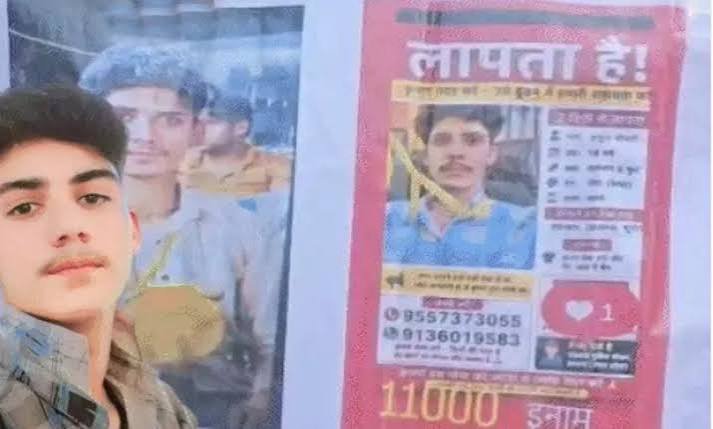
The controversy intensified after the September 25 death of a Premanand Maharaj disciple, while missing-person complaints drew more families to Keli Kunj. Police, however, have found no evidence so far of abduction or confinement at the ashram.
BY PC Bureau
New Delhi, October 6: Posters of missing people have appeared outside the Shri Radha Keli Kunj Ashram in Vrindavan as families from Hathras, Meerut, Noida, Maharashtra and elsewhere arrive in search of relatives they fear may have gone to the spiritual centre associated with Premanand Maharaj.
The growing number of complaints has put the ashram under scrutiny, particularly after the September 25 death of one of the guru’s disciples and protests by families of missing devotees. Several families have alleged that ashram sevadars either refused to provide information about their relatives or behaved aggressively when they sought answers. Videos purporting to show confrontations outside the premises have circulated widely on social media.
There is, however, no evidence so far that the missing people were abducted or confined at the ashram. Police investigations have instead established that at least two teenagers whose families had protested outside Keli Kunj were found safe at other locations.
The controversy intensified after the September 25 death of 25-year-old Deepak Lodhi, also known as Rasik Dulari Sharan, a disciple of Premanand Maharaj. Lodhi died after falling from the fourth floor of a building in the Varah Ghat area, around 500 metres from the older Keli Kunj premises. Police have examined CCTV footage showing the fall and are treating the case as suicide, while continuing their investigation into the circumstances preceding his death.
Lodhi’s death was followed by a series of missing-person complaints, bringing families to the ashram seeking information.
Teenager found at another ashram
One of the most prominent cases involved 17-year-old Anuj Chaudhary from Baramai Kheda in Hathras district. His family said he had taken initiation from Premanand Maharaj at Keli Kunj on June 26 and later left home for Vrindavan, after which they lost contact with him.
His father Rajveer Singh, along with Anuj’s mother, grandmother and sisters, staged a protest outside the ashram for several hours on October 2, alleging that they had been unable to obtain information about him.
Police subsequently established that Anuj had received initiation at Keli Kunj but had not been staying there. He was traced to another ashram in Barsana and brought back safely to his family.
The case is significant because it demonstrates both sides of the controversy: the family’s suspicion was centred on Keli Kunj, but the police investigation ultimately located the teenager at another religious establishment.
Another teenager, 16-year-old Mayank Chauhan of Kasganj, who had reportedly been missing for nearly two months, was also found safe in Prayagraj. His family had likewise staged a protest outside the Premanand-linked ashram.
Other families continue search
The cases involving other missing people remain unresolved.
Vibha Singh of Noida has reportedly been missing since August 15. Her family says she was a follower of Premanand Maharaj and had previously visited the ashram. Police, however, have said her name does not appear in the ashram’s visitor records and that her presence there has not been established.
The family of 20-year-old Om Parmeshwar Takpire of Chhatrapati Sambhajinagar, Maharashtra, has also been searching for him after he left for Vrindavan on July 21. His mother has claimed that he was seen on CCTV footage at the ashram, a claim that remains to be independently established.
In another case, the family of Prince, son of Netrapal and Poonam of Indirapuram in Meerut, has been searching for him for around two years. The family alleges that he disappeared after they visited Keli Kunj for a private discourse in May 2024 and that he did not return with them.
The Meerut family returned to the ashram on October 5-6 with Prince’s photographs and staged a protest, seeking information about his whereabouts.
READ: NSCN (IM) Leaders Retract Remarks on SC Jamir After Ultimatum
Prince, from Meerut, disappeared from self styled Guru Premanand’s ashram on May 10. His parents continue to visit the ashram in the hope of meeting their son, an ashram from where dozens have vanished without a trace. The police is refusing to even register FIR for the missing persons, let alone raid the ashram and retrieve them.
— Raj Singh Chaudhary ਰਾਜ ਸਿੰਘ ਚੌਧਰੀ راج سنگھ چوہدری (@RajSingh_Jakhar) October 6, 2026
Police urge families to file complaints
Mathura Police have appealed to families to lodge written complaints at the appropriate police station or police outpost rather than relying solely on confrontations at the ashram.
City SP Rajeev Kumar has also appealed to both the families and the ashram management to maintain peace and allow the police to investigate the cases.
The police have pointed to the recovery of Anuj as evidence that they are pursuing leads beyond the ashram itself. At the same time, the cases involving Vibha, Om and Prince remain matters of investigation, and their families’ claims about possible links to Keli Kunj have not been established as fact.
The ashram side has maintained that Anuj received initiation but did not stay there. In the Noida case, the ashram has similarly indicated that the woman’s presence there has not been confirmed.
Meanwhile, reports indicate that Premanand Maharaj is currently staying in seclusion at Yamuna Vihar Kunj in Belvan, away from the Keli Kunj premises, and is not giving regular public darshan.
For now, the controversy rests on three separate strands: a disciple’s death that police are investigating as suicide, missing-person complaints that have brought increasingly distressed families to the ashram, and allegations of poor or hostile responses from some sevadars.
Two teenagers have already been found safe elsewhere. But with other families still searching and posters of missing people appearing outside Keli Kunj, questions about what happens to devotees who arrive at or move between religious centres in Vrindavan are unlikely to disappear until the remaining cases are resolved.








Comments 2