A woman was injured when NSCN (IM) and ZUF-J cadres exchanged fire at Taodaijang Bunruang in Manipur’s Noney district, reviving a rivalry that has produced repeated clashes across the Zeliangrong areas.
BY PC Bureau
October 6: A woman was injured early Tuesday when cadres of the National Socialist Council of Nagaland-Isak-Muivah (NSCN-IM) and the Zeliangrong United Front-Jenchui (ZUF-J) exchanged fire at Taodaijang Bunruang village in Manipur’s Noney district, in the latest flare-up between the rival Naga groups.
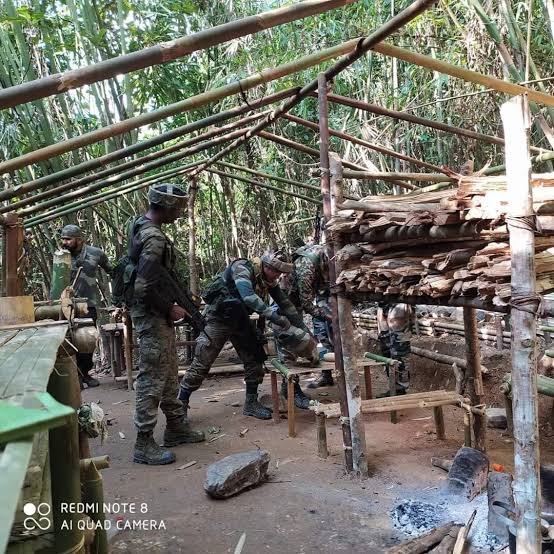
The firing broke out around 4.30 am, about 19 km east of Nungba police station, after NSCN-IM cadres allegedly attacked a bunker occupied by ZUF-J cadres, according to sources.
Ganchuiliu Kamei, 36, wife of Dithailung Gangmei and a resident of Taodaijang, was hit in the thigh during the exchange. Her condition was reported to be stable. The officer-in-charge of Nungba police station subsequently led a police team to the area after receiving information about the firing.
The incident revived memories of a much longer gun battle in the same village earlier this year. On the night of March 9, NSCN-IM and ZUF-J cadres exchanged fire for nearly three hours, with gunfire and explosions reported from the settlement. Three houses were damaged and several residents were forced to take shelter elsewhere.
Similar confrontations have been reported at Kaiphundai in neighbouring Tamenglong district, including exchanges of fire on March 20 and June 26. The two groups have subsequently traded allegations over the presence of armed camps, alleged extortion along the highway and violations of understandings governing their activities.
READ: Missing Posters Outside Premanand Maharaj Ashram as Families Search for Relatives
A rivalry rooted in a 2011 split
The conflict between the two organisations dates back to February 25, 2011, when a group of NSCN-IM cadres deserted with weapons and, along with some former NSCN-Khaplang members, formed the Zeliangrong United Front.
Jenchui Kamei has remained associated with the leadership of the faction, whose armed wing is known as the Zeliangrong Tiger Force.
The term Zeliangrong refers to the related Zeme, Liangmai and Rongmei communities, whose traditional areas straddle Manipur, Nagaland and Assam.
The split subsequently developed into a contest over political influence and territorial presence in the Zeliangrong areas.
The NSCN-IM, which has been under a ceasefire with the Centre since 1997 and signed the 2015 Framework Agreement, has sought a political settlement encompassing Naga-inhabited areas, an objective commonly associated with its demand for a Greater Nagalim. The group regards itself as the principal Naga organisation negotiating with the Centre.
The ZUF, however, has pursued a different political objective. It has said it is not seeking secession from India and has instead demanded that Zeliangrong-inhabited areas be brought under a single administrative arrangement within the Indian Union. It has also engaged in talks with the Centre over the demand.
Contest for influence
The competing political visions have translated into a contest for influence on the ground.
The NSCN-IM has accused the ZUF-Jenchui faction of operating outside designated camps, collecting what it describes as illegal taxes along NH-37 and undermining the broader Naga political movement.
The ZUF, in turn, has accused the NSCN-IM of intimidation, resource pressure and using its military strength to dominate Zeliangrong areas. It has repeatedly demanded that NSCN-IM cadres leave the region.
As a result, villages and strategic locations in Noney and Tamenglong have repeatedly become flashpoints, with clashes often centred on bunkers, camps and outposts.
A compilation by the South Asia Terrorism Portal indicates the scale of the rivalry, putting the number of armed confrontations since the formation of the ZUF at around 30 and the death toll at roughly 42. The compilation attributes most of the deaths to cadres of the two groups, while also recording militants whose affiliations were unclear and at least one civilian killed in crossfire.
Some of the deadliest clashes occurred in the early years of the rivalry, including fighting at Leishok in Tamenglong in October 2011. Smaller bursts of violence have continued through 2024-26, including the killing of a ZUF cadre near Dolang in Noney in December 2025.
ZUF’s own factional fighting
The security situation has been further complicated by divisions within the ZUF itself.
In late August 2026, cadres belonging to the Jenchui and Kamson factions clashed in Noney, with deaths and injuries reported on both sides.
Those clashes are separate from the long-running NSCN-IM-ZUF rivalry but have added another layer of armed competition to a region already affected by factional tensions and competing territorial claims.
For villages such as Taodaijang Bunruang, the consequences are immediate and recurring: houses damaged by gunfire, residents forced to flee or take shelter and civilians occasionally caught in exchanges between armed groups.
The latest injury has once again brought that local cost into focus, even as the NSCN-IM and ZUF continue to pursue different political agendas and maintain varying degrees of engagement with the Centre.
For residents caught between their bunkers and competing claims to authority, however, the distinction between political negotiations and armed rivalry offers little protection when the guns begin firing.