INDIA bloc leaders, including Priyanka Gandhi Vadra and Akhilesh Yadav, join march alongside students and Left organisations; Delhi Police stops procession before Supreme Court as legal battle over SIR intensifies
BY PC Bureau
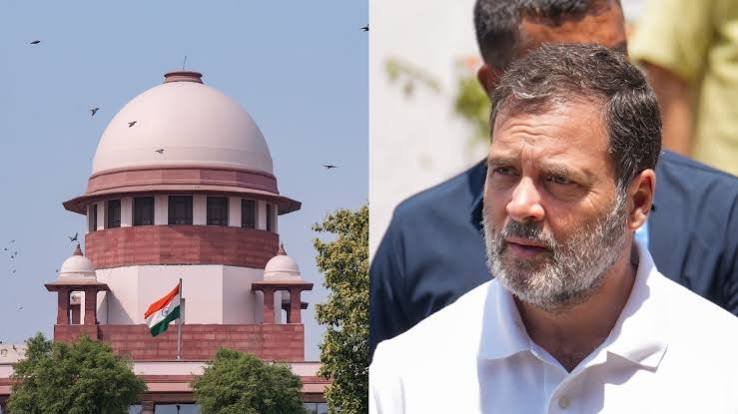
NEW DELHI/ October 12: Congress leader and Leader of Opposition in the Lok Sabha Rahul Gandhi on Monday mobilised a massive crowd in the national capital as he moved the Supreme Court challenging alleged large-scale voter deletions and irregularities in the Election Commission of India’s (ECI) Special Intensive Revision (SIR) of electoral rolls. The march brought together opposition leaders from across party lines, student activists and Left organisations, turning the controversy over voter registration into a major political confrontation over electoral rights and the independence of the Election Commission.
The demonstration, billed as a “March for Democracy”, saw the participation of Congress president Mallikarjun Kharge, Congress MP Priyanka Gandhi Vadra, Samajwadi Party chief Akhilesh Yadav and several other INDIA bloc leaders. Student activists, including All India Students’ Association (AISA) national president Neha Bora, also joined the procession, responding to Rahul Gandhi’s appeal for people across political affiliations to unite against what the Opposition calls “vote chori”.
The crowd was notable for its size and political diversity, with Congress workers marching alongside supporters of opposition parties, student organisations and Left groups. Protesters raised slogans demanding the resignation of Chief Election Commissioner Gyanesh Kumar and an end to the SIR exercise.
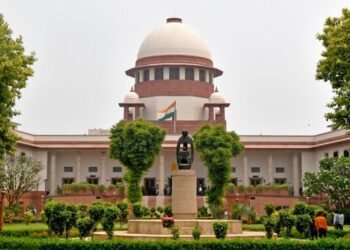
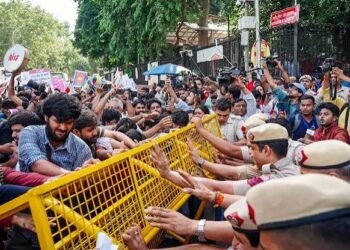
The procession moved through central Delhi towards the Supreme Court but was stopped by Delhi Police at barricades on Bhagwan Dass Road amid a heavy security deployment and traffic restrictions. Although the demonstrators could not reach the Court, Rahul Gandhi’s writ petition has now taken the dispute into the judicial arena.
Rahul Gandhi moves Supreme Court after CJI declines meeting
Rahul Gandhi had earlier sought a meeting with Chief Justice of India Surya Kant to submit a representation detailing concerns about the SIR process and alleged voter deletions.
The CJI declined the request, pointing out that related matters were already pending before the Supreme Court. He advised Gandhi that he was free to approach the Court through a formal petition.
In a communication to Gandhi, the Chief Justice also noted that similar matters were scheduled for hearing on Tuesday, October 13, and indicated that any petition filed by Congress leaders could be considered alongside the pending cases.
Gandhi has now filed a writ petition challenging the SIR process and alleged irregularities in the revision of electoral rolls. The petition has reportedly been assigned Diary No. 64196/2026.
The filing marks a further escalation in the Opposition’s campaign against the Election Commission’s handling of electoral-roll revision. The petition places the controversy before the Supreme Court at a time when several other challenges concerning the SIR, the functioning of the ECI and police action against protesters are also awaiting judicial consideration.
The precise reliefs sought in Gandhi’s petition and the Court’s subsequent orders will determine how the challenge proceeds.
READ: SC Rebuts ECI Claim on Revised Form 6, Says Its Validity Remains Open
LIVE: March For Democracy – Supreme Court, New Delhi https://t.co/1K8bMjLqCu
— Rahul Gandhi (@RahulGandhi) October 12, 2026
An unusually broad opposition mobilisation
Monday’s march was significant not merely because of the presence of senior political leaders but also because of Rahul Gandhi’s appeal for people to join the protest across party lines.
Priyanka Gandhi Vadra and Akhilesh Yadav were among the prominent leaders who joined the mobilisation, alongside Kharge and representatives of several INDIA bloc parties. Tejashwi Yadav, D. Raja, M.A. Baby, Dipankar Bhattacharya, Supriya Sule and other opposition leaders were also reported to have participated.
The presence of student activists and Left organisations added another dimension to the demonstration. AISA national president Neha Bora was among those who joined the march, reflecting the involvement of student groups in the campaign against the SIR.
As the procession advanced through central Delhi, protesters raised slogans against Gyanesh Kumar and the voter-revision exercise. The demonstration sought to project the controversy as an issue extending beyond party politics to the fundamental question of who gets to remain on the electoral rolls and exercise the right to vote.
The turnout was a major feature of the day’s protest, with the Congress seeking to demonstrate that opposition to the SIR extended beyond its own cadre. The participation of leaders from different parties also underscored the INDIA bloc’s attempt to build a common platform around electoral transparency and accountability.
Delhi Police stopped the march at barricades on Bhagwan Dass Road, preventing the protesters from proceeding towards the Supreme Court. The heavy security presence and restrictions on movement added to tensions in the capital.
Today is a historic day as INDIA stands united,walking alongside @RahulGandhi from Connaught Place to Supreme Court at 1:30 PM to restore democracy & voting rights. 1000s of Congress workers & citizens are heading to Delhi to join the march✊♥️ #ChaloDilli https://t.co/WJtAfQyMJR
— Akshay (@iAkshayRPillai) October 12, 2026
SIR controversy deepens after report on Election Commission decisions
The protests follow a report by The Indian Express that raised questions about the internal decision-making process within the Election Commission.
According to the report, Election Commissioners Sukhbir Singh Sandhu and Vivek Joshi had raised objections on multiple occasions over decisions and communications relating to the SIR, changes to Form 6, voter additions and deletions, and the centralisation of electoral-roll databases.
The report said the objections concerned at least 14 decisions over approximately 10 months. The alleged disagreements have fuelled questions about whether important decisions were taken collectively by the three-member Commission or were advanced without the concurrence of the other two Election Commissioners.
The ECI has maintained that differences of opinion within the Commission are normal and that decisions were ultimately taken unanimously.
The Opposition has nevertheless demanded greater transparency, questioning the manner in which the SIR has been implemented and calling for Kumar’s resignation.
The dispute has also raised a wider legal question: whether changes affecting voter registration and electoral-roll revision have been introduced in accordance with the statutory framework governing the Election Commission.
The revised Form 6, used by people applying for registration as new voters, has become a particular point of contention because it includes a declaration linked to the previous SIR. The Supreme Court has separately clarified that it has neither approved nor disapproved the revised form and has yet to adjudicate on its validity.
Millions of voter deletions fuel ‘vote chori’ charge
The SIR has become one of the most contentious political issues following the deletion of millions of names from electoral rolls during the revision process across states and Union Territories.
Opposition parties and civil society groups argue that the scale and manner of the deletions risk excluding eligible voters, particularly among poorer and more vulnerable sections of the population. They have called for greater transparency in the verification process, effective opportunities to appeal and safeguards against the wrongful exclusion of genuine electors.
The Opposition has repeatedly used the term “vote chori” to describe what it alleges are irregularities in the electoral-roll process.
The Election Commission, however, has defended the exercise as a legitimate effort to maintain accurate electoral rolls. It has attributed deletions to factors including deaths, migration, duplicate entries and electors who could not be traced. The Commission has also maintained that eligible citizens can apply for enrolment through the prescribed procedure.
The central dispute is whether the safeguards in place are sufficient to ensure that genuine voters are not removed from the rolls and whether the revision process is transparent, legally compliant and open to effective scrutiny.
Rahul Gandhi’s petition and the other pending cases could bring these questions before the Supreme Court for closer examination.
Police crackdown adds to confrontation
Monday’s march unfolded against the backdrop of several days of protests and police restrictions in the capital.
Demonstrations demanding Kumar’s resignation and an end to the SIR have involved opposition parties, the youth-led Cockroach Janta Party (CJP), student organisations and Left groups. Police imposed prohibitory restrictions under Section 163 of the Bharatiya Nagarik Suraksha Sanhita (BNSS), while several protesters were detained during demonstrations over the weekend.
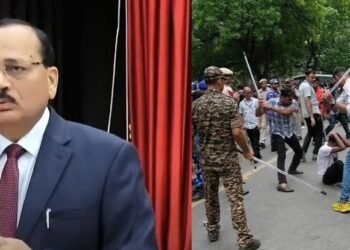
The detentions triggered a separate legal confrontation after petitions alleged that the police action had affected not only protesters but also lawyers and journalists attempting to carry out their professional duties.
On Sunday, October 11, the Supreme Court held a special sitting to consider petitions concerning the police crackdown and restrictions imposed during the protests.
The Court issued directions against the illegal detention of peaceful protesters and addressed concerns about access to public transport, courts and the ability of lawyers and journalists to perform their professional duties in accordance with law.
However, further petitions were subsequently filed alleging that police continued to detain protesters despite the Court’s intervention. The Supreme Court Bar Association and other petitioners have also approached the Court over alleged detention and assault of lawyers.
The complaints have widened the dispute beyond the SIR itself, placing the handling of demonstrations and compliance with judicial directions under scrutiny.
Several related matters are scheduled for hearing on October 13.
Supreme Court hearings could prove crucial
The convergence of Rahul Gandhi’s petition, challenges to the Election Commission’s decision-making and complaints concerning the detention of protesters has placed the Supreme Court at the centre of the escalating dispute.
The Opposition wants judicial scrutiny of the SIR process, the alleged exclusion of legitimate voters and the manner in which the Election Commission has taken decisions. The Commission, meanwhile, maintains that the revision is a legitimate administrative exercise intended to ensure accurate electoral rolls.
The October 13 hearings could bring several of these issues into sharper focus, although the scope of the Court’s consideration will depend on the petitions before it and the orders the Bench chooses to pass.
Monday’s mobilisation has given the Opposition an opportunity to bring its concerns over voter deletions into the streets while pursuing a parallel legal challenge.
With Rahul Gandhi formally moving the Supreme Court and a broad coalition of opposition leaders, students and Left organisations joining the march, the SIR controversy has entered a new phase—one in which the integrity of electoral rolls, the accountability of the Election Commission and the right to peaceful protest are increasingly intertwined.
The central question remains whether the ongoing revision can ensure accurate electoral rolls without wrongfully excluding eligible voters. The Supreme Court’s examination of the pending challenges may prove critical in determining the legal boundaries of the exercise and the safeguards available to those who contest their exclusion.