The UNC has tightened its blockade across key Manipur highways, setting up a fresh confrontation with the state government over its demands.
BY PC Bureau
September 9, 2026: Manipur’s latest confrontation is moving onto its highways. The United Naga Council (UNC) has intensified its indefinite economic blockade despite an explicit government warning that anyone obstructing roads or disrupting essential supplies will face prosecution.
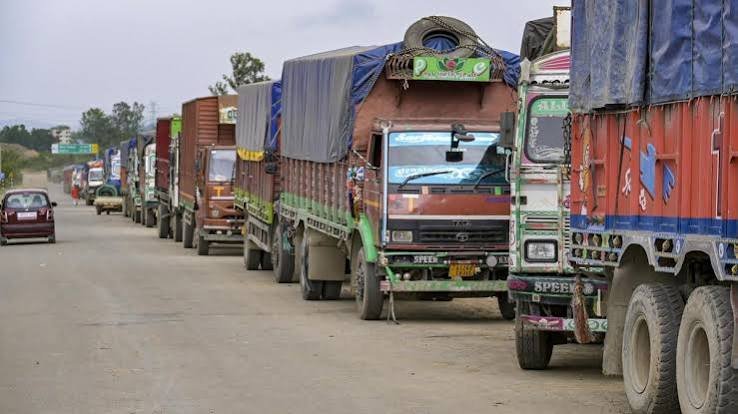
From 1 am on Wednesday, the Naga apex body stepped up its blockade of four critical road corridors, stopping goods-laden vehicles and challenging the Manipur government’s authority to keep the state’s lifelines open.
The UNC says its action now covers NH-2, NH-37, NH-102A and NH-202 — routes vital for bringing fuel, food, medicines and other supplies into different parts of the state.
The escalation came only days after the government warned that highway blockades would attract criminal action.
The message from the UNC, however, was equally blunt: the blockade will continue until its demands are addressed.
Government warning ignored
The confrontation follows the UNC’s Emergency Presidential Council meeting in Ukhrul on September 2, where the organisation reviewed what it described as the government’s failure to deliver justice over the alleged abduction and killing of Naga civilians.
In a statement issued Tuesday, the UNC alleged that 18 Naga civilians were abducted from Leilon Vaiphei on May 13. It said six were subsequently killed and alleged that their bodies were mutilated and dismembered.
The allegations are at the centre of the UNC’s agitation and have not, by themselves, established criminal responsibility.
The council has demanded immediate action against those it holds responsible and has called for the removal of Deputy Chief Minister Nemcha Kipgen.
It has also said essential services — including medical supplies, power, telecommunications, water and media movement — will be exempt from the blockade.
But the exemption may do little to prevent the wider economic impact if the shutdown continues.
Four highways, one high-stakes confrontation
The government’s warning came in a Home Department notification issued in the name of the Governor.
The administration prohibited blockades and other obstructions on national highways, state highways and public roads, citing reports of bandhs, forcible restrictions on movement and disruption of essential commodities.
It warned that offenders could face prosecution under several laws.
The National Highways Act, 1956, provides for imprisonment of up to five years, a fine, or both for acts that render a national highway impassable or less safe for travel or transportation.
The government also cited the Prevention of Damage to Public Property Act, the Motor Vehicles Act, the Bharatiya Nagarik Suraksha Sanhita and the Bharatiya Nyaya Sanhita.
District administrations and police have been ordered to ensure uninterrupted movement along the highways and initiate legal action against violators.
The UNC has now effectively called the government’s bluff.
READ: Balaghat Tragedy: Who Cares for Tribal Lives in India?
From protest to indefinite shutdown
The present confrontation has been building for months.
The UNC launched its economic blockade on May 17 after issuing an ultimatum over the alleged abduction of 18 Naga civilians. Following the recovery of six bodies, the agitation was escalated into an indefinite highway blockade.
The issue has also created political pressure within the government.
Nine Naga legislators stayed away from the final sitting of the Assembly session on September 7, protesting what they described as the lack of progress in the case and demanding the suspension or removal of Nemcha Kipgen pending a thorough investigation.
The UNC has four principal demands.
It wants the Suspension of Operations agreement with Kuki militant groups scrapped and those allegedly involved in the abduction of the Naga civilians arrested and prosecuted.
It has also demanded action over the alleged killing of Wilson Thanga Chiru at Joujangtek on May 13.
The council wants the arrest and prosecution of Lalboi Vaiphei, whom it identifies as the chief of Leilon Vaiphei village, along with others it alleges were involved in the abduction.
The UNC has further demanded that the Kuki National Front–President (KNF-P) be declared a terrorist organisation.
Its final demand is the removal of Nemcha Kipgen. The UNC has alleged that her husband, Semtinthang alias Thangboi Kipgen, is the KNF-P president and argues that her continuation in the government raises questions over the handling of the security situation.
These remain allegations and political demands made by the UNC and do not establish criminal liability without investigation and due process.
Manipur’s supply lines at risk
The stakes are high.
NH-2 is the principal Imphal-Dimapur route. NH-37 connects Imphal with Jiribam and onward towards Silchar, while NH-102A and NH-202 serve important routes in the hill districts.
These highways are not merely transport routes. They are Manipur’s supply arteries.
A prolonged blockade can squeeze the movement of fuel, food, medicines and other essential commodities, potentially pushing up prices and aggravating shortages.
NH-2 also carries particular significance because Imphal-Guwahati public transport services had resumed in August after remaining disrupted for more than three years.
Any renewed obstruction could therefore hit ordinary residents who have already endured prolonged shortages and restrictions during the ethnic conflict.
Who blinks first?
The confrontation has now produced a stark stand-off.
The government says blockades are illegal and threatens prosecution. The UNC says it will intensify the blockade unless its demands are met.
That leaves the administration facing a difficult choice.
Allowing the blockade to continue risks undermining the government’s authority and disrupting vital supply lines. A forceful attempt to reopen the highways, meanwhile, could trigger a fresh confrontation with Naga civil society at a time when Manipur remains deeply divided.
Few weeks back, a Dy CM of Manipur gave a strong statement claiming “National Highways are Nobody’s Property” in the presence of the Chief Minister of the state.
And, here we are- Economic Blockade follows…! @rashtrapatibhvn @INCIndia @INCManipur pic.twitter.com/bktd3XCbzg
— Dr. Lamtinthang Haokip (@DrLamtinthangHk) September 8, 2026
The UNC’s action also exposes a larger problem: competing communities are increasingly using roads, political pressure and shutdowns to force the state to respond to grievances that they believe have gone unanswered.
For the government, this is now a test of authority.
For the UNC, it is a test of whether sustained pressure can force action.
For ordinary Manipuris, it could become another battle fought over the roads they depend on to survive.
After more than three years of ethnic conflict, Manipur’s highways have once again become a battleground — this time between an increasingly defiant Naga leadership and a government determined to show that its writ still runs across the state.