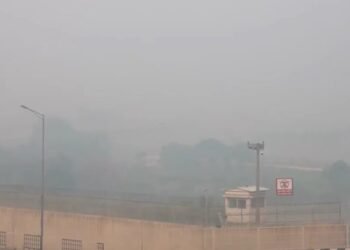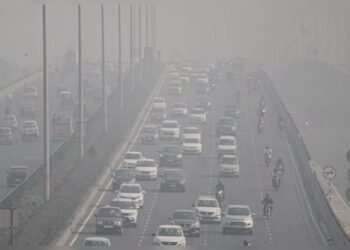


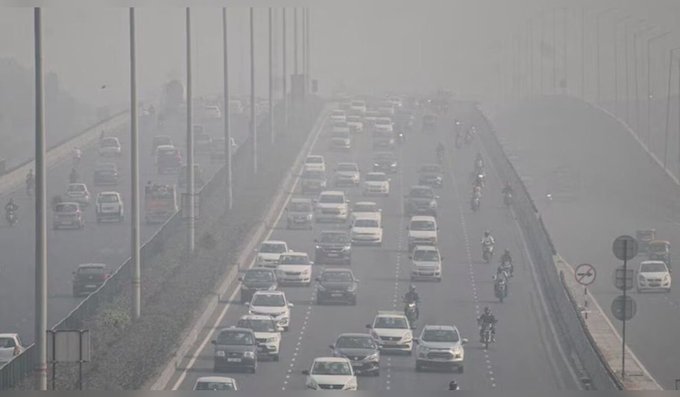
A day after Diwali, India accounted for 99 of the world’s 100 most polluted cities, according to AQI.in. Punjab’s Bathinda led the global rankings with a hazardous AQI of 816, followed closely by Faridkot at 804, while New Delhi ranked fifth at 635.
PC Bureau
November 9: India is home to 99 of the world’s 100 most polluted cities, according to real-time rankings by air quality monitoring platform AQI.in. On Monday morning (9 November 2026), thick smoke from Diwali firecrackers mixed with widespread farm (stubble) fires blanketed large parts of north India, pushing air quality into the hazardous range across the region.
At around 8:30 am, Bathinda in Punjab topped the global list with an Air Quality Index (AQI) of 816. Faridkot (also in Punjab) followed closely at 804. Rewari in Haryana ranked third with 696, Sri Ganganagar in Rajasthan fourth at 689, and New Delhi fifth with 635. Thus India acquired the notorious tag of world’s one of the most polluteed countries.
Reply to the Fraud Government
👉🏼At least pretend to think scientifically when discussing pollution data.
👉🏼Even if your Punjab theory is believed, smoke takes 2-3 days to travel from Punjab to Delhi. Stubble burnt on Diwali night in Punjab cannot reach Delhi in 10 minutes.
👉🏼Have some shame and stop committing fraud with Delhi’s AQI data.
👉🏼People can get very sick and even die because of your pollution data manipulation.
— Saurabh Bharadwaj (@Saurabh_MLAgk) November 9, 2026
Lahore in Pakistan was the only non-Indian city in the top ranks, placing 15th with an AQI of 466.
Top 20 Most Polluted Cities in India (AQI.in rankings, morning of 9 November 2026)
AQI.in classified the air quality in all 20 cities as “hazardous.”
Punjab and Haryana dominated the list, together accounting for 10 of the top 20 cities:
- Punjab: Bathinda, Faridkot, Patiala, Amritsar, Ludhiana
- Haryana: Rewari, Sirsa, Hisar, Bhiwani, Faridabad
Other states also featured prominently, including Madhya Pradesh (Bhopal, Sagar), Uttar Pradesh (Prayagraj, Gorakhpur, Ghazipur, Lucknow), Rajasthan, and Bihar.
The sharp spike in pollution index across India came a day after Diwali celebrations on 8 November, when firecracker emissions combined with ongoing stubble burning in the agricultural belt of Punjab and Haryana. Calm weather conditions trapped the pollutants close to the ground, creating a dense, choking smog across northern India.
READ: Delhi AQI Blackout on Diwali Night: Stations Go Silent as Pollution Hits 1,000