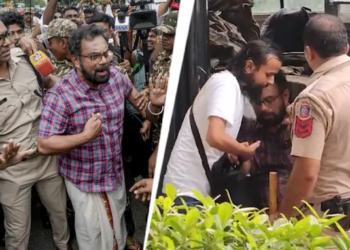
According to concerned civil society groups, intelligence inputs and field reports suggest unusual movement and possible convergence of armed elements in and around multiple villages in Ukhrul. These developments have raised serious alarm about the safety of civilian populations, particularly in vulnerable Kuki-Zo settlements.
BY PC Bureau
April 25, 2026: In a deeply alarming escalation of Manipur’s protracted ethnic conflict, two powerful Kuki organisations — the Kuki CSO Working Committee, Ukhrul, and the apex Kuki Inpi Manipur (KIM) — have issued simultaneous warnings of a coordinated militant build-up involving Meitei Arambai Tenggol fighters and Tangkhul armed elements in Ukhrul district. The reports point to an organised convergence that could rapidly spiral into large-scale violence targeting Kuki-Zo civilian populations.
Direct Warnings from Kuki CSO Working Committee Report
The Kuki CSO Working Committee’s official letter (Ref: WC/PR38/04/26), issued today from their office in Zalengbung, Ukhrul, pulls no punches. It states:
“The Kuki CSO Working Committee, Ukhrul, expresses grave concern over credible information indicating the presence of over 50 Meitei Arambai Tenggol militants stationed in Sikibung, operating in coordination with Tangkhul militant elements.
This development is deeply alarming. The concentration of armed cadres from different groups at a single location points to an organised and coordinated militant arrangement, which poses a direct threat to civilian safety and stability in the district.”
The committee further reveals that multiple villages in the district are being used as bases for joint Tangkhul-Meitei militant activity, specifically naming:
Sareikhong, T.M. Kasom, Leingangching, Sikibung, Thoyee, and Sinakeithel.
Another hard-hitting paragraph from the report reads:
“The Committee is shocked by the scale and openness of these developments. The pattern that is emerging indicates a structured effort that cannot be dismissed as isolated or incidental. The convergence of militant elements across communities, coupled with the absence of effective intervention, has created a volatile situation on the ground.”
READ: Kuki Ambush or Naga Attack? Police Records and Naga Contradictions Clear the Air
READ: Probe Pressure, Political Shift: Mittal the Latest Example
Alarming report from Kuki CSO WC, Ukhrul, stating that over 50 members of the Meitei Arambai Tenggol are currently stationed in Sikibung. Due to elections, many central forces have been withdrawn from Manipur; hence, the Arambais and Tangkhuls are reportedly planning to launch… https://t.co/8LSTJrtkoY pic.twitter.com/ZttHmoc8ta
— Min Songkip (@minkukizo) April 25, 2026
Fresh Assault on Zalengbung
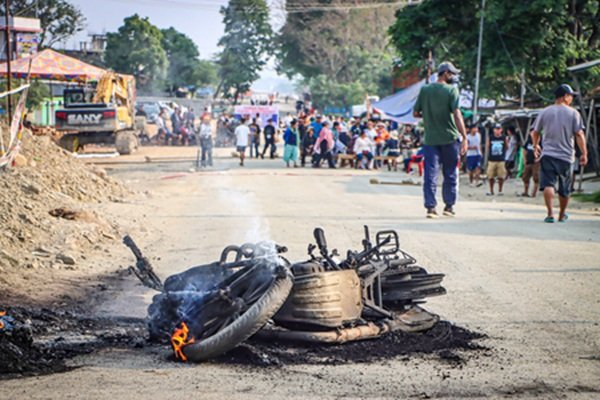
Compounding the crisis, Zalengbung village — a Kuki settlement in Ukhrul — reportedly endured a prolonged armed assault lasting over 13 hours on the same day these alerts were issued. This attack underscores the immediacy of the danger and suggests that the reported militant build-up may already be translating into active operations against civilian areas.
Serious Allegations of Police Complicity
Both organisations have levelled a grave charge: a senior officer in the Manipur Police is suspected of leaking sensitive intelligence about vulnerable Kuki villages to Tangkhul militant elements. The CSO Working Committee describes this as a potential “grave breach of official duty” that could facilitate targeted attacks on civilian settlements. They have demanded an independent, impartial inquiry and strict punitive action.
The committee also highlights the continued operation of unauthorised militant camps and raises “fundamental questions regarding the prevailing security framework in the district.”
However, The Power Corridors has not independently verified these allegations.
Why This Could Become a Massacre
If true, the alleged convergence of Meitei Arambai Tenggol with Tangkhul/Naga armed groups in the hills creates a dangerous new axis. Ukhrul, overwhelmingly Tangkhul Naga-dominated, has seen recurring friction with nearby Kuki villages. Past patterns in Manipur show that such coordinated concentrations, combined with intelligence leaks and absent law enforcement, frequently precede targeted village attacks, destruction, displacement, and mass violence.
Key red flags include:
- Use of multiple Kuki villages as launchpads for joint operations.
- Open presence of unauthorised camps with no apparent crackdown.
- Sophisticated coordination across previously rival ethnic lines.
- Timing amid fragile peace-building efforts.
The absence of decisive intervention is creating a permissive environment for escalation. The history of the Manipur conflict demonstrates that delayed responses to early warnings have repeatedly led to tragic loss of life.
Urgent Appeal for Government Intervention
The Kuki Inpi and Kuki CSO Working Committee have jointly called upon the Government of India and the Manipur State Government to act immediately and decisively to prevent what could rapidly descend into a massacre of Kuki-Zo civilians:
- Dismantle all unauthorised militant camps in Ukhrul district without delay.
- Disperse and neutralise all armed concentrations involving Meitei and Tangkhul elements.
- Enforce strict law and order and secure vulnerable Kuki villages.
- Launch an independent probe into the alleged intelligence leak by a senior police officer, with exemplary punishment.
- Deploy additional central forces if required to restore deterrence and protect civilians.
- Ensure safe rehabilitation of displaced persons and prevent further targeting.
The situation in Ukhrul is a ticking time bomb with clear potential for ethnic massacre if left unchecked. As the Kuki CSO Working Committee warns, any delay will only aggravate the already fragile security environment, and the government will be held “solely accountable for the consequences of any failure to act.”
Immediate, firm intervention from New Delhi is not optional — it is an urgent national imperative to prevent another tragic chapter in Manipur’s unending ethnic crisis.