BY PC Bureau
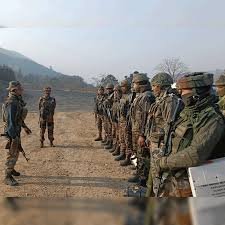
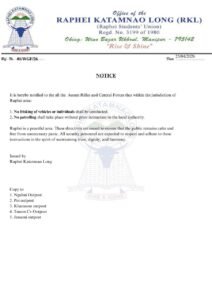
April 25, 2026 — In a significant and controversial development, the Raphei Katamnao Long (RKL), the students’ union of the Tangkhul Nagas, has issued a formal “notice” directing Assam Rifles and Central Armed Police Forces to halt routine security operations in the Raphei area of Ukhrul district, Manipur.
The notice, dated April 25, 2026, explicitly prohibits “frisking of vehicles or individuals” and bars any patrolling without “prior intimation to the local authority.” It claims that Raphei is a “peaceful area” and urges security personnel to show “respect” by adhering to these conditions in order to avoid what it describes as “unnecessary panic.”
However, the directive has triggered sharp criticism, with observers describing it as an extraordinary attempt by a student body to impose operational restrictions on India’s security forces. The Assam Rifles and Central Armed Police Forces are deployed in the region specifically to maintain law and order in an area long affected by insurgency-related activity, extortion networks, and periodic ethnic tensions.
Critics argue that the notice reflects a deeply problematic assertion of parallel authority, effectively seeking to regulate the movement and functioning of security personnel in sovereign Indian territory. They point out that such directives undermine the operational freedom required for counter-insurgency and anti-extortion missions.
READ: Iran Delegation Deaprts Before US Envoys Land in Pakistan, Derailing Talks Prospects
Security experts further note that prior intimation of patrols could compromise operational effectiveness, allowing individuals involved in illegal activities time to evade detection, conceal arms, or disperse illicit networks. Manipur’s hill districts, including parts of Ukhrul, have historically witnessed such challenges.
The timing of the notice has also drawn attention, coming amid ongoing instability in the state. While Manipur continues to grapple with ethnic tensions and law-and-order concerns, critics say such unilateral directives risk complicating security management on the ground.
The incident has prompted calls for a measured response from authorities, with some urging the state and central governments to reaffirm that security operations cannot be subjected to conditions imposed by any non-state or civil body, including student organisations.
Civil society voices have also stressed the need for responsible engagement rather than confrontation, warning that escalation between local groups and security forces could further strain an already fragile environment.
India’s security forces, officials note, operate strictly under constitutional and legal frameworks, and their deployment and procedures cannot be altered through localised “notices” issued by community or student bodies.
The development underscores the continuing sensitivity of governance and security dynamics in Manipur’s hill districts, where trust-building between communities and security agencies remains a critical challenge.