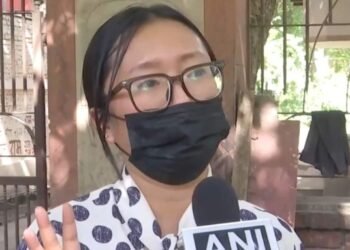
Major tribal bodies, including KOHUR, KIM, KZC, COTU, and the Kuki-Zo Women’s Forum, have demanded high-level probe, crackdown on NSCN (I-M) camps, and enhanced protection for Kuki-Zo villages.
BY PC Bureau
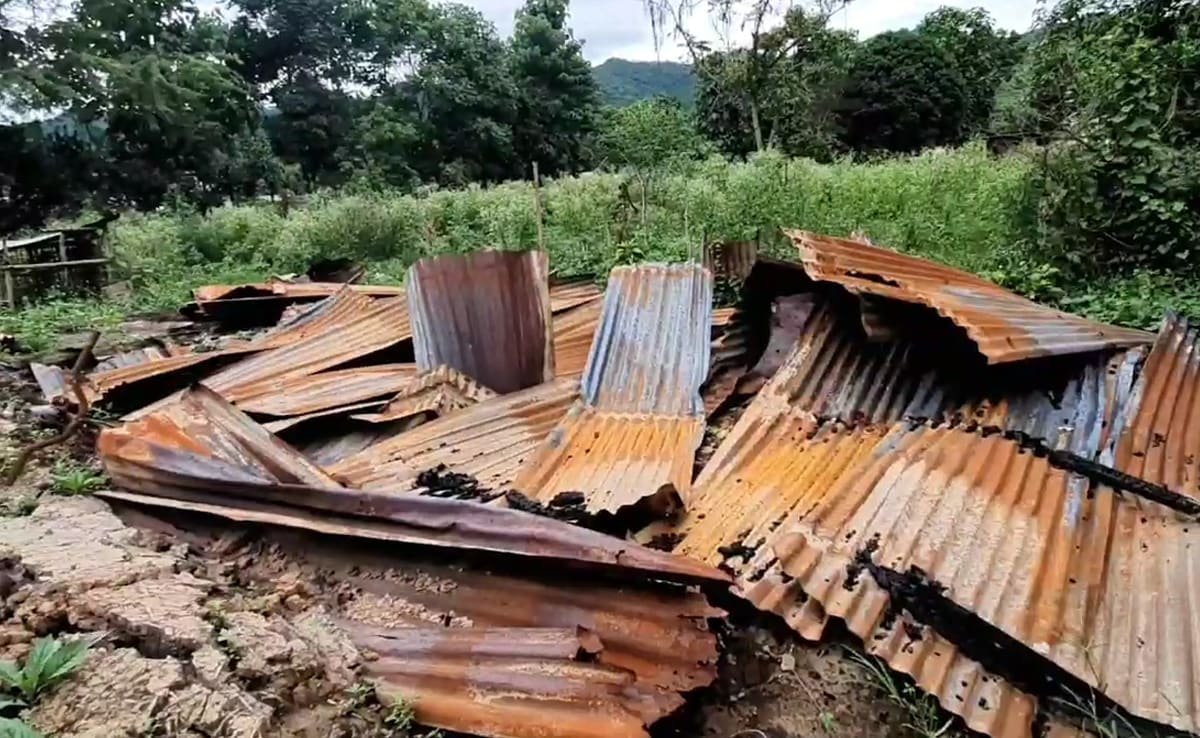
June 5, 2026: Three innocent Kuki-Zo civilians were killed and seven homes set ablaze in a pre-dawn armed attack on Loibol Khullen village in Kangpokpi district early today, prompting sharp condemnation from major Kuki civil society bodies, who have accused the NSCN-IM and its proxy, the ZUF (Kamson faction), of orchestrating the assault.
The victims have been identified as Mr. Letkhongam Haokip, his wife Mrs. Tinmary Haokip, and Mr. Jangminlal Haokip. According to statements issued by the Kuki Organisation for Human Rights Trust (KOHUR), Kuki-Zo Council, Kuki Inpi Manipur (KIM), and the Kuki-Zo Women’s Forum (Delhi & NCR), heavily armed assailants descended on the village around 4:00 AM while residents were asleep, gunning down the victims in their homes before torching houses and destroying civilian property.
All five organisations have emphasised that the 1997 Indo-Naga Ceasefire Agreement does not extend to Manipur, rendering every NSCN-IM camp in the state illegal and its cadres fully liable under ordinary criminal law.
Kuki Organisation for Human Rights Trust
KOHUR described the incident as “calculated savagery” and the latest episode in what it called a “sustained campaign of terror” by NSCN-IM and its proxies against Kuki-Zo villages in the hill districts. In a detailed press release, the organisation listed a series of earlier attacks in 2026:
• 26 January: Arson at K. Songlung village in Kangpokpi, claimed by ZUF.
• February: Escalated violence at Litan Sareikhong in Ukhrul, with homes burnt and bunkers erected.
• 13 March: Abduction and murder of two Kuki-Zo labourers (Thenkhogin Baite and Thangboimang Lunkim) in Ukhrul; a third man wounded.
• 24 April: Pre-dawn attack on Mulam Kuki village in Ukhrul, killing two young volunteers and burning at least 15 houses.
• 13 May: Ambush on a convoy of Thadou Baptist Association clergy between Kotzim and Kotlen in Kangpokpi, killing three ordained ministers — Rev. Dr. Vumthang Sitlhou, Rev. Kaigoulun Lhouvum, and Pastor Paogoulen Sitlhou.
• 30 May: Arson at Kharam Vaiphei village in Kangpokpi.
A key point repeatedly stressed by KOHUR is the legal status of the NSCN-IM ceasefire. The organisation noted that the 1997 Ceasefire Agreement between the Government of India and NSCN-IM is territorially limited to Nagaland. The 2001 attempt to extend it “without territorial limit” was withdrawn following protests in Manipur. KOHUR asserts that every NSCN-IM camp in Manipur is therefore illegal, and all acts of violence by its cadres in the state are ordinary criminal offences with no legal protection.
KOHUR emphasised that the Loibol Khullen attack fits an established pattern of targeting soft civilian targets along the fringes of the hill districts.
READ: The SIR Exercise in Manipur: A Risky Path to Deeper Division and Disenfranchisement
KUKI-ZO COUNCIL
🚨 COTU STRONGLY CONDEMNS the barbaric attack by NSCN-IM & ZUF (Kamsom) militants on Loibol village, Kangpokpi at 4 AM today.
3 innocent Kuki-Zo civilians, including a woman, brutally killed & many houses burnt down in a clear provocation to restart the 1990 Kuki-Naga conflict.… https://t.co/7k62WdcsLK pic.twitter.com/AEQSk722pl
— Min (@minkukizo) June 5, 2026
The Kuki-Zo Council (KZC) also strongly condemned the attack, linking it to a pattern that includes the killing of two young boys at Thawai Kuki village in Ukhrul and the earlier murder of three pastors. KZC appealed directly to Indian security forces for protection while reiterating the community’s long-standing demand for a separate administration.
“The continued atrocities against the Kuki-Zo people only reaffirm the legitimacy of our demand,” the council stated, urging the Government of India to expedite a political solution through dialogue with the Ministry of Home Affairs.
Committee on Tribal Unity
In an even sharper condemnation, the Committee on Tribal Unity (COTU), Sadar Hills, Kangpokpi, described the Loibol Khullen assault as “a clear and well-orchestrated battle plan at the highest level” designed to provoke the Kuki-Zo community and rekindle the 1990 Kuki-Naga conflict. COTU connected the incident to the recent Senapati hostage crisis and the 13 May killing of the three church leaders, accusing certain Naga groups of deliberately sabotaging peace efforts.
The organisation extended deepest condolences to the bereaved families and demanded that the Government of India clamp down on “proscribed armed Naga militants” and bring the perpetrators to justice within 24 hours — failing which, it warned, “the village volunteers of Kuki-Zo will take preemptive strikes in order to defend our land.”
Kuki Inpi Manipur (KIM)
Kuki Inpi Manipur (KIM), the apex body of the Kuki tribes, issued a separate press statement vehemently condemning the “barbaric attack” and demanding an immediate investigation, apprehension of perpetrators, and enhanced security for vulnerable villages.
KIM extended its condolences to the grieving families and expressed full solidarity with the people of Loibol Khullen. It also appealed to the Government of India and security agencies to immediately launch a thorough investigation, arrest the perpetrators, and take urgent steps to protect vulnerable villages from further attacks. The organisation made it clear that it “shall not be held responsible for any consequences arising from this heinous crime against our people.”
Kuki-Zo Women’s Forum (Delhi & NCR)
The Kuki-Zo Women’s Forum (Delhi & NCR) went further in its condemnation, describing the massacre as “demonic barbarism” and a “grotesque violation of every norm of humanity.”
The statement sharply criticised both the Government of India and the Government of Manipur for their “criminal negligence” and failure to act despite being aware of months of arms training by Naga groups on social media. It demanded immediate accountability, concrete action against the perpetrators, and urgent protection for vulnerable Kuki-Zo villages.
“We will not be silent. We will not forget. Justice must be delivered,” the Forum declared, extending solidarity to the grieving families and the entire Kuki-Zo community.
The statement was issued by Merlin Haokip, Convenor, Kuki-Zo Women’s Forum.
COMMON DEMANDs:
- Launch an immediate comprehensive crackdown on all illegal NSCN-IM camps in Manipur’s hill districts and disarm the cadres.
- Order a time-bound National Investigation Agency (NIA) probe into the Loibol Khullen massacre, the 13 May clergy killings, and the entire chain of 2026 attacks, tracing command responsibility.
- Apprehend and prosecute the perpetrators to end the prevailing culture of impunity.
- Provide permanent deployment of Central Armed Police Forces to protect vulnerable Kuki-Zo villages and refrain from sudden withdrawals that have preceded previous attacks.
- Ensure immediate relief, compensation, and rehabilitation for the affected families.
KOHUR warned that continued state inaction would only “embolden those who kill with impunity” and could push the region toward a far graver catastrophe. As of the evening of 5 June 2026, no official statement has been issued by the Manipur government or security agencies confirming the identity of the attackers or detailing any immediate response. The three Kuki organisations have expressed deep grief to the bereaved families of Loibol Khullen and pledged solidarity with the wider Kuki-Zo community.
Common Demands
Collectively, the Kuki bodies have called for:
• An immediate comprehensive crackdown on all illegal NSCN-IM camps in Manipur’s hill districts;
• A time-bound National Investigation Agency (NIA) probe into the Loibol Khullen massacre and the entire chain of 2026 attacks;
• Apprehension and prosecution of perpetrators to end the culture of impunity;
• Permanent deployment of Central Armed Police Forces to protect vulnerable Kuki-Zo villages;
• Immediate relief, compensation and rehabilitation for the affected families.
As night falls on 5 June 2026, no official confirmation or detailed response has yet been issued by the Manipur government or central security agencies. The unified voice of Kuki civil society organisations reflects deep grief, mounting anger, and a clear warning that continued inaction could push the region toward far more serious consequences.