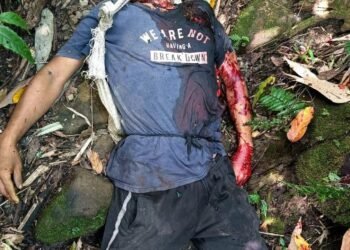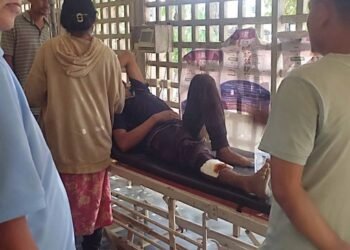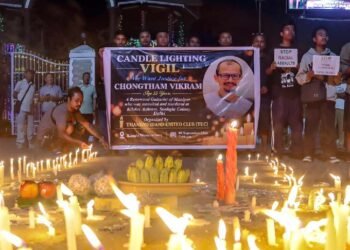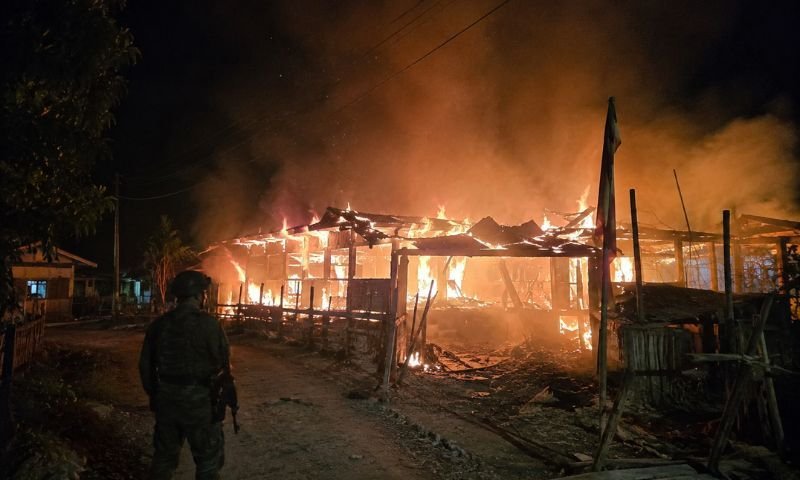
COCOMI has asserted that the Kamjong district attacks were not fabricated or communal in nature but involved armed groups allegedly operating from across the Indo-Myanmar border, citing local testimonies and official references.
BY PC Bureau
May 11, 2026: The Coordination Committee on Manipur Integrity (COCOMI) has strongly rejected attempts to dismiss th recent attacks in Kamjong district as “imaginary narratives” or “politically manufactured claims,” asserting that the incidents were direct acts of armed aggression carried out by heavily armed groups operating from across the Indo-Myanmar border.
In a strongly worded statement issued on Monday, COCOMI alleged that armed cadres linked to the KNA(Burma) and allied groups were involved in the attacks. The committee said that local representatives, including the sitting MLA of the affected region, had openly acknowledged the role of the cross-border militant elements.
“Any attempt to dilute or deny the seriousness of the situation only exposes the selective blindness and political agenda of organizations trying to shield such activities under the guise of activism,” the statement said.
READ: “We’ll Never Bow”: Iran Defies Trump’s Warning
The committee further referred to a statement issued by the PRO and Spokesperson of the Ministry of Defence regarding a rescue operation involving a Naga woman villager from Namlee village. According to COCOMI, the operation also led to the apprehension of an alleged KNA(B) operative identified as Lal Thag John, 38, from Churachandpur district along with weapons and ammunition before he was handed over to local police.
COCOMI claimed that the Defence Ministry statement acknowledged the presence of cross-border “narco-terrorist groups” and indicated that several attacks and hostilities were allegedly carried out by the KNA(B) faction operating from Myanmar.
The committee said the development corroborated testimonies from villagers, civil society groups, and elected representatives who described the Kamjong incident not as a communal clash but as an “organized act of cross-border armed aggression.”
Launching a sharp attack on the Kuki Organisation for Human Rights Trust (KOHUR), COCOMI accused the group of attempting to “distort or selectively suppress facts” and alleged that it had consistently tried to shield violent elements under the pretext of human rights advocacy.
“Raising alarm against cross-border armed aggression cannot be equated with hatred against any community. The issue at hand is national security, territorial integrity, and the protection of civilians from foreign-origin armed groups,” the statement added.
COCOMI also accused KOHUR and similar organizations of maintaining “selective silence” over several violent incidents in the state, including the Jiribam killings, the Tronglaobi attack, and the recent incident at T. Kamson in Ukhrul district in which two Tangkhul civilians lost their lives.
The committee said human rights “cannot be conditional, selective, or politically convenient,” adding that the people of Manipur deserved “peace, security, and truth, not propaganda designed to confuse realities and protect violent actors operating under political or ethnic cover.”
Calling for stronger security measures, COCOMI urged authorities to enhance border security along the Indo-Myanmar frontier, neutralize foreign-origin armed incursions, protect and rehabilitate affected civilians, and initiate transparent investigations into alleged cross-border militant activities threatening India’s sovereignty.
“The truth cannot be erased merely through press statements,” the organization stated, adding that silence in the face of violence would also be judged by history.