Sacred Unions and Other Stories – Tales from Purvanchals recreate a pre-digital India shaped by cinema halls, letters, river crossings, and railway journeys, where emotional bonds are built slowly and tested by caste, class, migration, and social pressure.
BY Navin Upadhyay
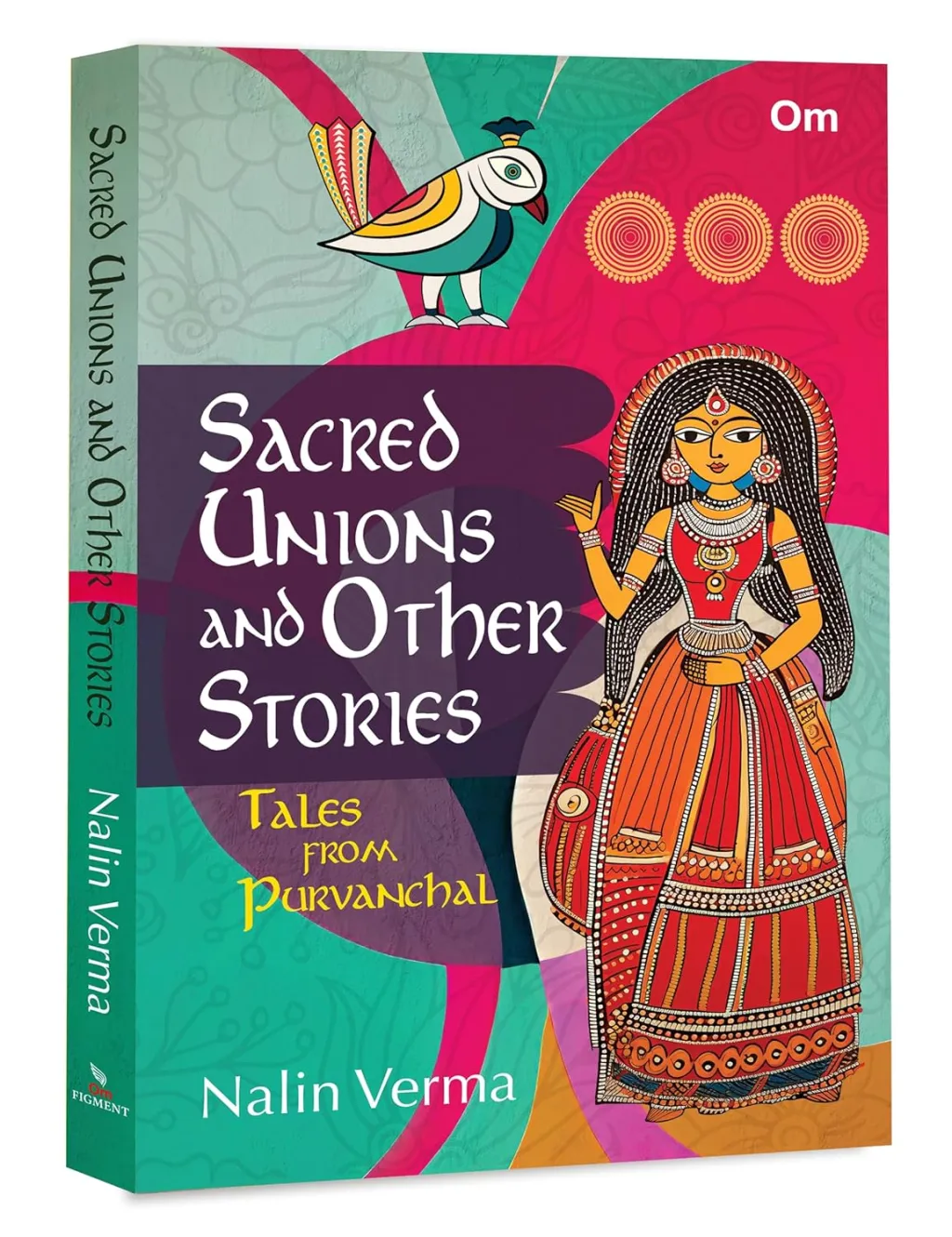
May 31, 2026: Sacred Unions and Other Stories: Tales from Purvanchal by Sacred Unions and Other Stories: Tales from Purvanchal is a deeply textured and emotionally resonant collection of five interconnected yet standalone stories that draw from the cultural and social fabric of rural Purvanchal—the belt spanning parts of eastern Uttar Pradesh and north-western Bihar.
Written by veteran journalist and academic Nalin Verma, the book reflects a lived intimacy with the Gangetic plains, capturing not just landscapes but the emotional geography of villages where love, caste, faith, migration, and aspiration constantly intersect. Across its roughly 180 pages, the collection builds a vivid world where ordinary lives carry extraordinary emotional weight.
Set primarily between the late 1960s and early 1990s, the stories recreate a pre-digital India shaped by letters, cinema halls, railway journeys, village fairs, and long silences. Films like Mughal-e-Azam, Sholay, and Bobby are not just cultural references but emotional frameworks through which characters understand love, rebellion, and destiny. In this world, waiting itself becomes a form of communication, and separation a recurring condition of life.
At the heart of the collection is its strong focus on human relationships—especially love in its many forms: romantic, familial, forbidden, sacrificed, and unspoken. In “Kallu and Gulli,” the opening story, young lovers from impoverished backgrounds are separated by a corrupt local authority figure, a daroga, forcing the protagonist into exile and survival. The narrative expands into a layered tale of displacement and eventual justice, where coincidence, labour, and moral reckoning converge in a satisfying emotional resolution. The story stands out for its vivid depiction of village life, including its rhythms, animals, social hierarchies, and quiet tensions.
Other stories deepen this emotional landscape. “Lost and Found” revolves around Rahman Kaka, a beloved village elder whose death becomes a moral mirror for his estranged son, forcing a confrontation with pride, regret, and inherited values. The village itself becomes an active participant in grief and remembrance, blurring the line between individual and collective memory.
READ: INDIA Block Rallies Behind Mamata Banerjee After Assault on Abhisek
“Rajkumar’s Heartthrob” explores a tender and restrained romance between an educated boy from an upper social background and Sundari, an illiterate village girl. Their relationship, shaped by inequality and emotional sincerity, remains unresolved, reflecting the uncertainties of class mobility and social acceptance. Even here, supporting characters—most notably an elephant with symbolic sensitivity—add unexpected layers of emotional depth.
“The Flower Girl” shifts focus to fleeting youthful love set against the backdrop of the Ganga’s landscapes, while also reflecting on the costs of development and changing rural realities. The final story, “Sacred Unions,” brings together the thematic core of the collection through the lives of two women, Shakuntala and Ahilya, who raise their children alone with quiet resilience. Their eventual reunion and the symbolic union of their children redefine the idea of “sacred” not as ritual or convention, but as endurance, dignity, and emotional truth.
A defining strength of the book is its portrayal of women. Rather than being passive figures, they emerge as emotionally intelligent, grounded, and resilient—often navigating patriarchal structures with wit and moral clarity rather than confrontation. Their strength is internal, shaped by survival and care rather than ideology.
Caste, class, religion, and migration operate throughout the stories not as abstract themes but as lived realities embedded in everyday interactions. Hindu and Muslim identities coexist naturally within the narrative world, reinforcing the social complexity of Purvanchal without reducing it to conflict alone. This subtle layering gives the collection its authenticity and depth, aligning it with the tradition of writers like Premchand and Phanishwar Nath Renu, while adding a contemporary psychological sensitivity.
Stylistically, Verma’s prose carries the cadence of oral storytelling. It is simple yet evocative, rooted in observation rather than ornamentation. Critics have noted that while some narrative arcs follow familiar structures or reach predictable resolutions, these limitations are outweighed by the emotional sincerity and cultural richness of the storytelling.
Ultimately, Sacred Unions and Other Stories functions not only as a literary work but also as a cultural archive of a vanishing rural world. It preserves a time when human relationships unfolded slowly, shaped by distance, memory, and endurance rather than instant communication. For contemporary readers, especially those distanced from rural India, the book offers a window into a world where longing had duration and love had consequence.
By the end of the collection, Nalin Verma emerges as a chronicler of emotional truth in the Hindi heartland—one who captures not just how people lived in Purvanchal, but how they felt, endured, and transformed within its shifting social landscape.