BY PC Bureau
May 10, 2026: “We will never bow to any enemy. Dialogue and negotiations must never be mistaken for surrender,” Iranian President Masoud Pezeshkian declared in a strongly worded post on X, as tensions between Tehran and Washington surged again despite weeks of diplomatic efforts to end the devastating Middle East war.
His remarks came after US President Donald Trump publicly rejected Iran’s latest proposal aimed at ending the conflict that has gripped the region for more than two months. Calling Tehran’s conditions “totally unacceptable,” Trump signalled that hopes for a breakthrough may be collapsing, increasing fears of another round of military escalation.
The US President, who has faced growing criticism at home over the prolonged conflict, insisted Iran had already suffered a major military setback and claimed Washington had successfully curbed Tehran’s nuclear ambitions — one of the central justifications for launching the war.
In a terse message posted on his Truth Social platform, Trump said: “I have just read the response from Iran’s so-called representatives. I don’t like it — TOTALLY UNACCEPTABLE!”
While Trump did not elaborate on the contents of Iran’s response, a report by The Wall Street Journal said Tehran had proposed partially diluting its stockpile of highly enriched uranium while transferring the remaining material to a third country under certain guarantees.
According to the report, Iran sought assurances — reportedly communicated through Pakistani mediators — that the uranium would be returned if the negotiations failed or if the United States withdrew from the agreement at a later stage.
Details of Iran’s response to the U.S. plan, which the US president called “unacceptable”:
Iran’s proposal, submitted in response to the US plan, emphasizes the fundamental rights of the Iranian nation.
Iran has rejected the US plan, which would have meant Tehran’s submission…
— Iran in India (@Iran_in_India) May 11, 2026
Trump avoided discussing those details publicly. Instead, he doubled down on military threats during an interview with journalist Sharyl Attkisson, saying the US was closely tracking Iran’s uranium reserves and would respond forcefully to any attempt to move them.
“We have it surveilled,” Trump said. “If anybody got near the place, we would know immediately — and we’ll blow them up.”
Highlighting American surveillance capabilities, he added that the US Space Force could identify anyone approaching the facilities “by name, address, even badge number.”
Tehran responded sharply, warning that any renewed American attack would trigger retaliation. Iranian state media also reported that the country had rejected Washington’s counteroffer because it effectively demanded surrender.
Iranian officials instead laid out a series of conditions, including compensation for war damages, the lifting of US sanctions, the return of frozen Iranian assets, and full Iranian control over the Strait of Hormuz — the strategic waterway through which a significant share of the world’s oil passes.
State broadcaster IRIB reported that the American proposal, delivered through Pakistani intermediaries, focused on halting the conflict across the region, particularly in Lebanon, where Israeli forces continue to battle the Iran-backed Hezbollah group.
The proposal also reportedly sought an extension of the Gulf ceasefire to create space for broader negotiations over Iran’s nuclear programme and regional security.
Even as diplomatic contacts continued quietly behind the scenes, Iranian leaders maintained a defiant public posture.
Pezeshkian repeated that negotiations would not come at the cost of national dignity or sovereignty.
Meanwhile, Iranian state media claimed the country’s new supreme leader, Mojtaba Khamenei, had issued “decisive directives” to military commanders for the continuation of operations against Iran’s enemies. Khamenei has not appeared publicly since the war began.
The deteriorating situation also drew intervention from Israeli Prime Minister Benjamin Netanyahu, who argued that the war could not end unless Iran’s nuclear infrastructure was dismantled completely.
READ: No Report of Foreign Hands in Naga Village Attacks: Manipur HM
Speaking in an interview on the CBS programme 60 Minutes, Netanyahu said Iran still possessed enriched uranium and operational enrichment facilities that needed to be removed.
“It’s not over,” he said. “There’s still nuclear material inside Iran, and the enrichment sites must be dismantled.”
Asked how that could be achieved, Netanyahu replied bluntly: “You go in and take it out.”
He also suggested that Trump shared a similarly hardline position regarding Iran’s nuclear programme.
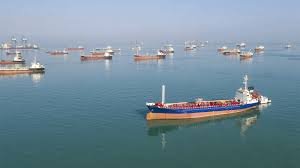
The crisis has already severely disrupted global trade and energy markets. Iran’s blockade of the Strait of Hormuz has pushed oil prices sharply higher and intensified fears of broader economic instability.
Tehran has reportedly begun imposing transit charges on vessels moving through the strait, while the US Navy has tightened restrictions around Iranian ports and shipping lanes.
Britain and France are now leading efforts to form an international maritime coalition aimed at securing the Strait of Hormuz once a ceasefire agreement is reached. The United Kingdom said defence ministers from more than 40 countries would participate in talks this week on plans to restore safe trade routes in the Gulf.
Iran, however, warned against any foreign naval deployment in the region.
Deputy Foreign Minister Kazem Gharibabadi said only Iran had the right to guarantee security in the strait and warned Britain and France of an “immediate and decisive response” if they attempted to intervene militarily.
French President Emmanuel Macron later clarified that Paris was not considering a military deployment to the Strait of Hormuz, saying any future initiative would instead involve a security arrangement coordinated with Tehran.