The latest round of US strikes targeted military installations and strategic infrastructure across Iran, while Tehran accused Washington of hitting civilian facilities and escalating the humanitarian crisis.
BY PC Bureau
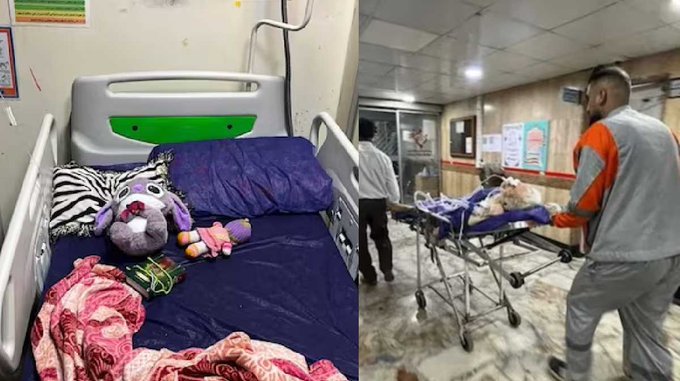
July 16: The US-Iran confrontation escalated dramatically on Wednesday as Iran claimed it had shot down an American MQ-9 Reaper drone over the southwestern city of Andimeshk, while fresh US airstrikes pounded military and strategic targets across the country. Among the sites reportedly hit was a children’s cancer hospital in Ahvaz, prompting condemnation from Tehran and raising fears over the growing humanitarian toll of the conflict.
According to Iran’s Islamic Revolutionary Guard Corps (IRGC), its air defence units successfully destroyed the “enemy” MQ-9 drone using a newly deployed air defence system. The claim came hours after waves of American strikes targeted multiple locations across Iran, including military facilities, ports and infrastructure.
Iranian state media reported that the Shahid Baghaei Hospital in Ahvaz was damaged during the overnight bombardment, severely affecting its pediatric oncology department. The hospital, which provides chemotherapy and specialised cancer treatment for children, was evacuated following the strike.
Explosions were reported in multiple locations including Qeshm Island, Bandar Abbas, Sirik, Chabahar, Konarak, Rask City, Khondab, Khorramabad and Bushehr, home to Iran’s only civilian nuclear power plant. Iranian officials said the US strikes also hit an army barracks, killing at least seven soldiers. Tehran claimed at least 35 people were killed and more than 300 injured in the latest wave of attacks.
Air defence systems were activated over Tehran as authorities responded to what they described as continuing aerial threats.
US Military Actions
US Central Command (CENTCOM) said the strikes targeted Iranian military assets and capabilities that posed a threat to commercial shipping through the Strait of Hormuz. Washington also announced the reimposition of a naval blockade on Iranian ports.
In one operation, a US aircraft fired Hellfire missiles into the smokestack of the Curacao-flagged oil tanker M/T Belma, which US officials alleged was attempting to breach the blockade and deliver cargo to Iran. CENTCOM said the vessel was disabled and prevented from reaching Iranian waters.
BREAKING: US missiles have struck a children’s cancer hospital in Ahvaz, southwestern Iran, with patients being evacuated minutes ago, per Fars.
This is the first US strike on an Iranian hospital in months, with additional strikes also causing damage to multiple residential… pic.twitter.com/GBTXy5TQiT
— The Hormuz Letter (@HormuzLetter) July 15, 2026
Iran’s Retaliation
Iran responded with a series of military actions across the region. The IRGC claimed it launched attacks targeting the US Fifth Fleet headquarters in Bahrain, where air raid sirens sounded as incoming projectiles were intercepted.
Jordan’s military said it intercepted and destroyed three missiles launched from Iranian territory, while Kurdish security forces in northern Iraq reported that the US-led coalition intercepted eight explosive drones approaching Erbil.
The IRGC also claimed its aerospace force successfully shot down an American MQ-9 Reaper drone over Andimeshk using an advanced indigenous air defence system.
READ: England Boss Tuchel Faces Backlash After World Cup Exit
Diplomatic and Regional Developments
Even as hostilities intensified, the US State Department approved potential new arms sales to regional allies. The proposed packages include a $1.96 billion precision-guided weapons deal for Saudi Arabia and a $484 million sustainment package for Kuwait’s C-17 military transport fleet. Both proposals are subject to congressional approval.
President Donald Trump said Iran appeared willing to negotiate but warned that Washington was prepared to intensify military operations if diplomacy failed.
“They don’t like what we’re doing, and they do want to settle,” Trump said during a defence summit. Later, in an interview with Fox News, he warned that “next week it gets really bad for them” unless Tehran returned to negotiations, mentioning critical infrastructure such as power plants and bridges as potential future targets.
Despite the escalating conflict, indirect negotiations mediated by third parties have not formally collapsed. Iran’s chief negotiator, Mohammad Bagher Ghalibaf, reiterated that any future agreement must provide concrete economic and political benefits for Tehran.
In what observers described as a possible confidence-building measure, Iran released American-Iranian citizen Dena Karari, who had been detained since 2024.
Strait of Hormuz Remains Flashpoint
The Strait of Hormuz remains at the centre of the conflict. Earlier in the confrontation, Iran imposed a blockade on the vital maritime corridor and has vowed to keep it closed until what it calls “US aggression” ends.
The renewed American naval blockade of Iranian ports has further disrupted shipping through one of the world’s busiest energy routes, pushing global oil prices higher and increasing concerns over international energy security.
Iranian officials accused Washington of effectively tearing up last month’s interim Islamabad understanding aimed at reducing tensions, warning that the region now faces one of its most dangerous security crises in decades.
The rapidly evolving conflict continues to heighten fears of a broader regional war with potentially far-reaching consequences for global energy markets, international trade and Middle East stability.