Sonam Wangchuk Loses Over 9 kg on 19th Day of Indefinite Fast; Doctors Warn of Possible Organ Damage if Hunger Strike Continues.
BY PC Bureau
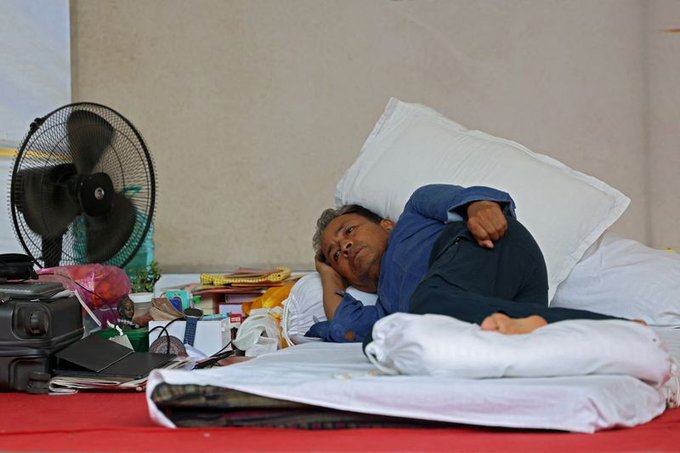
New Delhi: Climate activist and education reformer Sonam Wangchuk has lost more than 9 kilograms after completing 19 days of his indefinite hunger strike, prompting doctors to warn that he may soon enter a dangerous phase of starvation where prolonged nutritional deprivation could begin affecting vital organs.
A medical team monitoring Wangchuk said that while he remains mentally alert and clinically stable, his body has begun showing clear signs of prolonged starvation, necessitating continuous medical surveillance.
Dr Satish Lamba, who is overseeing Wangchuk’s health, said the activist currently weighs 56.9 kg, down by more than nine kilograms since beginning the fast. His latest medical readings showed a blood sugar level of 80 mg/dL, pulse rate of 72 beats per minute, and blood pressure of 105/61 mmHg while lying down and 101/65 mmHg while sitting. Doctors said his hydration remains satisfactory and he continues to be fully conscious and mentally oriented.
However, physicians expressed growing concern over biochemical changes indicating that the body has exhausted much of its readily available energy reserves.
“We are seeing elevated uric acid levels, which indicate that the body has increasingly begun breaking down muscle tissue for energy,” Dr Lamba said. “This represents the second phase of prolonged starvation. If the fast continues, we could soon enter a third phase where essential organs may begin to suffer damage. At present, we are adopting a wait-and-watch approach with round-the-clock monitoring.”
READ:
VIDEO | Delhi: Dr. Satish Lamba, Senior General Physician, gives update on health of Sonam Wangchuk, who has been on a hunger strike at Jantar Mantar since 19 days.
He says, “Today, on the 19th day, I am presenting Sonam Wangchuk’s health bulletin. First, I will discuss the… pic.twitter.com/HXSrcv48VZ
— Press Trust of India (@PTI_News) July 16, 2026
Medical experts explained that starvation follows a predictable physiological progression.
During the first stage, which typically lasts one to three days, the body consumes stored glucose and glycogen in the liver and muscles to meet its energy requirements.
The second stage begins when these reserves are depleted. The body shifts to burning fat stores, producing ketone bodies as an alternative fuel, while simultaneously breaking down muscle proteins to supply amino acids needed for essential metabolic functions. This process often leads to rising uric acid levels, significant weight loss, muscle wasting, weakness and fatigue.
If starvation continues into the third stage, fat reserves become critically depleted and the body increasingly consumes proteins from vital organs, including the heart, liver, kidneys and immune system. This stage can lead to cardiac rhythm disturbances, impaired kidney and liver function, severe electrolyte imbalances, increased susceptibility to infections, cognitive impairment and, ultimately, multi-organ failure if nutrition is not restored.
Doctors noted that although Wangchuk has not yet reached this advanced stage, his continued fast significantly increases the risk of irreversible complications.
Despite repeated appeals from political leaders, supporters, civil society groups and legal interventions urging him to end the hunger strike, Wangchuk has remained steadfast, insisting that breaking his fast now would undermine the purpose of his protest.
“If I eat, what message will go?” Wangchuk said. “The message to the government will be that there is no need for accountability. Protesters sit and leave. That is not the message we want to send.”
READ: Iran Downs MQ-9 Drone; US Strike Damages Cancer Hospital
In a video message released on the 18th day of his fast, Wangchuk sought to reassure his supporters that medical examinations had not yet revealed any immediate life-threatening complications.
“My condition is not such that I will die in two or four days,” he said. “Many medical tests have been conducted and the results are quite normal for an 18-day fast. An ECG was also done and it is not bad. I can continue for many more days.”
The activist acknowledged experiencing increasing physical weakness and noticeable muscle loss but maintained that his heart and other major organs were functioning normally.
Rather than focusing solely on his personal health, Wangchuk appealed to supporters to channel their energies into the Cockroach Janta Party’s ‘Chalo Sansad’ march scheduled for July 20, coinciding with the opening day of Parliament’s Monsoon Session.
The march is intended to amplify demands for greater government accountability and renewed attention to environmental and governance issues that Wangchuk says lie at the heart of his protest.
As the hunger strike enters its third week, doctors continue to monitor his condition closely, warning that while his vital signs remain stable for now, the risks associated with prolonged fasting rise substantially with each passing day.