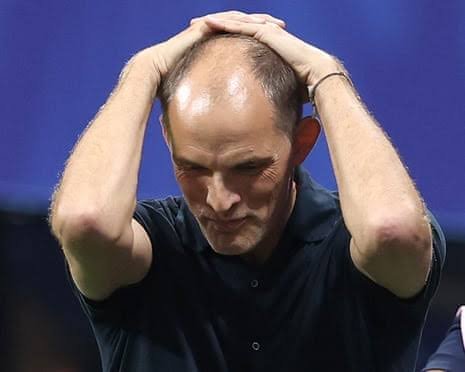
Tuchel’s decision to sit deep after Anthony Gordon’s opener has sparked fierce criticism, with England accused of throwing away a winning position through overly cautious tactics.
BY PC Bureau
July 16, 2026: England’s quest to end six decades of World Cup heartbreak ended in cruel fashion on Wednesday night as a timid tactical retreat by head coach Thomas Tuchel allowed Argentina to snatch a dramatic 2-1 victory in the closing moments of a pulsating FIFA World Cup semi-final.
For more than an hour, England looked destined to reach their first World Cup final since lifting the trophy in 1966. Organised, disciplined and dangerous on the counterattack, the Three Lions frustrated the reigning champions while creating the better opportunities. Anthony Gordon’s composed finish after a brilliant delivery from Morgan Rogers gave England a deserved lead and ignited dreams across the country that football’s most famous prize was finally within touching distance.
Instead, what followed will be remembered as one of England’s most painful tactical collapses on the biggest stage.
READ: US-Iran Conflict Escalates: 35 Killed in Fresh US Strikes
🚨Thomas Tuchel on England’s World Cup semi-final defeat to Argentina.
🗣️ “I have to say it because everyone watched the same match. The referee and VAR completely lost control of this game. In a World Cup semi-final, mistakes like these are unacceptable. You work four years for… pic.twitter.com/XNsPKw7Y0a
— SethOfficial (@UTD_Seth001) July 15, 2026
The turning point came not because Argentina suddenly discovered another gear, but because England voluntarily surrendered the initiative. Rather than continuing to press and attack, Tuchel opted for caution, withdrawing his side into a defensive shell with nearly 25 minutes still remaining.
The change in approach transformed the contest.
England abandoned the midfield, ceded possession and invited wave after wave of Argentine attacks. The five-man defensive line that was intended to protect a slender advantage instead pinned England deep inside their own half, leaving Harry Kane isolated and depriving the team of any meaningful attacking outlet.
Argentina, sensing hesitation, grew stronger with every passing minute.
The pressure finally told in the 85th minute. Lionel Messi, who had been carefully marshalled for much of the evening, found just enough space to influence the game. His clever involvement created an opening for Enzo Fernández, whose spectacular curling strike flew beyond Jordan Pickford to level the scores.
The equaliser felt inevitable by then.
England, once in complete control, suddenly looked rattled. Every clearance returned like a boomerang as Argentina dominated possession and territory. Pickford, who had produced a string of outstanding saves to preserve England’s lead, could do little to halt the momentum.
Then came the knockout blow.
Three minutes into stoppage time, Messi produced another moment of magic, floating an inch-perfect cross into the penalty area. Lautaro Martínez timed his run brilliantly and powered a header past Pickford, completing a remarkable Argentine comeback and sending the South American giants into yet another World Cup final.
For England, it was devastation.
The statistics reflected the dramatic swing in momentum. Argentina finished with almost twice England’s expected-goals tally and monopolised possession after Tuchel abandoned his side’s earlier proactive approach. England, who had looked compact, energetic and threatening before the tactical reshuffle, failed to register any meaningful attacking threat during the closing stages.
Much of the post-match criticism centred on Tuchel’s substitutions and tactical decisions.
The introduction of additional defenders, including Ezri Konsa and Dan Burn, signalled England’s intention to defend rather than compete for control of the match. The move effectively handed the midfield to Argentina, allowing Messi, Fernández and their teammates to dictate the tempo without resistance.
Attacking options such as Marcus Rashford and Ivan Toney were introduced only after Argentina had equalised, leaving many pundits questioning why England waited until crisis struck before attempting to regain the initiative.
Several football analysts described the tactical retreat as an act of excessive caution, arguing that England abandoned the very style that had earned them the lead. Rather than forcing Argentina to chase the game, England became passive spectators to their own downfall.
The contrast between the two managers could hardly have been sharper.
While Lionel Scaloni responded to adversity by introducing attacking players, increasing the tempo and committing bodies forward in search of an equaliser, Tuchel chose preservation over ambition. The Argentine coach gambled on victory and was rewarded. England’s manager gambled on survival and paid the ultimate price.
It was not a contest decided by superior talent alone.
For long periods, England matched the reigning champions stride for stride. Their defensive organisation frustrated Argentina, while Gordon, Rogers and Jude Bellingham consistently threatened on the break. Jordan Pickford delivered another outstanding tournament performance, producing several world-class saves to keep Messi and company at bay.
Yet football’s biggest matches are often decided by belief as much as ability.
As Argentina continued to attack with conviction, England increasingly played not to lose rather than to win. The psychological shift was unmistakable, and against a side boasting the experience and resilience of world champions, it proved fatal.
For Messi, now in the twilight of his extraordinary international career, it was another unforgettable chapter. Though he did not score, his intelligence, vision and two decisive contributions underlined why he remains one of football’s greatest match-winners.
Argentina now advance to Sunday’s World Cup final against Spain, carrying hopes of securing consecutive world titles and further cementing one of the greatest eras in their footballing history.
England, meanwhile, must regroup for a third-place play-off against France—a fixture that will offer little consolation after coming so close to a historic breakthrough.
For English supporters, the pain lies not simply in defeat, but in the manner of it.
This was a team capable of competing with the world’s best. For over an hour they proved exactly that. Yet when the defining moments arrived, caution replaced confidence, and ambition gave way to fear.
Sixty years after England’s only World Cup triumph, the wait continues.
On a night that began with hope and promise, England once again discovered that the smallest tactical decisions can produce the biggest heartbreak. The dream of bringing football home did not die because Argentina were overwhelmingly superior.
It died because England stopped believing they could finish the job