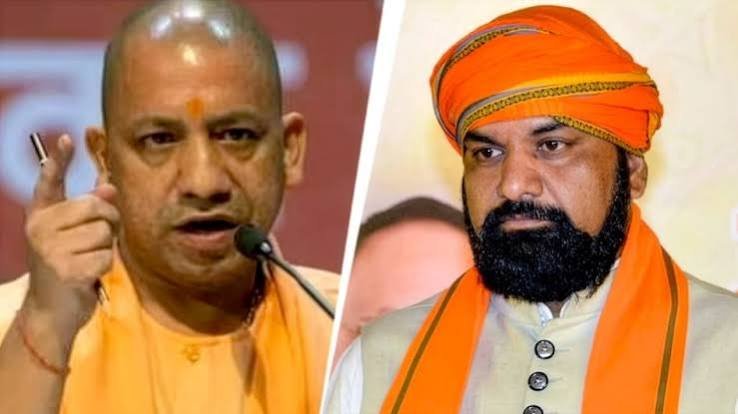
Since taking office in April 2026, Samrat Choudhary has sought to emulate Uttar Pradesh Chief Minister Yogi Adityanath’s tough policing model through increased police encounters linked to accused persons. Critics argue the Bankipur verdict suggests Bihar’s electorate remains wary of such methods.
BY Navin Upadhyay
August 4, 2026: The outcome of the Bankipur Assembly by-election has sent political shockwaves far beyond Patna. Jan Suraaj Party founder Prashant Kishor’s emphatic victory over the Bharatiya Janata Party (BJP) candidate by nearly 19,000 votes has not only ended the BJP’s uninterrupted three-decade dominance in one of Bihar’s most prestigious urban constituencies but also triggered a larger debate over the direction of governance under Chief Minister Samrat Choudhary.
While every election is shaped by a complex interplay of local issues, candidate profiles, caste arithmetic and organisational strength, the Bankipur verdict is increasingly being viewed as more than just a by-election upset. For many political observers, it represents the first significant electoral test of Choudhary’s administration—and a possible public rebuke of his efforts to replicate Uttar Pradesh Chief Minister Yogi Adityanath’s hardline law-and-order model in Bihar.
The ‘Yogi Model’ Comes to Bihar
Since assuming office as Bihar’s first BJP Chief Minister in April 2026, Samrat Choudhary has sought to project an image of uncompromising governance.
Within weeks of taking charge, the administration adopted a visibly more aggressive policing strategy. Police encounters increased sharply, with several suspects being injured in what came to be described as “half encounters”—operations in which accused persons were shot in the leg during alleged attempts to escape. Simultaneously, bulldozers were deployed against properties linked to individuals accused of serious crimes, echoing the controversial enforcement model that has become synonymous with Uttar Pradesh under Yogi Adityanath.
The government defended these measures as necessary to restore fear among criminals and dismantle organised crime networks. BJP leaders argued that law-abiding citizens welcomed tougher policing after years of criminal intimidation.
However, critics warned that Bihar was witnessing the gradual institutionalisation of a governance model that often blurred the line between decisive law enforcement and extra-judicial punishment.
READ: Noida Teen Changes Homes Thrice Amid Rape, Death Threats
The Bharat Bhushan Tiwari Turning Point
The defining moment came on June 17, when Bharat Bhushan Tiwari was killed in a police encounter in Bhojpur district.
The incident quickly escalated into one of the biggest political controversies of the Choudhary government’s brief tenure. Opposition parties accused the administration of sanctioning extra-judicial killings, while civil rights groups demanded an independent investigation. Questions were raised about the circumstances of the encounter, triggering judicial scrutiny and widespread protests.
The controversy assumed an additional political dimension because sections of the upper-caste community—traditionally regarded as one of the BJP’s strongest social constituencies in Bihar—expressed unease over the government’s handling of the case. Many critics argued that the administration appeared more interested in projecting toughness than ensuring adherence to constitutional safeguards.
The encounter became a symbol of the broader debate over whether Bihar was being pushed towards a model of governance that prioritised spectacle over due process.
Bihar Is Not Uttar Pradesh
For decades, Bihar has evolved a political culture markedly different from that of many neighbouring states.
Successive governments have certainly faced criticism over crime and law and order. Yet, since the mid-2000s, governance has largely relied on institutional policing, criminal prosecutions and judicial processes rather than highly publicised encounters or demolition drives.
Even during Nitish Kumar’s long tenure, improvements in law and order were presented as the outcome of better policing, faster investigations and expanded judicial capacity rather than dramatic displays of executive power.
Attempts to replicate Uttar Pradesh’s encounter-and-bulldozer template therefore represented a significant departure from Bihar’s established administrative approach.
Many voters appear uncomfortable with that shift.
A Verdict Beyond Local Politics
Bankipur has long been regarded as one of the BJP’s safest urban constituencies.
That made Prashant Kishor’s victory politically significant.
His campaign repeatedly questioned not merely the government’s performance but its governing philosophy. He projected the election as an opportunity for voters to express their opinion on the direction in which Bihar was being taken under the new administration.
The nearly 19,000-vote margin suggests that dissatisfaction extended beyond routine anti-incumbency. Coming barely four months after Samrat Choudhary assumed office—and less than a year after the NDA’s strong performance in the 2025 Assembly elections—the result represents one of the earliest electoral indicators of public sentiment towards the new government’s style of governance.
Whether the defeat reflected opposition to encounter politics, dissatisfaction with local governance, candidate selection, organisational weaknesses or broader political realignments will remain a subject of debate.
Nevertheless, the symbolism of losing Bankipur cannot be ignored.
The Limits of Political Imitation
Political models rarely travel seamlessly across states.
The “Yogi model” has been built within Uttar Pradesh’s unique social, political and administrative context. Bihar possesses its own history, caste equations, political traditions and public expectations.
Attempts to replicate another state’s governance style without adapting it to local realities inevitably carry political risks.
The Bankipur verdict suggests that a significant section of Bihar’s electorate continues to place considerable value on constitutional processes, judicial accountability and institutional governance. Many voters appear reluctant to endorse approaches that are perceived as relying on encounters, demolition drives or executive action before judicial determination of guilt.
A Message for the Government
One by-election does not determine the fate of a government. Nor should every electoral outcome be reduced to a single issue.
Yet Bankipur has delivered an unmistakable warning.
The BJP has lost a constituency it had held for nearly three decades, and it has done so within months of introducing a markedly different law-and-order narrative under Samrat Choudhary.
If the result reflects a broader public mood, the government may have to recalibrate its approach. Bihar’s electorate has historically rewarded administrations that combine effective governance with institutional restraint. The challenge before the Chief Minister is whether he continues pursuing a model identified with another state or evolves one rooted in Bihar’s own democratic and constitutional traditions.
The Bankipur by-election may ultimately be remembered not merely as an electoral upset but as the first clear indication that Bihar’s voters are unwilling to embrace governance models they believe compromise due process in the name of decisive action.