

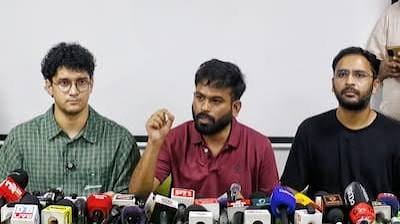
Mumbai Police’s decision to issue Look Out Circulars against three Cockroach Janata Party leaders over an allegedly unauthorised demonstration at Shivaji Park raises questions about the use of extraordinary police powers against political activists
BY Navin Upadhyay
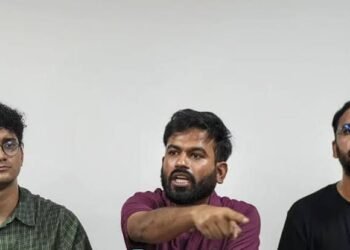
NEW DELHI: Can participating in a peaceful demonstration become grounds for preventing citizens from travelling abroad? The question has acquired urgency following Mumbai Police’s decision to issue Look Out Circulars (LOCs) against three leaders of the Cockroach Janata Party (CJP) in connection with a protest held at Mumbai’s Shivaji Park on October 2.
The LOCs against CJP founder Abhijeet Dipke and co-convenors Ashutosh Ranka and Saurav Das have triggered concerns about the proportionality of police action and its implications for the constitutional right to peaceful assembly.
The controversy came into sharper focus on November 23 when Das was stopped at Delhi airport while preparing to travel to the United Kingdom for an event at Oxford University. He subsequently approached the Delhi High Court, challenging the travel restriction. The Centre informed the court that the LOC had been issued at the request of Mumbai Police. The matter is listed for December 9.
The police action stems from CJP’s October 2 ‘Chalo Mumbai’ demonstration at Shivaji Park, organised on Gandhi Jayanti to demand the resignation of Chief Election Commissioner Gyanesh Kumar over alleged irregularities in the revision of electoral rolls.
Mumbai Police Issue LOCs Against Dipke, Ranka, Saurav Das https://t.co/GTogHyoG4T #MumbaiPolice #CJP #SauravDas #AbhijeetDipke #LookOutCircular #DelhiHighCourt #ShivajiPark #GyaneshKumar
— POWER CORRIDORS (@power_corridors) November 27, 2026
Mumbai Police had denied permission for the gathering, citing restrictions governing the use of Shivaji Park and the absence of the requisite municipal clearance. The organisers nevertheless went ahead with the demonstration.
An FIR was registered on October 3 against ten named organisers and 400–500 unidentified participants. The charges included unlawful assembly and disobedience of an order issued by a public servant under the Bharatiya Nyaya Sanhita, besides provisions of the Maharashtra Police Act.
READ: Centre Reconvenes Parliament to Push Delimitation, Opposition Questions Move
The police are entitled to investigate allegations of violating lawful restrictions on public gatherings. But the decision to issue LOCs raises a separate question: what evidence suggested that the organisers were likely to evade investigation or leave the country to avoid legal proceedings?
An LOC is a significant restriction on an individual’s freedom of movement. Although it is an investigative measure and not a punishment, its consequences can be substantial. A person against whom such a circular has been issued can be stopped at an airport or other immigration checkpoint, disrupting professional commitments and international travel.
The legal framework governing LOCs does not envisage their routine issuance merely because an individual has been named in an FIR. Judicial guidelines, including those laid down by the Delhi High Court in Sumer Singh Salkan v. Assistant Director, identify circumstances such as deliberate evasion of arrest, failure to appear before a court despite warrants and the likelihood of leaving the country to evade legal proceedings.
The CJP controversy is not without precedent. In February 2025, the Delhi High Court quashed LOCs against two individuals associated with the farmers’ protest toolkit investigation, observing that there was no sufficient material to establish that they had failed to cooperate with the investigation or were attempting to evade legal proceedings.
In another case, activist Bhanu Tatak was stopped at Delhi airport in 2025 while travelling to Ireland. The LOC against her was linked to pending police cases, including one involving a protest.
The constitutional implications are equally important. Article 19(1)(a) guarantees freedom of speech and expression, while Article 19(1)(b) protects the right to assemble peacefully and without arms. Article 21 safeguards personal liberty, including the right to travel abroad, subject to constitutionally valid restrictions.
These rights do not confer immunity from the law. Organisers of demonstrations can be prosecuted if they violate lawful orders. But prosecution and restrictions on international travel are separate matters and require separate justification.
The distinction becomes particularly significant when the underlying incident involves political criticism of a constitutional authority. The CJP demonstration was directed against the Chief Election Commissioner. Whether its allegations were justified is a matter of political and public debate. The right to question an independent constitutional authority, however, is an essential component of democratic accountability.
The police must explain why ordinary investigative procedures were insufficient and what specific circumstances warranted restricting the leaders’ international travel.
An FIR over an allegedly unauthorised gathering cannot automatically establish that its organisers are flight risks. Nor should an LOC become an additional instrument of pressure on those exercising their right to political expression.
The CJP case therefore raises a larger question for Indian democracy: when does the enforcement of restrictions on public gatherings cross the line into disproportionate curbs on civil liberties?
The answer will have implications beyond three political activists. It will help determine whether extraordinary investigative powers remain exceptional measures or gradually become routine features of policing political dissent.