The bail comes days after JNU dismissed Akoijam following an Internal Committee inquiry into complaints by 11 female students.
BY PC Bureau
New Delhi, October 13, 2026: Congress MP Bimol Akoijam has secured seven-day transit anticipatory bail in connection with an FIR registered by Delhi Police following sexual harassment complaints against him at Jawaharlal Nehru University (JNU).
The interim relief gives the Inner Manipur MP a limited window to approach the appropriate court for further legal protection. Transit anticipatory bail does not determine the merits of the allegations or amount to a final ruling on the case..
The development comes days after JNU dismissed Akoijam, a former associate professor at its Centre for the Study of Social Systems, with immediate effect on October 9, following an Internal Committee inquiry into complaints filed by 11 female students in May.
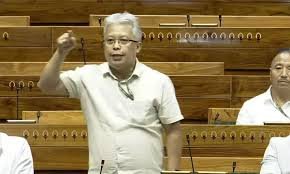
Imphal, Manipur: Congress MP Angomcha Bimol Akoijam says, “You know, I have said it, this is a witch hunt. It is becoming clearer because the fact that the university has done something—a big blunder—they have turned ICC into a khap panchayat. I say this not without reasons. Anybody in this class, if you can report this part: I got a mail around 12:40 saying that the inquiry is closed, that is on 9th. The report was not sent to me, which is supposed to be sent to me according to the rules established by UGC, Indian Parliament, and JNU. On 9th, they said inquiry is over…”
— IANS (@ians_india) October 13, 2026
FIR follows JNU inquiry
Delhi Police registered an FIR on October 11 at Vasant Kunj North police station on a complaint by JNU’s Chief Security Officer, reportedly drawing on the Internal Committee’s findings and related documents.
The case invokes provisions of the Bharatiya Nyaya Sanhita (BNS) relating to sexual harassment and conduct intended to insult a woman’s modesty. The allegations reportedly concern inappropriate personal interactions, sexually suggestive behaviour and unwelcome physical contact. Accounts of the complaints have also referred to intrusive questions about students’ personal lives and interactions allegedly crossing professional boundaries.
The allegations remain contested, and the criminal investigation is ongoing.
READ: Amit Shah Hits Back at Rahul Gandhi Over SIR Protests, Cites Congress’s Election Losses
Akoijam alleges political vendetta
Akoijam has denied the allegations and described the university’s action as a politically motivated “witch hunt”. He has questioned the fairness and transparency of the inquiry, alleging that he was not provided with the committee’s report before the dismissal order was issued.
He has also disputed JNU’s account of his cooperation with the proceedings, claiming that he submitted a written response on May 31, appeared for a physical deposition on July 16 and presented eight witnesses before the panel on August 14.
Akoijam has challenged the university administration’s assertion that it sent him around 300 emails, claiming that he received only 43 or 44. He has further alleged that the inquiry report and dismissal order were processed with undue haste and that details were leaked to the media before he had an opportunity to examine the findings.
These claims have not been independently established in the information available.
MP questions motives and procedure
The Congress MP has also alleged that the action against him is linked to his outspoken criticism of the government and its handling of the crisis in Manipur. He has argued that the proceedings raise questions about procedural fairness, confidentiality and the principles of natural justice.
Akoijam has said he will contest the action in court and has indicated that he would leave Parliament if the allegations against him are proved.
The case has triggered a political controversy, with critics questioning the university’s handling of the complaints and others demanding accountability over the allegations. However, the central issues—including the validity of the university inquiry, Akoijam’s procedural objections and the criminal allegations—remain to be resolved through the relevant legal processes.