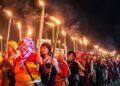
Christian organisations in India and abroad condemned the killings, calling the attack a blow to peace efforts and the sanctity of human life. From Churachandpur to Moreh, mourners gathered in churches and public grounds demanding an NIA probe and justice for the slain clergy.
BY PC Bureau
May 14, 2026: From Delhi’s Munirka to the hill towns of Churachandpur, Kangpokpi. Moreh and Saikul thousands of Kuki-Zo community members gathered in candlelight vigils, prayer services and protest blockades after the killing of three church leaders in Manipur’s Kangpokpi district triggered outrage across Christian and tribal organisations.
The coordinated mourning ceremonies and demonstrations came a day after Rev. V. Sitlhou, Rev. Kaigoulen and Pastor Paogoulen were killed in an ambush along the Kotzim-Kotlen stretch while returning from a church peace meeting. Five others were injured in the attack.
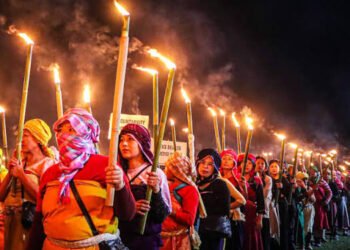
In Delhi, the Kuki Students’ Organisation Delhi & NCR (KSOD & NCR) organised a candlelight vigil at the Gurudwara car park in Munirka around 8 pm. Students, pastors, professionals and families gathered carrying candles and wearing black ribbons to mourn the slain clergy.
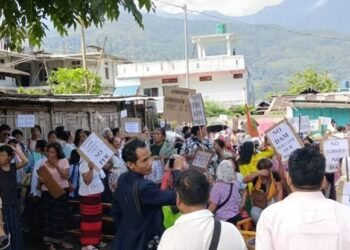
Participants offered prayers and sang hymns while demanding justice for the pastors. Placards calling for an NIA probe and stronger protection for religious leaders were displayed during the gathering.
Organisers alleged that the pastors were attacked by the ZUF (Kamson) faction while returning from a church-related programme. Speakers condemned the killings as an assault on peace efforts and urged the Centre to take immediate action against those responsible.
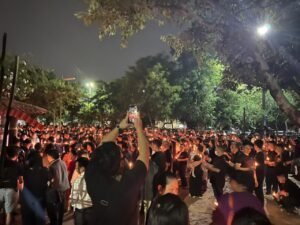
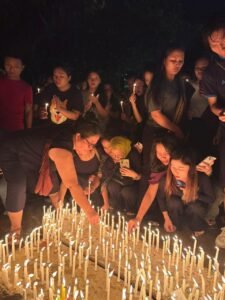
Simultaneously, candlelight vigils were held across Kuki-dominated hill districts of Manipur, including Churachandpur, Kangpokpi and Moreh, where hundreds gathered at churches, public grounds and community spaces to pay tribute to the slain pastors.
At Peace Ground in Churachandpur, mourners assembled under a sombre evening sky for prayers, gospel songs and emotional tributes. Women’s groups, youth organisations and church bodies led the service, remembering the three church leaders as voices of reconciliation during Manipur’s prolonged ethnic conflict.
In Kangpokpi, residents lit candles outside churches and near the site of the ambush, while community leaders described the killings as a direct attack on unarmed religious workers.
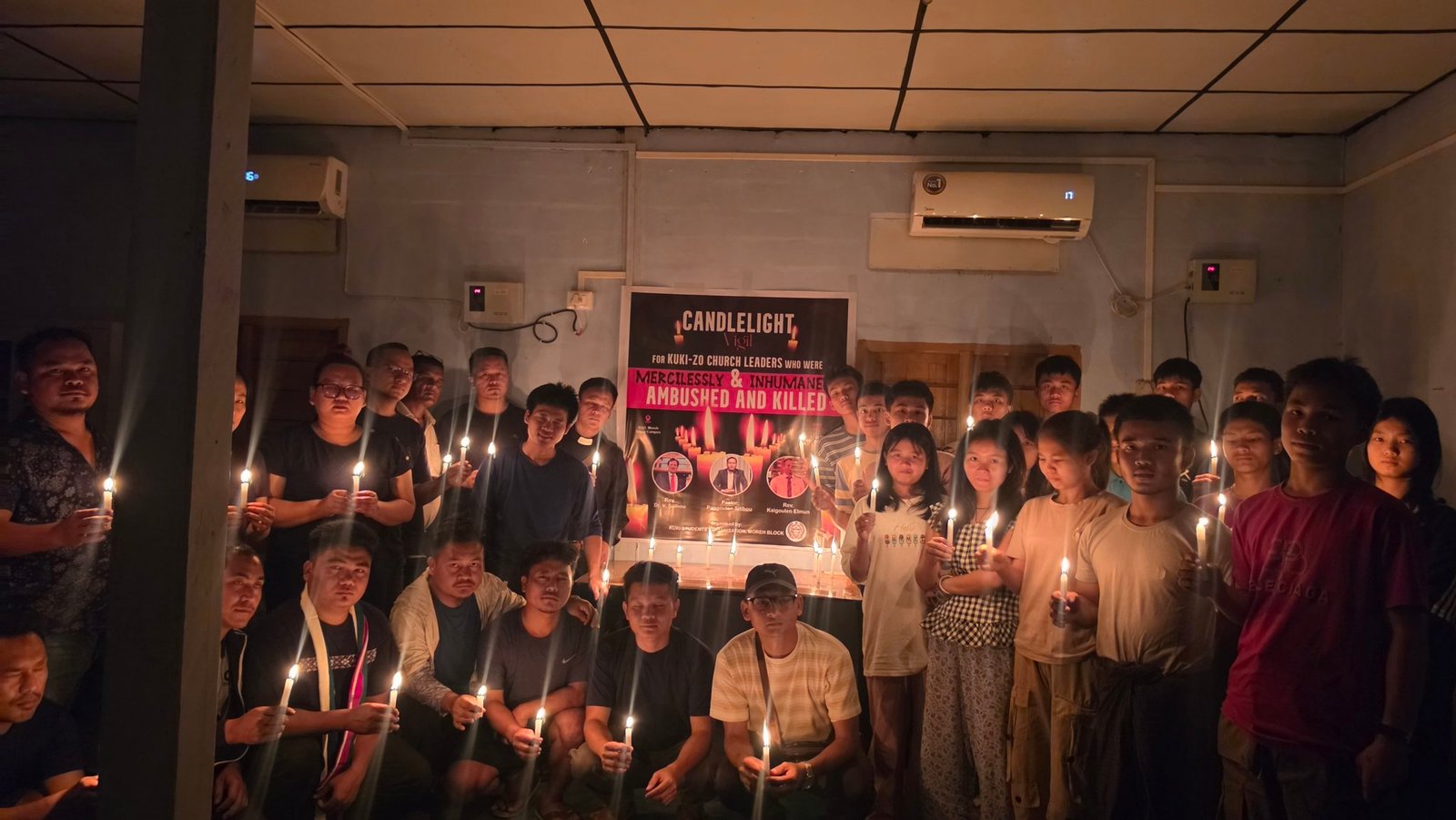
In Moreh, a candlelight vigil was held at the KSO Office under the banner of KSO Moreh Block. Community members gathered to mourn what organisers described as the “merciless and inhumane” killing of the Kuki-Zo church leaders.
Pastor K. K. Hahau Gangte, Secretary of the Moreh Pastors Fellowship, led the condolence service during the programme. A one-minute silence was observed in honour of the deceased, followed by mass prayers for the departed and for the injured persons currently undergoing treatment in hospital.
Meanwhile, Kuki civil society organisations imposed a bandh and blockade along the Jiribam national highways on Thursday to protest the killings. Vehicular movement along key routes was disrupted as protesters raised slogans demanding justice for the slain pastors and condemning continued violence against the Kuki-Zo community.
JOINT CONDOLENCE PROGRAMME which was followed by a solemn CANDLE LIGHT VIGIL in honour of the slain Kuki-Zo Church Leaders was held in Shillong under the banner of the three Sister KWS(Shillong, Happy Valley, Umiam), Kuki Inpi Meghalaya and KSO Shillong.#TangkhulTerrorists pic.twitter.com/DxogVwIrzI
— Official KSO Shillong (@kso_shillong) May 13, 2026
The pastors, all associated with the Thadou Baptist Association, were reportedly returning from a church peace meeting when they were ambushed near Kotzim and Kotlen in Kangpokpi district.
The killings also triggered widespread condemnation from churches and Christian organisations across India and abroad, many of which described the attack as an assault on the Christian faith, peace-building efforts and the sanctity of human life.
The Evangelical Fellowship of India termed the killings of “unarmed church leaders returning from Christian fellowship and ministry” as “deeply disturbing and tragic,” while urging churches across the country to pray for peace, healing and justice in Manipur.
The National Council of Churches in India described the ambush as a “brutal and inhuman act of violence” that undermines reconciliation and communal harmony.
The Catholic Bishops’ Conference of India and Archbishop Linus Neli expressed “deep sorrow and grief” and appealed for calm and peace with justice, warning that continued violence would only deepen divisions and suffering.
The United Christian Forum of North East India called the killings a “cold-blooded” attack and said no ethnic or political grievance could justify the murder of unarmed pastors and church workers.
Strong condemnations also came from the Nagaland Baptist Church Council, the Fellowship of Naga Baptist Associations, Ao Baptist Arogo Mungdang, the All Manipur Christian Organization and the Kuki Baptist Convention, several of which organised prayer vigils and solidarity gatherings.
READ: Manipur: No Breakthrough Yet in Kuki-Naga Hostage Crisis
International Christian bodies also reacted strongly. World Evangelical Alliance Secretary General Rev. Botrus Mansour condemned the ambush as a “hideous attack against Christian brothers” and urged authorities to ensure accountability and protection for vulnerable Christian communities in the region.
The Kuki Inpi Manipur appealed to international religious institutions including the World Council of Churches, the Baptist World Alliance and the Vatican to raise their voices and support justice efforts following the killings.
Across the vigils and protests, speakers recalled Rev. Sitlhou’s role in peace-building initiatives and inter-community dialogue, particularly efforts aimed at easing tensions between Kuki and Tangkhul groups.
The gatherings concluded with a minute’s silence and unified demands for a neutral investigation, deployment of additional security in vulnerable hill areas, and an immediate NIA probe into the killings.
As candles flickered across Delhi and the hills of Manipur late into the night, mourners said the vigils and blockades were not only acts of remembrance, but also declarations that the community would continue seeking justice despite fear and violence.