The hostage crisis is emerging as a major test for Chief Minister Yumnam Khemchand Singh’s administration, with growing concerns that perceptions of selective justice could undermine public confidence in the government’s commitment to equal treatment under the law.
By Navin Upadhyay
June 2, 2026: The continuing hostage crisis in Manipur has exposed a troubling question that many residents across the country are increasingly asking: Why does the government appear unwilling to act decisively when the perpetrators are widely known?
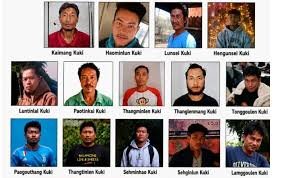
For nearly three weeks, 14 Kuki-Zo civilians—including women and minors—have remained in captivity in Senapati district. Their detention has not been denied. In fact, the United Naga Council (UNC) itself publicly acknowledged that the detainees were under the custody of the Naga Village Guard–Northern Command and even announced plans for their release before abruptly postponing the move following objections from other Naga organisations.
This admission alone makes the situation extraordinary.
In most parts of India, a public acknowledgment that civilians are being held by a non-state armed group would immediately trigger police action, criminal investigations, arrests, and sustained pressure from security agencies. Yet in Manipur, none of this appears to have happened.
No major crackdown has been reported. No prominent arrests have been made. No publicly known FIRs have been registered against those openly holding the hostages. No ultimatum has been issued by the state. Instead, negotiations continue while the captives remain deprived of their liberty.
READ: NEET Re-Exam Portal Faces Claims of Cybersecurity Exposure
The contrast becomes even more striking when viewed alongside the government’s response to other incidents arising from the same cycle of violence.
After the killing of three Kuki-Zo church leaders in Kangpokpi district and the subsequent disappearance of six Naga civilians, authorities moved swiftly to transfer the investigation to the National Investigation Agency (NIA). Security operations were intensified, official statements were issued, and repeated assurances were given that those responsible would be identified and prosecuted.
Yet the detention of the 14 Kuki-Zo civilians appears to have been treated differently.
The NIA probe announced by the government covers the murders of the church leaders and the disappearance of the six Naga civilians. It does not appear to encompass the continued captivity of the Kuki-Zo detainees, despite the fact that their whereabouts are not a mystery and the organisations involved have publicly discussed their custody.
This discrepancy has become a major talking point across Manipur.
A Promise of Reconciliation Under Strain
The controversy is particularly damaging because it comes at a time when Chief Minister Yumnam Khemchand Singh has sought to present himself as a leader of reconciliation.
After assuming office following the lifting of President’s Rule, Khemchand Singh reached out to various communities and initiated engagement with Kuki-Zo representatives in Guwahati. The new administration projected itself as one committed to restoring trust and moving beyond the bitterness of the ethnic conflict that has scarred Manipur for more than three years.
For a brief period, there appeared to be cautious optimism.
But the events following the May 13 killing of three Baptist church leaders have severely tested that image.
The murders triggered a chain reaction of retaliatory actions, civilian abductions, road blockades, and heightened tensions between sections of the Naga and Kuki-Zo communities. Instead of reinforcing confidence in the impartiality of the state, the government’s response has generated accusations of selective enforcement and unequal justice.
The Unanswered Questions
The church leaders’ killings were the spark that ignited the present crisis. Kuki-Zo organisations have repeatedly alleged the involvement of suspected Tangkhul Naga militants, while state authorities have not publicly identified those responsible.
Not a single major arrest has been announced in connection with the killings.
Nor has there been any significant breakthrough in the investigation.
Yet when six Liangmei Naga civilians were reported missing, the state acted with remarkable speed. Following meetings between Naga leaders and the Chief Minister, the case was handed over to the NIA. Within a short period, four Kuki-Zo men were arrested by joint security forces during operations in Kangpokpi district.
The difference in response has not gone unnoticed.
Critics point out that there has been no comparable NIA probe into allegations that dozens of Kuki-Zo civilians were abducted during the escalation of violence. More importantly, there has been no visible legal action against those openly acknowledged to be holding the 14 Kuki-Zo detainees.
This has created a growing perception that different standards are being applied depending on the identity of the victims.
A Crisis of Credibility
The government may argue that negotiations offer the best chance of securing a peaceful release of the hostages and preventing further violence. Such considerations are understandable in a conflict-ridden environment where a single misstep can trigger wider unrest.
However, governments are judged not only by their intentions but by the consistency with which they uphold the law.
When hostage-taking becomes negotiable rather than prosecutable, dangerous precedents are created.
The issue goes beyond the fate of the 14 detainees. It concerns the authority of the state itself.
If a village guard, civil society organisation, or armed group can openly detain civilians for weeks and negotiate their release on its own terms, what message does that send about the state’s monopoly over law and order?
Equally troubling is the apparent asymmetry in public discourse. The six missing Naga civilians rightly deserve attention, concern, and urgent investigation. Their families deserve answers. But so do the families of the Kuki-Zo detainees. The principle should be identical: no civilian should be abducted, detained, or used as leverage by any group under any circumstances.
Justice cannot be community-specific.
A hostage is a hostage regardless of ethnicity.
The Perception of Privilege
Whether justified or not, a perception is rapidly taking root across sections of Manipur that certain organisations enjoy a degree of political accommodation unavailable to others.
The absence of arrests, the apparent exclusion of the hostage-taking from the NIA investigation, and the preference for negotiations over enforcement have all contributed to that perception.
In deeply divided societies, perceptions often become as important as realities.
Every day that passes without visible legal action strengthens allegations that some groups enjoy greater immunity than others. Every delay reinforces doubts about whether the state is willing to apply the law equally.
Many in Manipur are now asking questions that the government can no longer ignore.
Why has there been no visible criminal action against those holding the 14 detainees?
Why was their captivity seemingly excluded from the larger NIA investigation?
Why are negotiations replacing enforcement in a matter that would ordinarily constitute a serious criminal offence?
And most importantly, does the government intend to apply the law equally to all communities and organisations?
The Rule of Law Demands Consistency
The answers to these questions will shape not only the outcome of the present crisis but also public confidence in the state’s commitment to impartial governance.
For a state struggling to emerge from years of ethnic violence, perceptions matter almost as much as actions. At present, the perception taking hold across Manipur is deeply damaging: that while some crimes trigger investigations, arrests, and federal intervention, others trigger negotiations and political accommodation.
No democracy can afford to let such a perception become entrenched.
The rule of law demands consistency.
If hostage-taking is a crime, it must be treated as a crime regardless of who commits it, who the victims are, or how politically sensitive the circumstances may be.
Until that principle is applied uniformly, the hostage crisis will remain not only a humanitarian tragedy but also a troubling symbol of selective justice in Manipur.