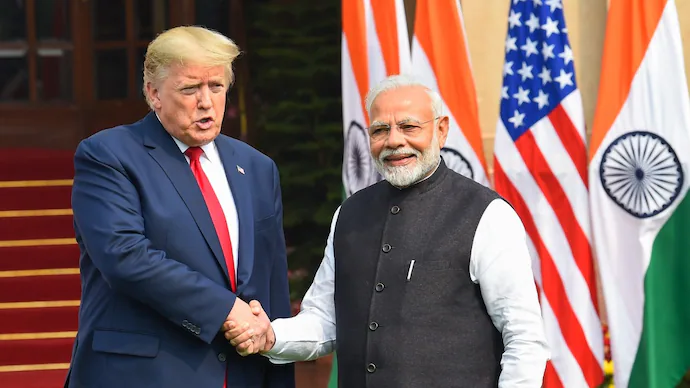
The Tariff related moved , which could affect more than 60 US trading partners, come as American and Indian negotiators meet in New Delhi to advance an interim trade agreement.
BY PC Bureau
New Delhi: Even as a high-level US trade delegation is in New Delhi for negotiations on an interim trade pact, the administration of President Donald Trump has proposed a new round of tariffs on more than 60 trading partners, including India, citing their alleged failure to curb imports produced through forced labour.
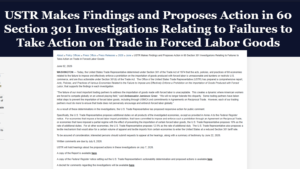
According to a report released by the Office of the United States Trade Representative (USTR) on Wednesday, India could face an additional 12.5 per cent tariff under the proposed measures. Other countries in the same category include China, Japan, South Korea, Brazil and Switzerland.
Canada, Mexico, Taiwan and the United Kingdom would be subject to a lower 10 per cent tariff, with US authorities claiming these economies had not adequately enforced restrictions on imports linked to forced labour.
The proposed duties are not expected to take effect immediately. They will undergo a public consultation process and further review before any final decision is made.
New Route to Tariffs After Court Setback
The proposal comes months after the US Supreme Court struck down a significant portion of President Trump’s earlier tariff measures, prompting the administration to explore alternative legal avenues for imposing trade restrictions.
Washington had earlier launched investigations under Section 301(b)(1) of the Trade Act of 1974, examining whether key trading partners had taken sufficient action against goods produced through forced labour and whether such imports harmed US commerce and workers.
In its findings, the USTR stated that 54 economies, including India, China, Bangladesh, Vietnam, Japan, Saudi Arabia, Singapore, Russia, Israel, Qatar, the UAE and the UK, had failed to establish or effectively enforce bans on forced-labour imports. Six others — Canada, Mexico, Pakistan, Indonesia, Ecuador and the European Union — were found to have inadequately enforced existing prohibitions.
“The failure of our most important trading partners to address the importation of goods made with forced labour is unacceptable,” US Trade Representative Jamieson Greer said in a statement.
He argued that the continued flow of such goods creates unfair competition for American workers and businesses.
READ: NEET Re-Exam Portal Faces Claims of Cybersecurity Exposure
Exemptions Included
The proposed tariff regime contains several exemptions. Products such as beef, coffee and selected fruits and nuts would not be affected. Goods traded under the North American free trade framework between the United States, Canada and Mexico would also remain exempt, along with certain textile and apparel categories.
The USTR has invited public comments until July 6, after which hearings will be conducted before a final determination is made.
The forced-labour investigation is one of several trade probes launched by the Trump administration in recent months. US officials have also initiated inquiries into excess industrial capacity, another issue likely to influence future trade actions.
US Trade Team Holds Talks in New Delhi
The tariff proposal comes at a sensitive moment, with a US trade delegation led by chief negotiator Brendan Lynch currently in New Delhi for discussions aimed at finalising an interim trade agreement with India.
India’s negotiating team is headed by Darpan Jain, Additional Secretary in the Department of Commerce. Officials from both countries are working to conclude the details of an interim arrangement while simultaneously advancing negotiations on a broader Bilateral Trade Agreement (BTA).
Key topics under discussion include market access, customs procedures, non-tariff barriers, investment promotion, trade facilitation and economic security cooperation.
The negotiations build on a framework announced by Washington and New Delhi on February 7. Under that understanding, the United States agreed in principle to reduce tariffs on a range of Indian exports to around 18 per cent and remove certain duties linked to India’s purchases of Russian oil.
The proposed reductions had been welcomed in India as a significant easing of trade tensions after months of uncertainty, during which some Indian exports were reportedly hit by tariffs as high as 50 per cent.
The latest tariff proposal, however, introduces a fresh layer of complexity into the ongoing negotiations, raising questions about how the forced-labour investigation and potential new duties could affect the broader trajectory of US-India trade relations.