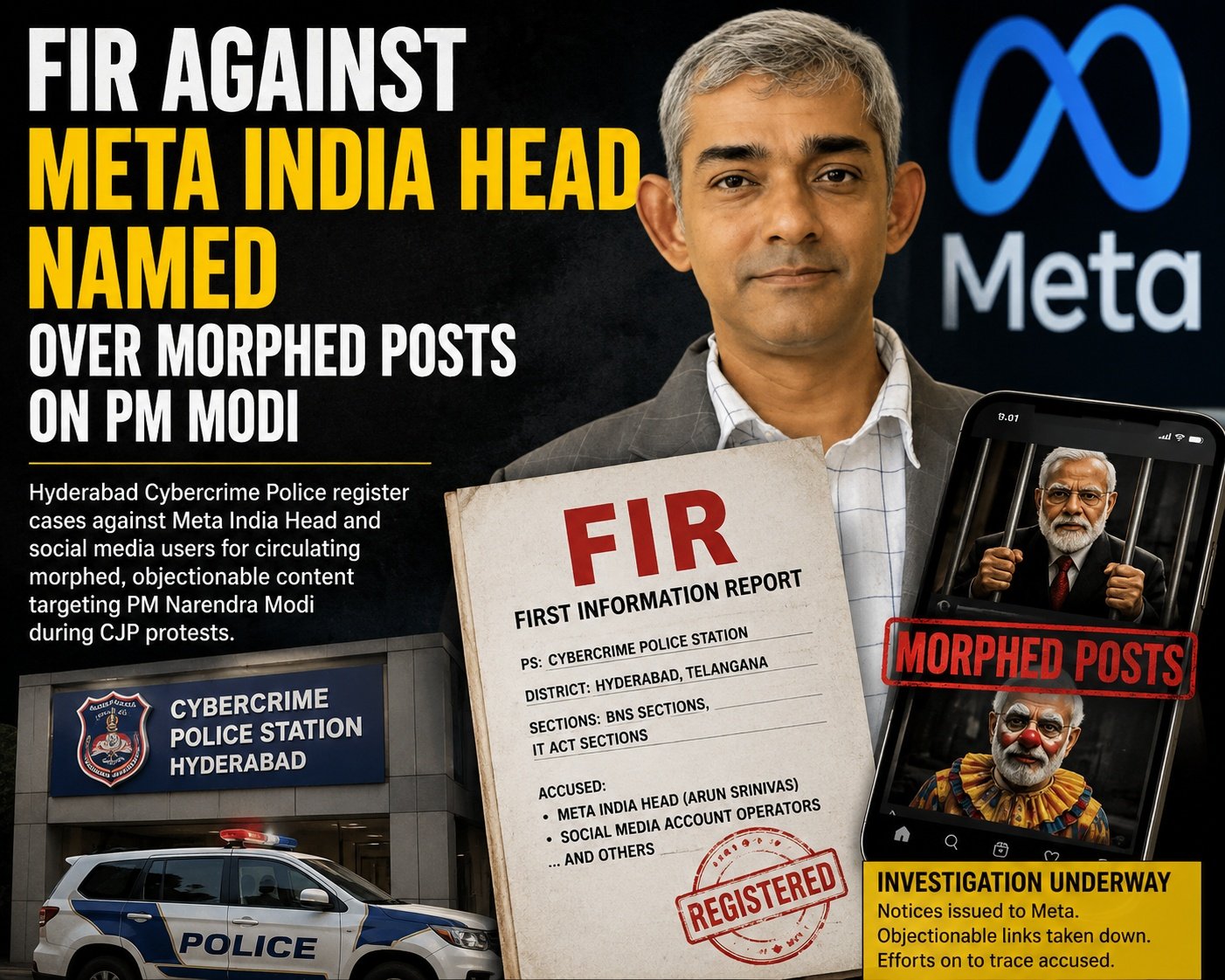
Hyderabad Cybercrime Police have registered cases against Meta India’s head and several social media users over alleged AI-generated and morphed posts targeting Prime Minister Narendra Modi during the CJP-led NEET protest movement.
BY PC Bureau
July 31, 2026: Hyderabad Cybercrime Police have registered two criminal cases against operators of several Facebook and Instagram accounts, as well as Meta’s India head, over the alleged circulation of morphed and AI-generated content targeting Prime Minister Narendra Modi during the Cockroach Janta Party (CJP)-led protests against the NEET-UG paper leak, according to media reports.
The cases were registered following complaints filed by Bharatiya Janata Party (BJP) supporters, who alleged that manipulated videos and images of the Prime Minister were shared widely on Meta-owned platforms.
One complaint was filed by T. Saikiran Goud, 32, a member of the Telangana BJP’s social media core committee. According to reports, Goud submitted around 20 Facebook and Instagram links to Hyderabad Cybercrime Police on Wednesday, alleging they contained morphed and objectionable videos of Prime Minister Modi. He also sought action against Meta for allegedly failing to remove the content.
MeitY has summoned Meta’s President of Global Affairs, Joel Kaplan, after rejecting the company’s explanation for briefly removing PM Narendra Modi’s Instagram reel. But the reel is only part of a much bigger story, India is also scrutinising Meta’s handling of protest content,…
— MediaNama (@medianama) July 29, 2026
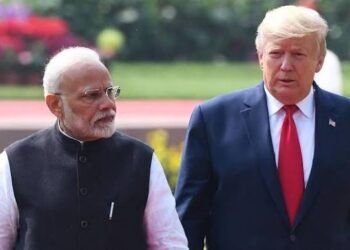
In a separate complaint, S. Aravind Reddy, a BJP supporter from Hyderabad’s Nampally area, alleged that several Instagram accounts had circulated “obscene, derogatory and misleading” morphed videos and images depicting Prime Minister Modi, US President Donald Trump and former Union Education Minister Dharmendra Pradhan. He claimed the posts were capable of misleading the public and spreading misinformation, and urged police to initiate action against both the account operators and Meta’s India head for permitting the content to remain on the platform.
Based on the complaints, police registered cases under relevant provisions of the Bharatiya Nyaya Sanhita (BNS) and the Information Technology Act. Media reports said the operators of the identified social media accounts, along with Meta India head Arun Srinivas, have been named as accused in one of the FIRs.
READ: Pakistan Coal Mine Blast Kills 32, 10 Miners Still Trapped
A cybercrime official said notices had been issued to Meta seeking details about the accounts and the reported content. “We have issued a notice to Meta regarding the cases and the objectionable links submitted by the complainants. We are also collecting details to identify the account holders and take further legal action,” the officer was quoted as saying.
By Thursday evening, several of the reported links had become inaccessible. Investigators are now working to determine the origin of the alleged AI-generated and digitally manipulated videos, how they were amplified across social media, and whether adequate moderation measures were in place.
The Hyderabad cases come amid a wider crackdown on online content linked to the CJP protests over the alleged NEET-UG paper leak. In recent weeks, Delhi Police have also registered FIRs and issued notices over allegedly abusive, defamatory and deepfake content targeting Prime Minister Modi and other political leaders. Authorities have reportedly identified hundreds of social media accounts, including some suspected of operating from outside India, and have sought takedowns from platforms including Meta and X.
Meta has also come under increased government scrutiny in recent weeks over its handling of protest-related content and AI-generated material, including questions surrounding the temporary restriction of a video posted by Prime Minister Modi. The company has previously attributed such incidents to technical issues or compliance procedures. There was no immediate response from Meta regarding the Hyderabad cases.
The investigation is continuing, with police focusing on tracing those behind the accounts while also examining the responsibilities of social media intermediaries in preventing the spread of manipulated and misleading content.