

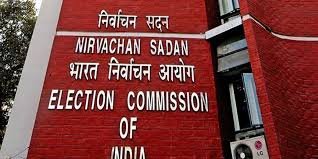
In a rejoinder affidavit, Singh alleges that Chief Election Commissioner Gyanesh Kumar took several SIR-related decisions without the concurrence of the other two Election Commissioners. He argues that subsequent corrections cannot cure the alleged procedural violations.
By PC Bureau
November 16: Petitioner Rakesh Kumar Singh has challenged the Election Commission of India’s claim that key decisions relating to the Special Intensive Revision (SIR) of electoral rolls were taken unanimously, telling the Supreme Court that the Commission has produced no contemporaneous records to substantiate its assertion.
In a rejoinder affidavit filed through Advocate-on-Record Mudit Gupta, Singh has disputed the ECI’s counter-affidavit and supplementary affidavit, arguing that subsequent corrective measures cannot retrospectively validate decisions allegedly taken without compliance with Section 18 of the Chief Election Commissioner and Other Election Commissioners (Appointment, Conditions of Service and Term of Office) Act, 2023.
The petitioner has argued that the Commission’s assertion of unanimity within the EC on SIR remains unsupported by minutes, resolutions or other institutional records.
The rejoinder states that the ECI has acknowledged several instances requiring corrective action, including alterations to the online statutory form, changes in the allocation of internal work, IT modules not being placed before the Commission, and appeals affecting large numbers of electors being filed without the matter being brought before the three-member body.
“An assertion of unanimity is not proof of it. Administrative practice is not statutory authority. Subsequent correction is not authorisation at the time of the act,” the affidavit states.
Singh’s writ petition challenges the functioning of the Election Commission, alleging that Chief Election Commissioner Gyanesh Kumar took several decisions concerning the SIR exercise unilaterally, without the concurrence of the other two Election Commissioners.
The ECI has denied the allegations, maintaining that the SIR exercise was lawful and that its decisions were unanimous. The matter is listed before the Supreme Court on November 17.
READ: Bilkis Bano to Challenge Bail Granted to Men Who Gang-Raped Her and Killed Her Family Members
Petitioner seeks original decision-making records
A central demand in the rejoinder is for the production of original institutional records to establish how the disputed decisions were taken.
Singh has sought agendas, minutes of meetings, file notings, circulation sheets, resolutions, electronic approvals and official communications relating to the decisions under challenge.
He argues that the ECI’s affidavits do not establish whether the decisions were taken collectively under Section 18 of the 2023 Act or whether individual officers and administrative divisions acted without demonstrated approval from the Commission.
The petitioner has also disputed the Commission’s reliance on Section 19A of the Representation of the People Act, 1951, and delegation orders dated January 12, 1996, and September 9, 2012.
According to Singh, neither provision nor the delegation orders authorise changes to the statutory framework governing electoral registration or permit the exercise of powers reserved for the Commission as a collective body.
Form 6 declaration during SIR under scrutiny
The additional declaration incorporated into the online Form 6 application during the SIR exercise is another major issue raised in the rejoinder.
Singh contends that the declaration introduced a requirement of historical electoral-roll mapping, including details of parents or grandparents, without a corresponding amendment to Form 6 prescribed under the Registration of Electors Rules, 1960.
He argues that the declaration effectively became compulsory for online applicants because the application could not be completed without submitting it. Consequently, it cannot be dismissed as a separate administrative document or an optional attachment.
The petitioner maintains that the actual functioning of the online application process, rather than the terminology used by the ECI, should determine whether an additional statutory requirement was imposed.
The Commission had earlier acknowledged that displaying the SIR declaration alongside Form 6 online could be construed as an amendment. It subsequently separated the two.
However, Singh argues that this corrective measure does not validate the earlier arrangement or establish that it had received the necessary statutory approval.
Subsequent SIR corrections cannot validate earlier decisions
The rejoinder challenges the ECI’s reliance on corrective steps taken after the writ petition was filed.
These include press notes, the constitution of a committee to examine the ECINet portal, separation of the declaration from Form 6, reallocation of IT oversight and directions concerning electors categorised as Absent, Shifted, Dead or Duplicate (ASDD).
Singh argues that these measures cannot retrospectively establish that the original decisions were taken in accordance with Section 18 of the 2023 Act.
The affidavit also cites the difficulties faced by 97 eligible electors in Goa, who allegedly could not complete the Form 6 process through the ECINet portal despite repeated requests for assistance.
Another issue concerns appeals filed in West Bengal against orders excluding names from electoral rolls. The petitioner alleges that these appeals were filed without any demonstrated authorisation from the Commission.
Singh has asked the Supreme Court to direct the ECI to produce the original records relating to the SIR orders, the online Form 6 declaration, internal work-allocation decisions, the West Bengal appeals and other disputed actions.
He has also sought disclosure of the specific authority under which each of the challenged decisions was taken.