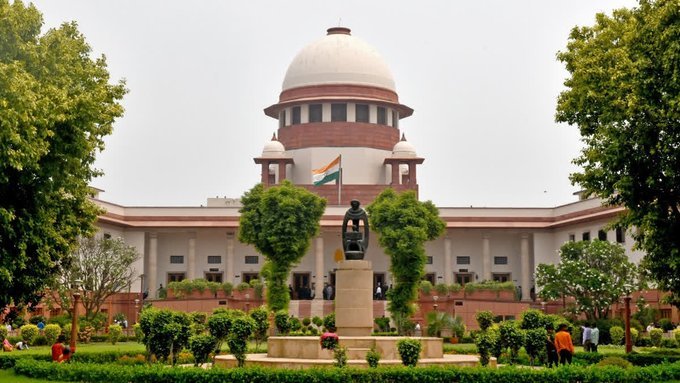
The Supreme Court has asked the Election Commission to respond to Rahul Gandhi and ten opposition leaders’ demand for 48 sworn answers from the country’s top poll officials over alleged irregularities in the ongoing SIR exercise.
BY PC Bureau
NEW DELHI: The Supreme Court has asked Election Commission of India (ECI) to respond to a a plea by Rahul Gandhi and ten other opposition leaders seeking to question the country’s top election officials under oath over alleged unilateral decisions and large-scale voter deletions during the ongoing Special Intensive Revision (SIR) of electoral rolls.
The Supreme Court on Tuesday allowed the poll panel to place its objections to the application on record and directed it to file a reply before the next hearing on December 9. The petitioners want permission to serve 48 formal questions, known as interrogatories, on the ECI and obtain sworn responses from Chief Election Commissioner Gyanesh Kumar and Election Commissioners Sukhbir Singh Sandhu and Vivek Joshi.
READ: Bilkis Bano to Challenge Bail Granted to Men Who Gang-Raped Her and Killed Her Family Members
A bench comprising Chief Justice of India Surya Kant and Justices Joymalya Bagchi and V. Mohana passed the direction after hearing submissions from both sides.
Senior Advocate Harish Salve, appearing for the ECI, said the Commission had serious reservations about the application. “We have something to say about that. There is very serious prejudice,” he told the court.
“Whatever it is, you may file your reply. You can raise your objections,” Chief Justice Kant said, adding that the court would examine the request for interrogatories before taking a decision.
Kapil Sibal Appears for Rahul
Senior Advocate Kapil Sibal appeared for Rahul Gandhi and the other petitioners.
In their application, Rahul Gandhi and opposition leaders have questioned the ECI’s failure to disclose what they describe as crucial official records in its responses to the main petition challenging alleged irregularities in the SIR exercise.
They contend that the Commission’s counter-affidavits rely on assertions without producing the underlying files, correspondence and meeting records needed to establish how the decisions were taken.
At the heart of the dispute is whether Chief Election Commissioner Gyanesh Kumar exercised the collective powers of the three-member Commission without the knowledge, approval or concurrence of the other two Election Commissioners.
In its counter-affidavit dated October 26 and a supplementary affidavit filed on November 14, both affirmed by Deputy Election Commissioner Bhanu Prakash Yeturu, the ECI maintained that the SIR orders had been issued following unanimous decisions of the Commission.
Rahul Gandhi and the other petitioners, however, argue that the affidavits provide no file numbers, dates or minutes of meetings to substantiate this claim.l They have also cited an August 2025 response to an RTI application in which the ECI’s own authorities reportedly stated that no decision had been taken to launch a nationwide SIR.