



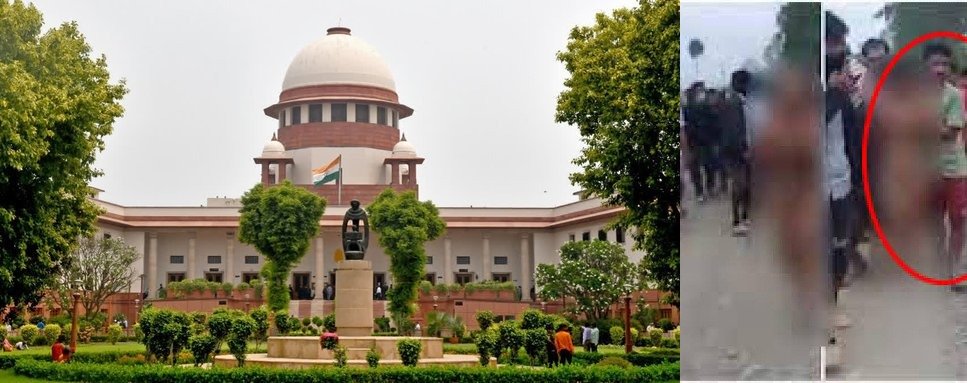
In a significant development in the 2002 Bilkis Bano case, the Supreme Court has granted bail to two of the 11 convicts whose premature release by the Gujarat government was quashed in 2024. Their appeals against conviction remain pending.
By PC Bureau
November 16, 2026
In a significant development in the Bilkis Bano gang rape and murder case, the Supreme Court has granted bail to two men serving life sentences, suspending their sentences after noting that they have spent more than 17 years in prison.
A bench of Justices MM Sundresh and Prasanna B Varale passed the order on October 28 while hearing appeals filed by the two convicts against the Bombay High Court’s 2017 judgment upholding their convictions and life sentences.
The court said the appeals raised questions of fact and law that required examination. It also took into account the prolonged incarceration of the appellants and the severe physical disability of one of them.
“Having heard the parties, suffice it to state that the appellants have been under incarceration for a period of more than seventeen years, and also the fact remains that one of the appellants has a severe handicap. Certainly, there are issues to be decided in the appeal, both on fact and law,” the bench observed.
The order suspends the sentences during the pendency of the appeals and allows the two men to be released on bail, subject to conditions imposed by the concerned trial court.
The development comes against the backdrop of the controversy surrounding the premature release of 11 convicts in the same case by the Gujarat government in August 2022. The Supreme Court quashed that decision in January 2024, ruling that the Gujarat government did not have the authority to grant remission in the case.
Supreme Court granted bail to two convicts, Bipinchand Kanaiyalal Joshi and Pradip Ramanlal Modhiya, in the Bilkis Bano gang-rape case and suspended their life sentences. Both have spent over 17 years in prison. The court cited relevant circumstances, while the appeal against their convictions will continue
— IANS (@ians_india) November 16, 2026
What the Two Convicts Argued
Senior advocate Siddharth Luthra, appearing for the two appellants, told the Supreme Court that both had already spent more than 17 years behind bars.
He also raised questions about the evidence and circumstances surrounding their conviction. One of the appellants, he submitted, had not been named in the original FIR and was implicated nearly three years after the incident.
The defence further highlighted the serious physical disability suffered by one of the convicts, urging the court to consider his medical condition alongside the prolonged period of incarceration.
The appellants were convicted under various provisions of the Indian Penal Code, including Sections 143 (unlawful assembly), 147 (rioting), 302 (murder) and 376 (rape). They were sentenced to rigorous imprisonment for life and fined.
Their convictions were upheld by the Bombay High Court in 2017.
READ: Kashmir’s Most Wanted Lashkar Commander Lateef Bhat Killed in Kulgam
Centre Opposes Bail
The Centre opposed the applications, with Additional Solicitor General Raja Thakre arguing that the seriousness of the offences and the findings of the courts below weighed against granting relief.
The law officer submitted that the relevant evidence and material had already been examined by the courts that convicted the appellants and subsequently upheld their sentences.
The Supreme Court, however, considered the period of incarceration, the disability of one appellant and the legal and factual questions raised in the pending appeals.
“In view of the above and considering the issues involved in this appeal, we suspend the sentence and grant bail to the appellants on such terms and conditions as may be imposed by the concerned trial court,” the bench said.
Background: The Bilkis Bano Case
The case relates to the communal violence that swept Gujarat in 2002. Bilkis Bano, who was pregnant at the time, was gang-raped during the violence while several members of her family were attacked and killed.
Seven members of her family, including her three-year-old daughter, were murdered. The crime took place during the violence that followed the Godhra train burning.
The case was initially investigated in Gujarat but was subsequently transferred to the Central Bureau of Investigation (CBI) following concerns about the fairness of the investigation and trial.
In 2008, a special CBI court in Mumbai convicted 11 men and sentenced them to life imprisonment. The Bombay High Court upheld their convictions in 2017.
In August 2022, the Gujarat government ordered the premature release of all 11 convicts under its remission policy. The decision triggered widespread criticism and a legal challenge before the Supreme Court.
In January 2024, the Supreme Court set aside the remission orders, holding that the Gujarat government had acted without jurisdiction. The court ruled that the government of Maharashtra, where the trial had been conducted, was the appropriate authority to consider remission applications.
The 11 convicts were subsequently required to surrender and return to prison.
The latest order concerns only two of the convicts. Their appeals against the convictions remain pending, and the suspension of their sentences does not amount to an acquittal or overturn the findings of the trial court and the Bombay High Court.







Comments 1