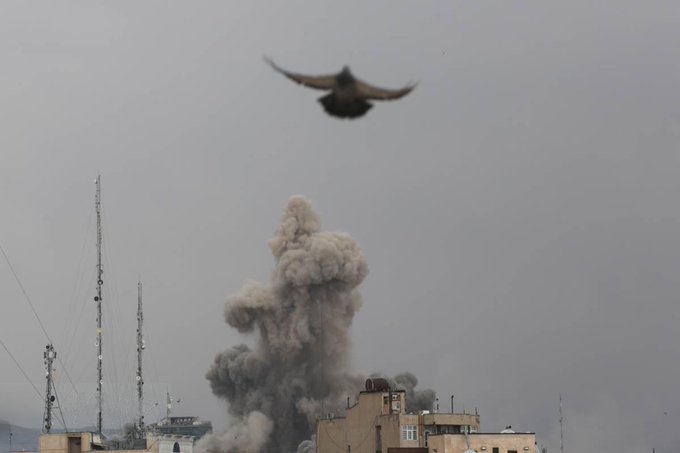
The Strait of Hormuz remains the focal point of the crisis, with attacks on commercial shipping, threats to global energy supplies and heightened fears of a wider regional conflict.
BY PC Bureau
July 15: The military confrontation between the United States and Iran intensified sharply on Wednesday, with fresh US air and missile strikes reportedly killing at least 35 people and injuring more than 300 across Iran, further escalating tensions in an already volatile Gulf region.
Iranian authorities said the attacks targeted military infrastructure and coastal defence installations, while reiterating that Tehran’s military posture remains strictly defensive. Iranian officials insisted the country would not negotiate under military pressure, even as hostilities continue to intensify.
The latest escalation comes amid heightened uncertainty over maritime security in the Gulf and growing international concerns that the conflict could expand into a wider regional war.
Trump Drops Strait Transit Fee Proposal
In a significant policy shift, US President Donald Trump abandoned his earlier proposal to impose a 20 per cent transit fee on commercial vessels using the Strait of Hormuz.
According to reports, the decision followed discussions with Gulf allies, who instead offered substantial investment commitments in the United States.
However, while shelving the transit fee proposal, Washington is proceeding with plans to tighten economic and maritime pressure on Tehran through a blockade targeting Iranian ports and shipping operations.
READ: Two Kuki Villages Torched in Manipur, Kuki Inpi Alleges NSCN-IM Role
Intense escalation last night between Iran-US
Updates after 10 PM Tehran time:
• The US targeted the barracks of the Iranian Army’s 388th Brigade in Bampour specifically the conscript soldiers’ dormitory, resulting several casualties.
• The US targeted a mineral water… pic.twitter.com/tMD8C3XEn1
— Arya Yadegaar (@AryJeayBackup) July 15, 2026
Fresh Military Strikes
US forces reportedly carried out a new wave of strikes targeting Iranian coastal defence systems, missile launch facilities, drone infrastructure and maritime assets.
Washington has maintained that the operations are aimed at reducing Iran’s ability to threaten commercial shipping and regional security.
Iran, meanwhile, has accused the United States of escalating the conflict and vowed to continue defending its territorial waters and national sovereignty.
Strait of Hormuz Remains Flashpoint
The Strait of Hormuz remains the central flashpoint in the conflict.
The narrow waterway carries nearly 20 per cent of the world’s seaborne crude oil and liquefied natural gas exports, making it one of the most strategically important maritime routes globally.
Iran maintains that it has the right to regulate navigation in the area, while the United States and its allies insist that international shipping must continue without interference.
Commercial Shipping Under Threat
The deteriorating security environment has raised fresh concerns for global shipping.
Reports indicate that two UAE-linked oil tankers were struck during recent attacks, with Indian crew members said to be among those affected. Other commercial vessels operating near Oman have also reported projectile attacks and security incidents.
Several international aviation authorities have issued advisories urging airlines to avoid parts of Gulf airspace as the risk of further military escalation grows.
Oil Markets on Edge
The renewed fighting has once again unsettled global energy markets.
Oil prices initially surged amid fears of supply disruptions before easing slightly after President Trump withdrew the proposed Hormuz transit fee.
Despite the temporary relief, traders continue to monitor developments closely, with any disruption to shipping through the Strait of Hormuz expected to have significant implications for global energy supplies.
Diplomatic Efforts Continue
Even as military operations intensify, diplomatic channels remain active.
Pakistan, Oman and Qatar are reportedly engaged in behind-the-scenes efforts to prevent the conflict from expanding further. Mediators are seeking to revive discussions on maritime security in the Strait of Hormuz, Iran’s nuclear programme and broader regional stability.
However, continued exchanges of military strikes have significantly reduced hopes for an early diplomatic breakthrough.
This live blog will continue to provide updates on military developments, diplomatic initiatives, maritime security, global oil markets and international reactions as the US-Iran conflict unfolds.