With thousands still living in relief camps or outside their home constituencies, questions are being raised about how Booth Level Officers (BLOs) will conduct effective door-to-door verification.
BY PC Bureau
May 14, 2026: The Election Commission of India’s Special Intensive Revision (SIR) of electoral rolls, designed to update voter lists through extensive house-to-house verification, is set to cover Manipur in its Phase-III rollout. However, questions are being raised about the practicality of conducting such a large-scale exercise in a state still grappling with the aftermath of prolonged ethnic violence and widespread displacement.
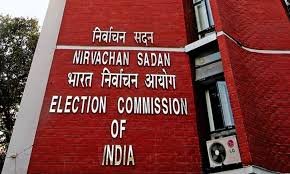
The ECI on Thursday announced the SIR Phase-III of electoral rolls covering 16 States and three Union Territories, encompassing over 36 crore electors. The exercise also includes Manipur.
A State Still in Flux
Manipur continues to face instability following ethnic clashes that have displaced thousands of people and forced many families to abandon their homes. Thousands of residents remain in relief camps or have left the state altogether. Many villages in affected districts have been partially or fully abandoned, with homes damaged or destroyed during periods of unrest.
In such conditions, the basic assumptions behind a door-to-door verification exercise—stable residence, accessible households, and verifiable local documentation—are significantly weakened.
READ: Manipur: KNO, UPF Condemn Killing Of Pastors, Blame Naga Militants
Special Intensive Revision – Phase III
SIR to be conducted in phased manner in 16 States and 3 UTs
Read more : https://t.co/gAv53Frppn pic.twitter.com/bXMC7rjLj7
— Election Commission of India (@ECISVEEP) May 14, 2026
The Core Challenge: “Where is the voter?”
The SIR process relies heavily on Booth Level Officers (BLOs) physically visiting households to verify eligibility, update records, and remove ineligible entries. But in Manipur’s current context, a large segment of the population may not be available at their registered addresses.
Displaced families often reside in relief camps, rented accommodations, or temporary shelters, sometimes outside their original electoral constituencies. This raises practical questions:
- How will BLOs verify voters who no longer reside at their recorded addresses?
- What documentation will displaced families be able to produce if personal records were lost or destroyed?
- Will temporary settlements and relief camps be formally integrated into the verification process?
- How will thousands of displaced people—particularly from the Kuki-Zo community—who are currently unable to travel safely to Imphal or return to their original hill villages, be able to make themselves available for BLO verification? For many, the process could become financially burdensome, requiring significant travel costs if they are forced to access hill districts via alternative routes such as Aizawl or Guwahati.
Without clear operational adaptations, there is a risk that a section of genuine voters could be left out simply due to circumstances beyond their control.
Risk of Exclusion in Conflict Zones
Electoral roll revisions are designed to improve accuracy, but in fragile environments they can also unintentionally lead to exclusion. In Manipur’s case, civil society observers and local stakeholders have all along expressed concern that displaced populations—already struggling with identity documents, relocation, and administrative disruption—could face difficulties in re-establishing their voter eligibility.
This becomes especially sensitive in regions where displacement has been long-term, and where families may have lost access to property records, utility bills, or other standard proofs of residence.
Administrative Complexity on the Ground
Conducting SIR in Manipur also presents logistical challenges. Some villages remain difficult to access due to security concerns, while administrative staff may face constraints in reaching certain areas safely. Coordination between election officials, security forces, and local administrators would be crucial for any meaningful verification exercise.
At the same time, ensuring that displaced citizens are not disenfranchised would require additional safeguards, such as mobile verification units, camp-based registration drives, and flexible documentation norms.
The Balance Between Accuracy and Inclusion
The purpose of SIR is to ensure clean and updated electoral rolls by removing duplicates and adding eligible voters, especially young and first-time electors. However, in conflict-affected regions like Manipur, the challenge is not just technical accuracy but also democratic inclusion.
If implemented without sensitivity to ground realities, there is a risk that administrative precision could come at the cost of representation for already vulnerable populations.
The feasibility of conducting SIR in Manipur depends not only on administrative capacity but also on adaptive planning that reflects the state’s current humanitarian and security situation. While updating electoral rolls is essential for electoral integrity, the process in Manipur will require exceptional flexibility to ensure that displacement does not translate into disenfranchisement.
In a state still recovering from violence, the challenge for election authorities is to ensure that every eligible voter is not only counted—but is also not left behind.