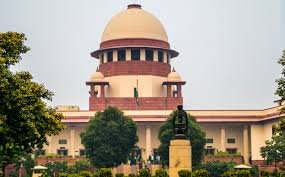
The Supreme Court observed that the presence of a Union Cabinet Minister in the panel creates a likely 2:1 majority in favour of the government, raising questions over neutrality.
BY PC Bureau
May 14, 2026: The Supreme Court on Thursday expressed serious reservations over the current composition of the selection committee responsible for appointing the Chief Election Commissioner (CEC) and Election Commissioners, particularly the inclusion of a Union Cabinet Minister, observing that the structure raises questions about institutional independence.
A bench comprising Justice Dipankar Datta and Justice Satish Chandra Sharma was hearing a petition challenging the appointment framework. The court noted that the panel—comprising the Prime Minister, the Leader of Opposition (LoP), and a Union Cabinet Minister—effectively creates a 2:1 arrangement in favour of the government, since the minister is unlikely to dissent from the Prime Minister’s view.
“Why this show-off of independence in appointment of Election Commissioner?” the bench observed. “Will a member of the cabinet go against the Prime Minister?”
The judges emphasised that the Election Commission plays a crucial role in safeguarding democracy and ensuring free and fair elections, and therefore requires stronger institutional safeguards. They also pointed out that if the Chief Justice of India can be part of the selection process for the CBI Director, a more independent mechanism could similarly be considered for appointing Election Commissioners.
READ: Efforts Underway to End Hostage Standoff in Manipur
Justice Datta remarked that independence must not only exist in substance but also in appearance. “It is not sufficient to be independent but it has to appear to be independent… The Election Commission should not only be neutral but it should look neutral in its functioning,” he said.
The bench further questioned the rationale behind the current structure, observing that the Leader of Opposition’s role appeared largely symbolic. “Let us assume the ruling party has 300 MPs. The PM picks 25 of his best. Now you again micromanage it and bring one from the 25. Why? Why do you then include the leader of the opposition? He’s ornamental. It will always be 2:1,” the court remarked.
Petitioner’s arguments
Retired IAS officer S.N. Shukla, appearing for petitioner Lok Prahari, challenged both the law governing the selection process and the appointments made under it. He argued that the committee functions as a “one-man show” and that the inclusion of the Leader of Opposition does not meaningfully check executive dominance, as their views can be disregarded.
Citing Dr. B.R. Ambedkar, he submitted that protecting the tenure of Election Commissioners is insufficient without safeguards against executive influence. He contended that the legislation violates Articles 14 and 324 of the Constitution and undermines the political neutrality of the Election Commission.
Government’s defence
Attorney General R. Venkataramani defended the existing framework, arguing that Parliament is entitled to design a selection process suited to national requirements. He cautioned against judicial overreach into legislative functions and said it cannot be presumed that the law compromises the Election Commission’s independence. He also maintained that the earlier Anoop Baranwal judgment should not be interpreted as a binding legislative mandate.
The bench also considered whether the matter should be referred to a Constitution Bench under Article 145(3), given the significant constitutional questions involved.
Justice Satish Chandra Sharma noted that current appointees, given their administrative experience and background as returning officers, bring relevant expertise to election management.