



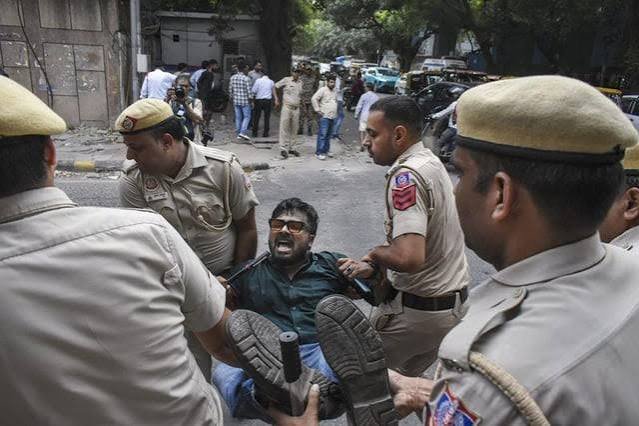
Despite Supreme Court’s Sunday intervention, journalists bundled into police buses, barricades remain, and protesters face fresh detentions as agitation against CEC Gyanesh Kumar continues.
BY Navin Upadhyay
New Delhi, October 11: Delhi Police’s continuing crackdown on protesters and journalists covering demonstrations against Chief Election Commissioner Gyanesh Kumar has raised serious questions about compliance with the Supreme Court’s directions on Sunday, with reporters detained despite displaying press credentials and restrictions on public movement continuing across the capital.
The police action continued even after a special Sunday sitting of the Supreme Court directed authorities against unlawful detention of peaceful protesters, ordered a review of barricades, called for normal Metro and rail services subject to legitimate public-order requirements, and emphasised that journalists, lawyers and other professionals must not be obstructed while performing their duties. The court also issued notices in contempt proceedings concerning alleged non-compliance with its earlier directions.
The developments have intensified concerns over the treatment of peaceful dissent and the freedom of the press. Rather than easing restrictions following the court’s intervention, police continued to detain people assembling at different locations, including Connaught Place, while reporters attempting to document the action found themselves among those taken away in police vehicles.
Journalists Detained Despite Showing Press Credentials
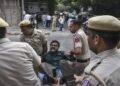
More than a dozen journalists were detained while covering the protests on Sunday, according to media reports. Three journalists working for The Indian Express Hindi—Shashwat, Siya and Vijay—said they were forcibly taken into a police bus despite identifying themselves and showing their press credentials. They were subsequently taken to Chhatrasal Stadium and released.
10 अक्टूबर को दिल्ली में हुए प्रदर्शन को कवर करने के लिए इंडियन एक्सप्रेस हिंदी की टीम ग्राउंड पर मौजूद थी. शाम को लगभग 6 बजे, कवरेज के दौरान विजय और स्वाति की टीम की बातचीत एक पुलिस अधिकारी से हुई. उनके कंधे पर तीन स्टार थे और उन्होंने क्रिकेट के खेल में इस्तेमाल होने वाला हेल्मेट पहना हुआ था.
विजय से बातचीत के दौरान उन्होंने ऐसा दर्शाया कि वो विजय को पहले से जानते थे. विजय ने मना कर दिया. पुलिस अधिकारी ने बातचीत जारी रखी.
इतने में हमारा ध्यान उनके चश्मे पर गया. मालूम पड़ा कि उन्होंने रेबैन के मेटा ग्लासेज़ पहने हुए थे. वो शायद रिकॉर्डिंग भी कर रहे थे. सवाल पूछने पर अधिकारी ने कहा कि वो रिकॉर्डिंग नहीं कर रहे थे.
हमने अपनी फ़ुटेज चेक की तो पाया कि उसी पुलिस अधिकारी की तस्वीरें हमारे कैमरे में कैद हुई थीं. हम वो तस्वीर यहां दिखा रहे हैं.
सवाल ये हैं:
क्या पुलिसकर्मियों को निगरानी रखने या किसी भी और इरादे से, ये स्मार्ट चश्मे दिए गए हैं?
यदि हां, तो क्यों?
यदि नहीं, तो क्या कोई पुलिसकर्मी, ड्यूटी के दौरान, ऐसे स्मार्ट चश्मे पहन सकता है? और लोगों की अनधिकृत रिकॉर्डिंग कर सकता है?— Indian Express Hindi (@IEhindi) October 11, 2026
Reporters from other organisations, including Peek TV, Hindustan Times and Malayalam news channels, were also reportedly detained. Journalists and eyewitnesses described reporters being dragged, pushed into vehicles and manhandled while attempting to cover the police action. There were also reports of phones being seized.
Well-known Youtuber Pragya Mishra was also dragged on the streets and detained by Delhi Police.
The action also continued a pattern reported on October 10, when journalists from several media organisations were detained while covering the protests despite displaying their press cards. Four press organisations subsequently condemned the police action and demanded an apology and an inquiry.
Supreme Court Directions Raise Questions Over Police Conduct
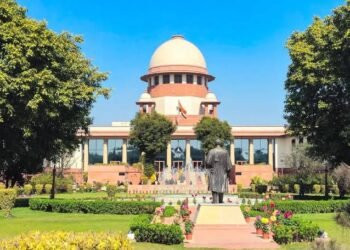
The Supreme Court’s intervention on Sunday was significant. A bench of Justices Joymalya Bagchi and V. Mohana directed that no individual should be detained except in accordance with the procedure established by law, particularly where peaceful and unarmed people assemble outside areas covered by prohibitory orders.
The court also directed authorities to review barricades and remove those not required for legitimate law-and-order or traffic reasons. It said Metro and rail services should function normally unless restrictions were necessary to address disturbances to public order. The court further stressed that journalists, lawyers and other professionals should not be prevented from carrying out their duties.
राजधानी दिल्ली में पत्रकारों के साथ बदसलूकी की खबरें आ रही हैं। उन्हें रिपोर्ट करने से रोका जा रहा है
इस वीडियो में महिला पत्रकार प्रज्ञा मिश्रा को दिल्ली पुलिस हिरासत में ले रही है
एक महिला पत्रकार को 10 से ज्यादा पुलिसकर्मी उठाकर ले जा रहे हैं, जो पत्रकार सवाल पूछ रहे हैं उन्हें भी डिटेन किया जा रहा है !
@PragyaLive— Rajender Singh (@rajendersingh56) October 11, 2026
These directions did not prohibit lawful policing or override valid restrictions imposed under the law. Nor did they grant protesters unrestricted permission to assemble anywhere. But they made clear that restrictions and detentions must have a lawful basis and that professional newsgathering must not be obstructed.
The subsequent detention of journalists covering the protests, alongside reports of continued barricading and mass preventive action, therefore demands a clear explanation from the police. The central question is whether the authorities implemented the court’s directions in practice or continued with measures that risked defeating their purpose.
The Supreme Court has not, merely by issuing notices in contempt proceedings, conclusively established that its orders were wilfully disobeyed. That determination rests with the court. Nevertheless, the reported events warrant close judicial scrutiny, particularly where journalists say they were detained while doing their jobs.
The detention of reporters has drawn strong criticism from press organisations, which have demanded accountability for the treatment of journalists covering the demonstrations. Their concern goes beyond the inconvenience or indignity suffered by individual reporters: it involves the ability of the media to document police conduct without intimidation or interference.
The issue is especially serious when journalists are detained while filming the detention of others. Such action can prevent footage from being recorded, restrict the flow of information and make it harder to independently establish whether the use of force was justified.
Any allegation that police personnel seized phones, interfered with recordings or pressured journalists to delete footage requires investigation. Equally, any allegation of unlawful detention or excessive force should be examined on the evidence, with responsibility fixed where misconduct is established.
The police have the authority to maintain public order. They do not have a licence to suppress reporting on how that authority is exercised.
Barricades, Detentions and a City Under Restrictions
On Sunday, despite the Supreme Court’s intervention, fresh detentions were reported as protesters attempted to gather at different locations. AISA president Neha Bora was among those detained during the continuing agitation.
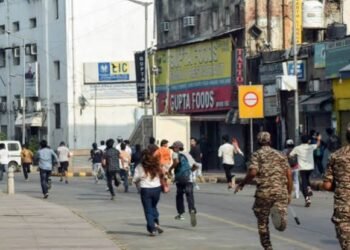
The peaceful protesters were not merely detained. In many cases, according to eyewitness accounts, videos, and reports from the ground, they were pinned to the ground, dragged across the streets, and roughly pushed and shoved by police personnel. The actions made a mockery of the right to peaceful protest, as if the Supreme Court’s orders—issued the same day—meant nothing.
The authorities have maintained that restrictions were necessary to preserve public order and have cited prohibitory orders and the absence of permission for certain gatherings. Those considerations, however, do not remove the obligation to act within the law or justify detaining journalists merely for reporting on events.
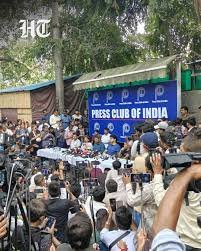
Despite the court’s specific order, the police kept most of the barricades in place and even erected one near the Press Club of India.
Contempt Question Now Before the Court
The Supreme Court has already been asked to examine alleged violations of its directions concerning public transport and restrictions imposed during the protests. On Sunday, it issued notice on a contempt petition alleging that Metro services had remained substantially suspended on October 10 despite the court’s earlier directions. The proceedings place the conduct of the authorities under judicial scrutiny.
The continuing detention of journalists and the reported persistence of restrictions after the court’s intervention raise a broader question of institutional accountability: what practical effect do judicial directions have if people on the ground continue to experience measures the court has sought to regulate?
The answer cannot be supplied by official assurances alone. The authorities must explain the legal grounds for the detentions, establish whether the journalists were obstructed in their professional duties, and demonstrate that barricades and restrictions were reviewed in accordance with the court’s directions.
The Supreme Court must now determine whether its orders were complied with and whether any breach warrants further action. Until the facts are established, it would be premature to declare the police guilty of contempt. But the reported incidents make transparent accountability imperative.
A constitutional democracy cannot protect the right to protest while denying the public the ability to witness how protests are policed. Nor can compliance with judicial orders be reduced to assurances in court while questions about their implementation remain unanswered on the streets.
The test of the Supreme Court’s intervention will not be the words recorded in its order, but whether the authorities act on them.

Comments 1