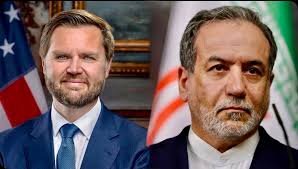
President Donald Trump has expressed optimism about a potential breakthrough, while also praising Pakistan’s mediation role in hosting and facilitating negotiations between US and Iran.
BY PC Bureau
April 18, 2027: A fresh round of direct negotiations between the United States and Iran is likely to take place in Islamabad on Monday, April 20, according to Iranian officials cited by CNN. Iranian sources indicated that negotiators from both sides are expected to arrive in the Pakistani capital as early as Sunday, raising hopes for progress toward ending the ongoing US-Israel-Iran conflict that has disrupted the Middle East for nearly two months.
US officials have not yet publicly confirmed the exact date, but President Donald Trump has expressed optimism in recent statements, suggesting that a deal could be “very close” and that talks may resume imminently, potentially with high-level US participation, including figures such as Vice President JD Vance, Steve Witkoff, or Jared Kushner. Trump has emphasized that future negotiations should take place exclusively in Islamabad, praising Pakistan’s mediation efforts and its Army Chief, Field Marshal Asim Munir, as a key facilitator.
Background: From Escalation to Ceasefire and Stalled Talks
The current diplomatic push follows weeks of intense military confrontation. On February 28, 2026, the US and Israel launched a major airstrike campaign against Iran, targeting nuclear facilities, ballistic missile sites, air defenses, and leadership positions. The operation reportedly resulted in the killing of Supreme Leader Ali Khamenei and significant degradation of Iran’s military capabilities, including its defense industrial base, navy, and missile stockpiles.
Iran responded with missile and drone attacks on Israeli targets, US bases in the region, and shipping in the Strait of Hormuz, which it disrupted for weeks, causing global oil price spikes and economic ripple effects. A fragile two-week ceasefire, brokered with Pakistani involvement, took effect around April 8, halting direct exchanges of fire between Iran, the US, and Israel. A related Israel-Hezbollah ceasefire in Lebanon has also shown signs of holding.
The first round of historic face-to-face US-Iran talks took place in Islamabad on April 11–12 at the Serena Hotel. Led on the US side by Vice President JD Vance and on the Iranian side by Parliamentary Speaker Mohammad Bagher Ghalibaf (with Foreign Minister Abbas Araghchi also involved), the marathon session lasted over 21 hours. Pakistan’s Prime Minister Shehbaz Sharif and Army Chief Asim Munir played central mediating roles.
READ: Iran Flags Trump’s Lies, Threatens to Block Hormuz Again
Despite the length and intensity of the discussions — described as the highest-level direct engagement between Washington and Tehran since the 1979 Islamic Revolution — no comprehensive agreement was reached. Vance stated that Iran rejected US terms, while Iranian officials said they did not expect an immediate breakthrough and accused the US of failing to build trust. Both sides, however, left the door open for continued dialogue.
Key Sticking Points in the Negotiations
Reports highlight several core issues dividing the parties:
- Iran’s Nuclear Program: The US has pushed for a long-term halt or severe restrictions on uranium enrichment, with proposals reportedly including a 20-year pause. Iran insists on its right to peaceful nuclear technology and rejects terms it views as excessive or aimed at regime change.
- Strait of Hormuz and Naval Issues: Iran temporarily disrupted shipping through the strategic chokepoint. While it has since signaled openness to commercial vessels for the remainder of the ceasefire period, the US has maintained pressure on Iranian ports.
- Regional Proxies and Ceasefires: Linked issues include the Israel-Hezbollah truce in Lebanon and broader de-escalation involving Iranian-backed groups.
- Sanctions, Security Guarantees, and Verification: Disputes continue over sanctions relief, security assurances for Iran, and mechanisms to verify compliance.
Pakistan has positioned itself as a neutral broker, with both Tehran and Washington engaging closely with Islamabad’s leadership. Turkey and other regional actors have also supported backchannel diplomacy.
As the initial ceasefire approaches a critical juncture, both sides appear motivated to avoid a return to full-scale hostilities. President Trump has alternated between optimistic claims of a near deal and warnings that Iran would suffer from prolonged stalemate. Iran has signaled willingness to continue talks but maintains it has not been defeated and rejects one-sided concessions.
Global markets have reacted sensitively, with oil prices easing after earlier spikes linked to disruptions in the Strait of Hormuz. However, uncertainty persists, and risks of renewed escalation remain if talks fail.
Pakistan’s role has drawn international attention, enhancing its diplomatic profile while raising security concerns in Islamabad, where authorities have tightened measures ahead of possible high-level visits.
The April 20 round in Islamabad could prove pivotal. Success may lead to a more durable truce, addressing nuclear concerns, reopening trade routes, and stabilizing the broader region. Failure, however, could risk the collapse of the ceasefire and a return to military confrontation, including potential US or Israeli strikes on Iranian targets.
Analysts note deep mistrust rooted in decades of hostility, but also point to war fatigue and economic pressure on all sides as possible drivers for compromise. Pakistan’s continued facilitation is expected to remain central.
This developing story is being closely watched worldwide for its implications on energy markets, regional security, and global power dynamics. Further updates are expected as delegations converge on Islamabad