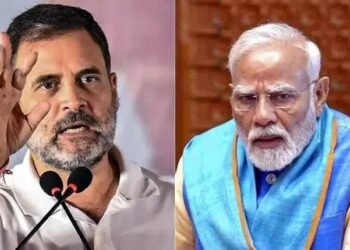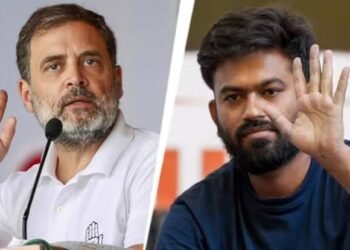



Maharashtra’s ruling Mahayuti alliance won only two of five MLC seats, while the opposition MVA secured three. Congress retained the prestigious Nagpur graduates’ constituency, defeating the BJP on the home turf of Chief Minister Devendra Fadnavis and the RSS headquarters.
BY PC Bureau
October 29: Maharashtra’s ruling Mahayuti alliance suffered a setback in the Legislative Council elections, winning two of the five graduates’ and teachers’ constituency seats, while the opposition Maha Vikas Aghadi (MVA) secured three. The most closely watched contest was in Nagpur, where Congress retained the graduates’ seat, defeating the BJP on the home turf of Chief Minister Devendra Fadnavis, Union Minister Nitin Gadkari and the Rashtriya Swayamsevak Sangh (RSS) headquarters.
In the second result declare late at night, Pratapsinh Patil defeated sitting MLC Satish Chavan in the Chhatrapati Sambhajinagar graduates’ constituency.
The results exposed differences within the ruling alliance and gave the opposition an opportunity to question its electoral coordination. The elections were held on October 23, with preferential paper-ballot counting extending over several days.
Congress retains Nagpur seat after dramatic count
🚨 Biggest Breaking Coming Straight from Nagpur.
Congress Won Nagpur. 💀🔥🫡
Devendra Fadnavis’s hometown.
Nitin Gadkari’s constituency.
RSS Headquarters.
Yet, Congress Humbled all of them in Nagpur MLC Elections. 🔥 https://t.co/uVQJCNnGzx
— Krishna Yadav (@Control_Krishna) October 28, 2026
Congress sitting MLC Abhijit Wanjari defeated BJP candidate Sudhakar Kohale by 3,271 votes, polling 67,231 votes against Kohale’s 63,960. The result came after more than 40 hours of counting, during which the lead changed as officials processed preferential votes.
Kohale had moved ahead by 4,294 votes after the second round, but subsequent transfers of preference votes helped Wanjari recover and secure victory. Independent candidate Nitesh Karale, who received more than 24,000 votes, emerged as a significant factor in the contest.
The defeat was politically significant for the BJP. Nagpur is the home city of Fadnavis and Gadkari and houses the RSS headquarters. Gadkari had represented the graduates’ constituency for several terms in the past. Wanjari’s victory also enabled Congress to retain the seat he won in 2020.
NCP (Sharadchandra Pawar) wins two seats
The NCP (Sharadchandra Pawar) faction secured victories in both graduates’ constituencies it contested. Harshada Deshmukh-Jadhav defeated BJP candidate Smita Jadhav in Pune, while Pratapsinh Patil unseated three-term MLC Satish Chavan in the Chhatrapati Sambhajinagar graduates’ constituency.
The ruling alliance’s two victories came in the teachers’ constituencies. BJP candidate Kaustubh Gawade won in Pune, defeating independent candidate Sachin Sanap, who was backed by the Shiv Sena faction led by Deputy Chief Minister Eknath Shinde. Shiv Sena candidate Kiran Sarnaik retained the Amravati teachers’ seat.
The final tally gave the BJP one seat from the three it contested, while the Shinde-led Shiv Sena won one of its two contests. The Ajit Pawar-led NCP failed to win the seat it contested. On the opposition side, NCP (SP) won two seats and Congress one.
READ: Soon After PM Modi Mocked Rahul, Cong Stuns BJP in Nagpur
Fadnavis deletes ‘big fat zero’ post
The Nagpur result also drew attention to a post by Fadnavis on X that he deleted after Congress secured victory.
Prime Minister Narendra Modi had commented on Legislative Council elections conducted through paper ballots in four states, including Maharashtra, asking how many seats Congress had won in a jibe at the party’s criticism of electronic voting machines. Fadnavis responded by declaring that Congress had scored a “big fat zero” and adding that the party was “consistent at something”.
However, the Nagpur count was still underway when he posted the remark. Wanjari’s eventual victory made the claim premature, and Fadnavis subsequently deleted the post.
The episode provided Congress with an opportunity to target the Chief Minister, particularly because the BJP defeat came in his home city. The party said the post had been published in haste before the final outcome was known.
Alliance management under scrutiny
The results have raised questions about coordination within Mahayuti, whose partners faced differences over seat-sharing and candidate selection. The BJP, Shiv Sena and NCP contested separate constituencies under an alliance arrangement, but their local electoral strategies did not always align.
The NCP (SP), meanwhile, converted its contests into two victories, benefiting from its performance in the graduates’ constituencies. The Nagpur result also demonstrated how preference transfers can determine the outcome in elections conducted through preferential paper ballots.
Graduates’ and teachers’ constituencies have relatively limited electorates and do not necessarily reflect voting patterns in state-wide elections. Nevertheless, they provide an indication of party organisation and influence among specific professional and educational groups.
Mahayuti retains its broader position in Maharashtra politics, but its two-seat tally against the MVA’s three has handed the opposition a fresh issue to raise. The Nagpur defeat and Fadnavis’s deleted post are likely to remain central to the political debate surrounding the results.