Maharashtra Chief Minister Devendra Fadnavis deleted his “big fat zero” post after Congress retained Nagpur’s graduates’ seat. The result gave the Opposition an opportunity to challenge the BJP electoral narrative on ballot paper.
BY Navin Upadhyay
October 29: Until Wednesday evening, the BJP and its leaders were using the results of the Legislative Council elections to taunt the Congress over its demand for greater scrutiny of electronic voting machines (EVMs). Their argument was straightforward: if paper ballots offered a more credible test of electoral fairness, why had the Congress failed to win a single seat in the four-state MLC elections?
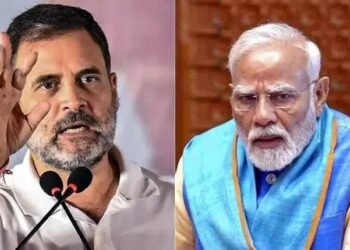
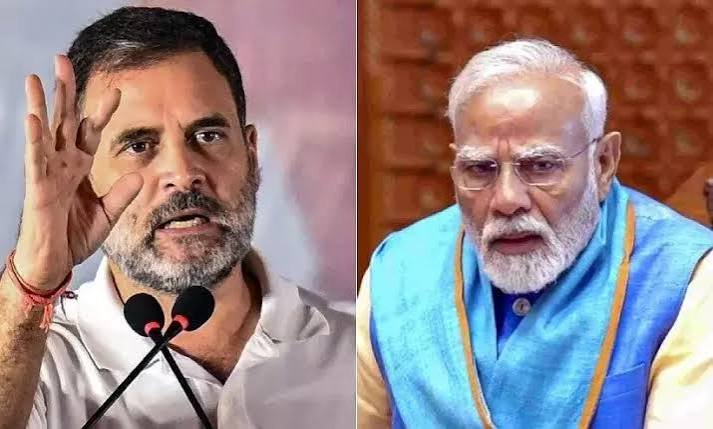
Prime Minister Narendra Modi joined the attack, highlighting the Congress’s failure to win seats in the contests declared at that stage. BJP leaders presented the results as a rebuttal to the Opposition’s allegations about EVMs and its demand for a return to paper ballots.
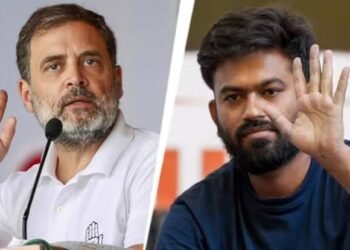
Within hours, however, the political narrative began to shift. Congress retained the Nagpur graduates’ constituency in Maharashtra, defeating the BJP in the home city of Chief Minister Devendra Fadnavis and the headquarters of the Rashtriya Swayamsevak Sangh (RSS). The Nationalist Congress Party (Sharadchandra Pawar) also clinched the Sambhaji Nagar seat . The Oppostion won the overall seat count 3/2 in Maharashtra.
The results gave the Opposition an opportunity to turn the BJP’s argument back on it. The ballot paper, which had been invoked to question the Congress’s electoral credibility, became a talking point for challenging the ruling alliance’s performance in some of its established strongholds.
On the surface, the results across Uttar Pradesh, surface, tBihar, Maharashtra and Karnataka did not amount to any setback for the BJP-led National Democratic Alliance (NDA). The alliance won all four seats in Karnataka, secured four of the eight seats in Bihar and retained six of the 11 seats in Uttar Pradesh. In Maharashtra, the ruling Mahayuti alliance won two of the five seats, while the opposition Maha Vikas Aghadi secured three. The NDA’s overall tally stood at 16 of the 28 seats.
But the fact remains that NDA lost seats represented by heavyweights such as Prime Minister Narendra Modi (Varanasi), BJP president Nitin Nabin (Patna), Defence Minister Rajnath Singh (Lucknow), Devendra Fadnavis and Nitin Gadkari ( Nagpur), and only barely managed to retain Uttar Pradesh Chief Minister Yogi Adityanath’s Gorakhpur seat by a mere 300 votes.
READ: Big Setback for NDA in Maharashtra, MVA Wins 3 of 5 MLC Seats
If Narendra Modi is so confident that EVMs have no bearing on election results, let him prove his confidence in the BJP’s electoral prowess through action, not rhetoric.
1. Commit to conducting all Lok Sabha and upcoming Vidhan Sabha elections by ballot paper going forward.
2. Suspend SIR and restore the 13.3 crore voters illegally deleted from the electoral rolls.
3. Terminate Gyanesh Gupta.
4. Repeal the law that gives life long immunity to Gyanesh Gupta.Until Modi acts on these demands, his claims are nothing but hogwash – hollow words no one can take seriously.
— Pawan Khera 🇮🇳 ಪವನ್ ಖೇರಾ (@Pawankhera) October 28, 2026
These results acquire added significance when set against the NDA’s commanding performance in the 2025 Bihar Assembly election and the BJP-led Mahayuti’s sweeping victory in the 2024 Maharashtra Assembly election. In both states, the ruling alliances entered the MLC contests with considerable political and organisational advantages. The Maharashtra opposition had also been weakened by defections. The opposition will be well within its rights to ask what changed between the assembly polls and now, that even after such landslides the NDA struggled in its strongholds.
The losses and close contests in politically significant areas also give the Opposition an opening to challenge the perception that the BJP’s organisational machinery guarantees electoral success. In Uttar Pradesh, the Samajwadi Party’s performance in Varanasi and Lucknow, alongside the narrow Gorakhpur result, will provide material for its campaign ahead of the 2027 Assembly election.
The political significance of these constituencies must nevertheless be kept in perspective. Graduates’ and teachers’ seats have restricted electorates and distinctive voting patterns. Their results cannot automatically be extrapolated to Assembly or parliamentary elections.
The ballot-paper argument comes full circle for the BJP
Congress spokesperson Pawan Khera was quick to seize on the results to challenge the BJP’s claims. The Prime Minister had highlighted the Congress’s initial failure to win seats in the ballot-paper elections. The Congress victory in Nagpur and the Samajwadi Party’s gains in Uttar Pradesh complicated that narrative, giving the Opposition grounds to ask why the ruling alliance had struggled in constituencies where it expected to perform strongly.
The Nagpur result was particularly significant because of its political symbolism. Congress candidate Abhijit Wanjari defeated the BJP’s Sudhakar Kohale by 3,271 votes after a prolonged count. The outcome came despite the BJP’s initial lead, with preference votes transferred during subsequent rounds eventually turning the contest in Wanjari’s favour.
The result also exposed the risks of premature political celebration. Fadnavis had declared on X that Congress had scored a “big fat zero” while counting was still underway. After Wanjari’s victory became clear, the Chief Minister deleted the post, which then became a subject of criticism on social media.
The EVM debate remains unresolved
The results have complicated the political messaging around EVMs, but they do not settle the larger debate over electoral integrity. A party’s victory under paper-ballot voting does not establish that electronic voting machines are unreliable. Equally, a party’s defeat in a paper-ballot election does not, by itself, invalidate its concerns about electoral procedures.
The credibility of any voting system must be assessed through evidence, transparent procedures and effective oversight—not simply through the fortunes of individual political parties.
What has changed is the political context in which the argument is being made. The BJP had used the early results to challenge the Congress’s demand for a return to paper ballots. Subsequent opposition victories have made that line of attack less straightforward.
For the Opposition, the immediate opportunity lies in using these results to question the ruling alliance’s claims of electoral invincibility. For the BJP, the broader tally provides grounds to argue that it remains electorally competitive across the four states.
The ballot paper has thus become a double-edged political instrument. One night of counting has changed the tone of the debate, but not resolved its substance. The real test of electoral credibility lies beyond partisan claims—in the strength of the evidence, the transparency of the process and public confidence in the institutions responsible for conducting elections.