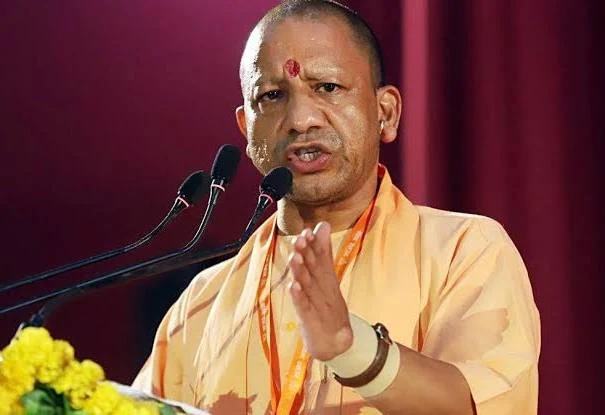
The Yogi Adityanath government’s revised job-verification rules have triggered a political row, with the Samajwadi Party describing them as reminiscent of the British colonial era and Congress questioning the government’s authority to determine eligibility
BY PC Bureau
October 29: The Yogi Aditynath-led Uttar Pradesh government has tightened character-verification rules for candidates seeking government jobs, declaring people involved in violent attempts to overthrow the existing system ineligible for public employment. The move has drawn criticism from the Samajwadi Party and the Congress, which have accused the Yogi Adityanath government of adopting an authoritarian approach.
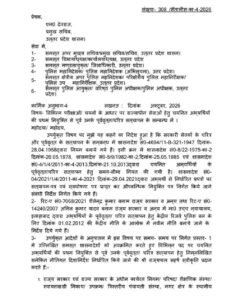
The revised guidelines, issued by M. Devaraj, Principal Secretary in the state’s Appointment and Personnel Department, apply to direct recruitment across government departments, corporations, councils and local bodies. They follow directions from the Allahabad High Court.
The rules, however, distinguish between political beliefs and violent activity. A candidate cannot be denied a government job merely for holding a particular ideology. Nor will the registration of a first information report (FIR) or the pendency of an investigation automatically render someone ineligible.
READ: A Night That Turned BJP’s Ballot-Paper Argument on Its Head
Three-year test for involvement in violent activities
Under the new guidelines, people associated with organisations committed to changing the existing order through violent means may be declared ineligible for government employment.
Participation in such activities during the three years preceding character verification, after the individual has turned 21, may be treated as evidence of continued involvement. The presumption can be reconsidered if there is clear evidence of a subsequent change in the person’s conduct.
The provisions have prompted opposition parties to question how the government will distinguish legitimate political dissent from activities that threaten public order.
Samajwadi Party spokesperson Udayveer described the Yogi Government’s guidelines as reminiscent of British colonial-era restrictions, arguing that peaceful protest is a constitutional right and that governments change through established electoral processes.
Congress leader Rashid Alvi also questioned the Yogi government’s authority to make such determinations, arguing that the decision appeared excessive and reflected anxiety over protests by younger people.
What the 30-day police verification rule means
One of the key provisions requires district police and the Local Intelligence Unit (LIU) to submit character-verification reports to the appointing authority within 30 days of receiving a verification request.
In practical terms, the deadline is intended to prevent police checks from remaining pending indefinitely and delaying appointments. The Home Department will monitor delays in the submission of reports.
The guidelines also remove the requirement for police or LIU personnel to visit a candidate’s home as part of the process. Candidates are not required to be physically present for verification.
If a verification report contains adverse findings, the district magistrate must give the candidate an opportunity to explain their position, either online or in person, before making a recommendation. This provision creates an opportunity for the candidate to respond before an adverse assessment is finalised.
The 30-day deadline does not mean that every candidate must automatically receive a final appointment within a month. It sets a time limit for the police and LIU to submit their reports; the appointment remains subject to the applicable eligibility requirements.
Pending FIRs will not automatically block appointments
The revised framework provides that an FIR or pending investigation, by itself, cannot be treated as sufficient grounds to reject a candidate.
Candidates who have been acquitted, cases resolved through compromise, and matters dealt with under juvenile-justice provisions will not face automatic rejection under the guidelines.
The rules also allow an appointment letter to be issued provisionally while character verification remains pending. For this, the candidate must submit a self-declaration and the required documents.
If subsequent verification establishes that the candidate is ineligible or has supplied false information, the appointment can be cancelled and legal action may follow.
Existing employees outside fresh verification
Government employees already in service are exempt from fresh character verification under the new guidelines. However, the appointing authority may seek information from their previous departments when required.
The government’s stated framework seeks to balance scrutiny of candidates’ backgrounds with safeguards against automatic rejection based on an FIR, an ongoing investigation or political ideology.
The controversy is likely to centre on how the provisions concerning violent attempts to change the existing order are interpreted and applied, particularly where allegations involve political activity or protest. The distinction between violence and peaceful dissent will be crucial to how the rules operate in practice.