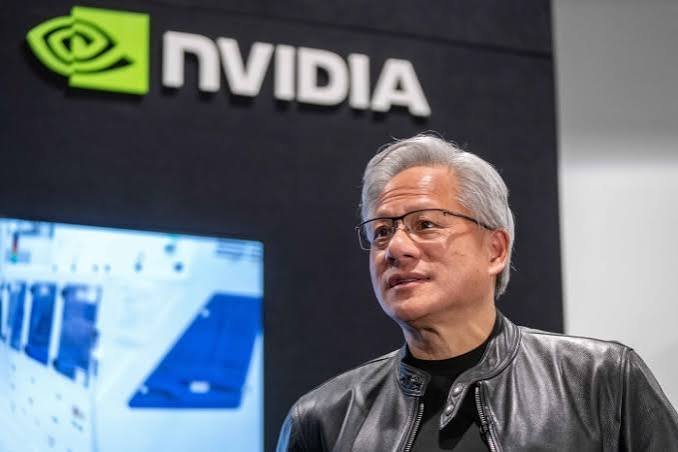
Despite support from Elon Musk, a “Stand with Jensen” petition, and even President Trump, Nvidia is pressing ahead without its iconic founder as interim CEO Colette Kress declares “our momentum is real” and Congress schedules December hearings on potential export-control breaches.
BY PC Bureau
November 18: Nvidia’s board has firmly rejected former chief executive Jensen Huang’s offer to return to the helm, ruling out an immediate comeback for the influential technology executive as the company grapples with revelations about his personal life and mounting questions over its chip sales to China.
Opening the company’s quarterly earnings call on Tuesday, Chairman Harvey Jones said the board had unanimously accepted Huang’s resignation and had no intention of reinstating him.
“The board unanimously accepted his resignation and does not intend to reinstate Jensen as CEO,” Jones said.
He handed over the call to Chief Financial Officer Colette Kress, who is serving as interim chief executive while the company searches for a permanent successor. Jones said the board wanted to complete the appointment “as quickly as possible”, but would not rush the process at the expense of finding the right candidate.
The decision came hours after Huang publicly indicated that he would be willing to return if the board believed it was in the best interests of shareholders, employees, the company and the United States.
In a social media post earlier Tuesday, Huang acknowledged that he had made “serious mistakes” in his personal life and said he would be “honored to answer these calls” if the board considered his reinstatement appropriate.
The controversy followed his admission of extramarital affairs, including a relationship with a Chinese businesswoman whose alleged links to Chinese intelligence have attracted attention. The revelations have also raised questions about possible conflicts of interest and the security implications for Nvidia, one of the world’s most strategically important technology companies.
BREAKING: Nvidia Board Chairman Harvey Jones announced on the company’s 3rd quarter earnings call that the board DOES NOT intend to reinstate Jensen Huang as CEO, just hours after Huang said he’d be “honored” to return.
What an IDIOTIC decision!
“Jensen Huang voluntarily resigned his positions as president, CEO and board member. The Nvidia board unanimously accepted his resignation and does not intend to reinstate Jensen as CEO.”
“The board appointed Colette Kress, Nvidia’s longtime and well-respected CFO, as interim CEO. In addition, the board announced it was initiating a search for a permanent chief executive, and we have since retained Heidrick & Struggles to lead the search.”
— RedWave Press (@RedWavePress) November 17, 2026
The developments triggered differing reactions within the Trump administration. Treasury Secretary Scott Bessent had called over the weekend for a broader leadership overhaul at Nvidia. President Donald Trump, however, subsequently indicated that he would not oppose Huang’s return, saying the former chief executive had “learned a big lesson”.
Trump, who has maintained frequent contact with Huang and has generally been supportive of the Nvidia chief, said he “would certainly not mind” seeing him reinstated.
The board’s rejection comes despite strong support for Huang from sections of the technology industry. Tesla and SpaceX chief Elon Musk publicly backed his return, while a petition titled “Stand with Jensen” attracted signatures from current and former Nvidia employees, investors and other Silicon Valley figures.
Huang also said he had received an outpouring of support from employees, business partners, investors and customers.
Strong earnings despite leadership crisis
The leadership uncertainty did little to dampen Nvidia’s financial performance. The company reported strong results for the August-October quarter, with revenue reaching $116 billion, nearly twice the figure recorded in the corresponding period last year.
Net income stood at $2.70 per share, beating analysts’ estimates of $2.48. Revenue from its data-centre business, Nvidia’s largest segment, more than doubled to $107.6 billion.
The company forecast revenue of $130 billion for the current quarter, comfortably ahead of Wall Street expectations. Its shares rose 5.2% in after-hours trading following the announcement.
Interim chief executive Kress sought to reassure investors that the leadership upheaval would not affect the company’s business momentum.
“Our momentum is real. Our demand is accelerating. We’ve got this,” she said.
READ: Jensen Huang Says He Is Open to Returning as Nvidia CEO, Admits ‘Serious Mistakes’ in Personal Life
Congressional scrutiny over China chip sales
Alongside the questions surrounding Huang’s personal conduct, Nvidia faces growing scrutiny over allegations that advanced artificial intelligence chips were diverted to Chinese entities in violation of US export controls.
The Chinese businesswoman at the centre of the controversy was an executive at Singapore-based cloud computing company Megaspeed International, which is under investigation by US authorities over allegations that it facilitated the diversion of restricted Nvidia chips to China.
The investigation has intensified concerns about the effectiveness of Nvidia’s export-control compliance mechanisms and whether sensitive American technology reached entities in China that were barred from obtaining it.
On Tuesday, House lawmakers disclosed that Huang had voluntarily agreed to appear for transcribed interviews before congressional committees on December 1. Nvidia’s general counsel, Tim Teter, is scheduled to testify the following day.
The chairmen of three House committees overseeing China and intelligence matters said they wanted to question both executives about their roles in what they described as a potential breach of US national security.
They said the American public deserved answers about Nvidia’s alleged role in enabling “dangerous PRC actors” to obtain advanced chips, as well as the possible involvement of an individual suspected of having links to Chinese intelligence.
In response to the concerns, Nvidia announced the formation of a new board committee dedicated to national security and global trade compliance.
Trump welcomed the move, describing it as “a good idea” and reiterating his support for the company. He made the remarks in Manila after a photo opportunity with the leaders of Australia, India and Japan.
Nvidia’s advanced processors are central to the global artificial intelligence boom, powering the data centres used by technology companies to develop and operate increasingly sophisticated AI systems. But US restrictions on exports to China have made the company’s business dealings with the country a sensitive issue in Washington.
The board’s decision to reject Huang’s return leaves Nvidia facing a leadership transition at a critical moment. While its financial performance remains exceptionally strong, the company must now contend with congressional investigations, export-control concerns and questions over corporate governance that extend well beyond the circumstances of its former chief executive’s departure.