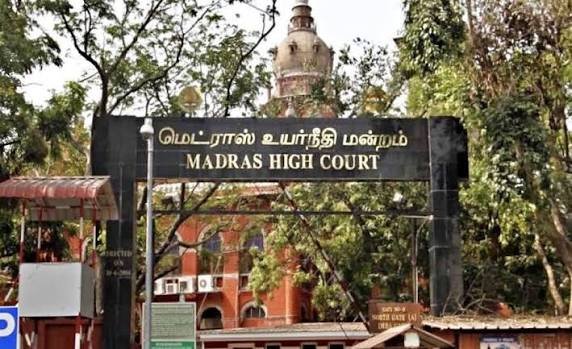
Quashing the police refusal, the Madras High Court said general apprehensions about law and order cannot justify denying permission for a peaceful protest. The protest can begin on November 29, subject to conditions.
BY PC Bureau
October 29: The Madras High Court has allowed residents of Sitharkadu village in Tamil Nadu’s Mayiladuthurai district to stage a sit-in protest inside a cremation ground against alleged pollution from a government-run rice mill, ruling that peaceful dissent cannot be curtailed on the basis of general apprehensions about law and order.
Justice V. Lakshminarayanan quashed the police order denying permission for the protest and allowed it to begin on November 29, 2026, subject to conditions.
The villagers have accused the Modern Rice Mill operated by the Tamil Nadu Civil Supplies Corporation (TNCSC) of causing air pollution and environmental damage. They approached the court after the police refused permission for their proposed demonstration.
Peaceful protest protected under Constitution
In its order in Anburaj v. State, the court held that peaceful protest is protected under Articles 19(1)(a) and 19(1)(b) of the Constitution, which guarantee freedom of speech and expression and the right to assemble peacefully without arms.
The judge observed that by drawing attention to alleged pollution caused by a state-controlled entity, the villagers were also discharging their fundamental duties under Articles 51A(a) and 51A(g), which concern respect for the Constitution and protection of the natural environment.
“Such a protest cannot be nipped in the bud,” the court said.
READ: Yogi’s New Job Rules: A Crackdown on Dissent?
The judge noted that the villagers had resorted to an unusual form of protest after earlier complaints and demonstrations allegedly failed to secure relief. A general apprehension of law-and-order problems was not sufficient to justify refusing permission if the demonstration remained peaceful.
The court also referred to the Supreme Court’s ruling in Mazdoor Kisan Shakti Sangathan v. Union of India, which recognised the importance of peaceful protests as an outlet for public grievances.
The villagers’ complaints against the rice mill date back several years. They have alleged inadequate pollution-control measures and continued deterioration in air quality despite approaching regulatory authorities and pursuing legal remedies.
The court’s order does not determine whether the mill is responsible for the alleged pollution. That issue remains subject to examination by the competent authorities.
The protest will be subject to three conditions: it must remain peaceful, organisers must provide the police with a list of participants in advance, and protesters must immediately make way for funerals and other religious rites at the cremation ground.
The ruling reinforces the principle that authorities cannot routinely deny peaceful protest merely because they anticipate possible law-and-order difficulties, particularly when citizens are seeking action over alleged environmental harm.