

Abhijit Wanjari’s victory in the Nagpur graduates’ MLC constituency, decided by preferential votes, and the Samajwadi Party’s win in the Varanasi teachers’ seat have complicated the BJP narrative of a sweeping victory in the ballot-paper elections.
BY PC Bureau
October 29: The BJP may have used the Congress’s poor performance in the wider Legislative Council elections to taunt the opposition over its demand for ballot papers, but two politically significant results have provided the opposition with a counterpoint. Congress’s Abhijit Wanjari defeated BJP candidate Sudhakar Kohale in Nagpur, while the Samajwadi Party retained the teachers’ constituency in Prime Minister Narendra Modi’s parliamentary constituency of Varanasi.
The Nagpur result is particularly significant for the BJP and the Rashtriya Swayamsevak Sangh (RSS). The city is the RSS headquarters and a longstanding centre of BJP organisation. The graduates’ constituency had been a BJP stronghold for decades before Wanjari wrested it from the party in 2020. His latest victory prevents the BJP from reclaiming the seat and marks a setback in a constituency where it had hoped to restore its dominance.
Nagpur: A dramatic reversal through preferential voting
The contest between sitting Congress MLC Wanjari and the BJP’s Kohale remained unsettled through hours of counting, with the lead changing hands as successive rounds were completed. The election, held on October 23, recorded a turnout of 64.82 per cent across the Nagpur Division Graduates’ constituency, which covers Nagpur, Wardha, Bhandara, Gondia, Chandrapur and Gadchiroli districts.
The first round of counting gave Wanjari a narrow lead of 927 votes. He secured 28,998 first-preference votes against Kohale’s 28,071. Independent candidate Nitesh Karale, popularly known as Karale Guruji, emerged as a significant third contender with 14,708 votes.
The picture changed during the next stage. After the second round, Kohale had accumulated 60,924 votes against Wanjari’s 56,630, putting the BJP candidate ahead by 4,294 votes. Karale’s tally rose to 24,249. Neither of the leading candidates had reached the winning quota of 75,438 votes, making the transfer of preferences crucial to the outcome.
READ: Flávio Bolsonaro Lands in Florida Amid Corruption Probe in Brazil
🚨 Biggest Breaking Coming Straight from Nagpur.
Congress Won Nagpur. 💀🔥🫡
Devendra Fadnavis’s hometown.
Nitin Gadkari’s constituency.
RSS Headquarters.
Yet, Congress Humbled all of them in Nagpur MLC Elections. 🔥 https://t.co/uVQJCNnGzx
— Krishna Yadav (@Control_Krishna) October 28, 2026
Under the preferential voting system, voters rank candidates in order of preference. When no candidate reaches the required quota, the lowest-placed candidates are eliminated and their ballots are transferred according to the next available preference. The process continues until a candidate secures the necessary quota.
That mechanism ultimately turned the contest in Wanjari’s favour. As lower-ranked candidates were eliminated, second-preference votes shifted the balance, with Karale’s preferences emerging as a decisive factor. Wanjari eventually defeated Kohale, overturning the BJP candidate’s substantial intermediate lead. The final margin was not consistently reported in the sources available at the time of writing.
The result also underlined the importance of independent candidates in elections conducted through preferential voting. Karale’s first-preference tally was large enough to influence the final contest even though he did not emerge as the principal challenger. The distribution of subsequent preferences, rather than the initial ranking alone, determined the winner.
For Congress, Wanjari’s victory offers a reprieve amid setbacks in other MLC contests. For the BJP, the loss is more than a narrow electoral reversal: it means the party has failed to recover a prestigious constituency in its organisational backyard.
नागपुर हम जीत रहे हैं
डिलीट करके भागना नहीं
देवाभाऊ ने मोदी को भी फंसा दिया 🤣🤣वाराणसी में नरेंदर हारे
नागपुर में देवेंदर हारे 🤏🐒डिलीट करके भागना नहीं 🏃🏃🏃 https://t.co/dtQZpnsXT8
— Atul Londhe Patil (INDIA Ka Parivar)🇮🇳 (@atullondhe) October 28, 2026
SP wins in Modi’s Varanasi a Big Setback for BJP
The Samajwadi Party delivered another setback to the BJP in Varanasi, where Lal Bihari Yadav retained the Legislative Council’s teachers’ seat by defeating the BJP’s Dr Pramod Kumar Mishra.
After two rounds of counting, Yadav had secured 10,958 votes against Mishra’s 6,060, according to reports on the count. The result extended the SP’s hold on the constituency and gave the party a high-profile victory in Modi’s Lok Sabha constituency. The SP also performed strongly in the Varanasi graduates’ contest, where its candidate Ashutosh Sinha was reported to be leading as counting continued.
The symbolic importance of the result is clear, but it needs to be seen in context. MLC elections for teachers’ and graduates’ constituencies involve specialised electorates and local political networks; they do not directly reflect the voting preferences of the entire population of a parliamentary constituency. The SP’s win nevertheless gives it a talking point ahead of Uttar Pradesh’s 2027 Assembly election.
Modi and Shah target Congress over ballot-paper polls
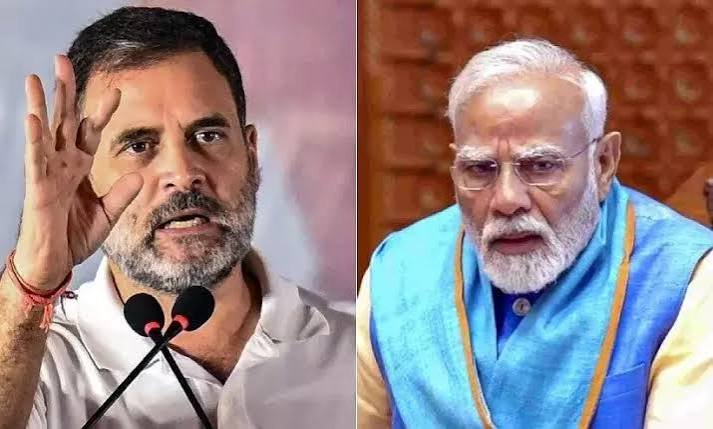
The Nagpur and Varanasi results came amid a broader political exchange over the MLC elections, which were conducted using ballot papers. Prime Minister Modi invited people on social media to guess how many seats Congress had won in the wider set of contests, while Union Home Minister Amit Shah also used the party’s poor performance to mock its demands for ballot-paper voting.
The BJP’s argument was that Congress had failed to secure victories even in elections that did not use electronic voting machines. The results across Karnataka, Uttar Pradesh, Bihar and Maharashtra provided the BJP with grounds to highlight Congress’s difficulties among registered graduates and teachers. In Karnataka, the BJP–Janata Dal (Secular) alliance swept all four seats, including the Bengaluru Teachers’ constituency, where JD(S) candidate A.P. Ranganath defeated sitting Congress MLC Puttanna by 908 votes.
However, the results were not uniformly favourable to the BJP-led alliances. The SP’s victory in Varanasi and Congress’s success in Nagpur demonstrated that local factors, candidate strength and preferential-vote transfers could produce outcomes that diverged from the broader state-wise trend.
The distinction is important because the 28-seat tally cited in the political exchange covers a wider set of contests than any single constituency. The Nagpur result should therefore be reported separately rather than folded into an unqualified claim that Congress won no seats anywhere in the MLC elections.
Nagpur’s outcome will be particularly uncomfortable for the BJP because of the constituency’s political symbolism and the party’s earlier lead during counting. The final reversal also illustrates why preferential-voting contests cannot be called on the strength of early tallies alone.
For the opposition, the victories in Nagpur and Varanasi provide a response to the BJP taunts. They do not erase Congress’s broader setbacks, nor do they amount to a verdict on the wider electorate. But they complicate the claim of an unqualified BJP sweep and underline a central feature of these MLC elections: even when the broader trend favours one alliance, local contests can still produce consequential defeats.