Czech Prime Minister Andrej Babiš faces mounting opposition over a plan to replace compulsory broadcasting fees with direct government funding, triggering one of the country’s biggest demonstrations in decades.
PC Bureau
PRAGUE: The sight of hundreds of thousands of people gathering in Prague to defend public-service media offers a powerful reminder that press freedom cannot be left solely to journalists, media organisations or professional bodies. Its protection ultimately depends on public participation and the willingness of citizens to resist attempts that could weaken independent journalism.
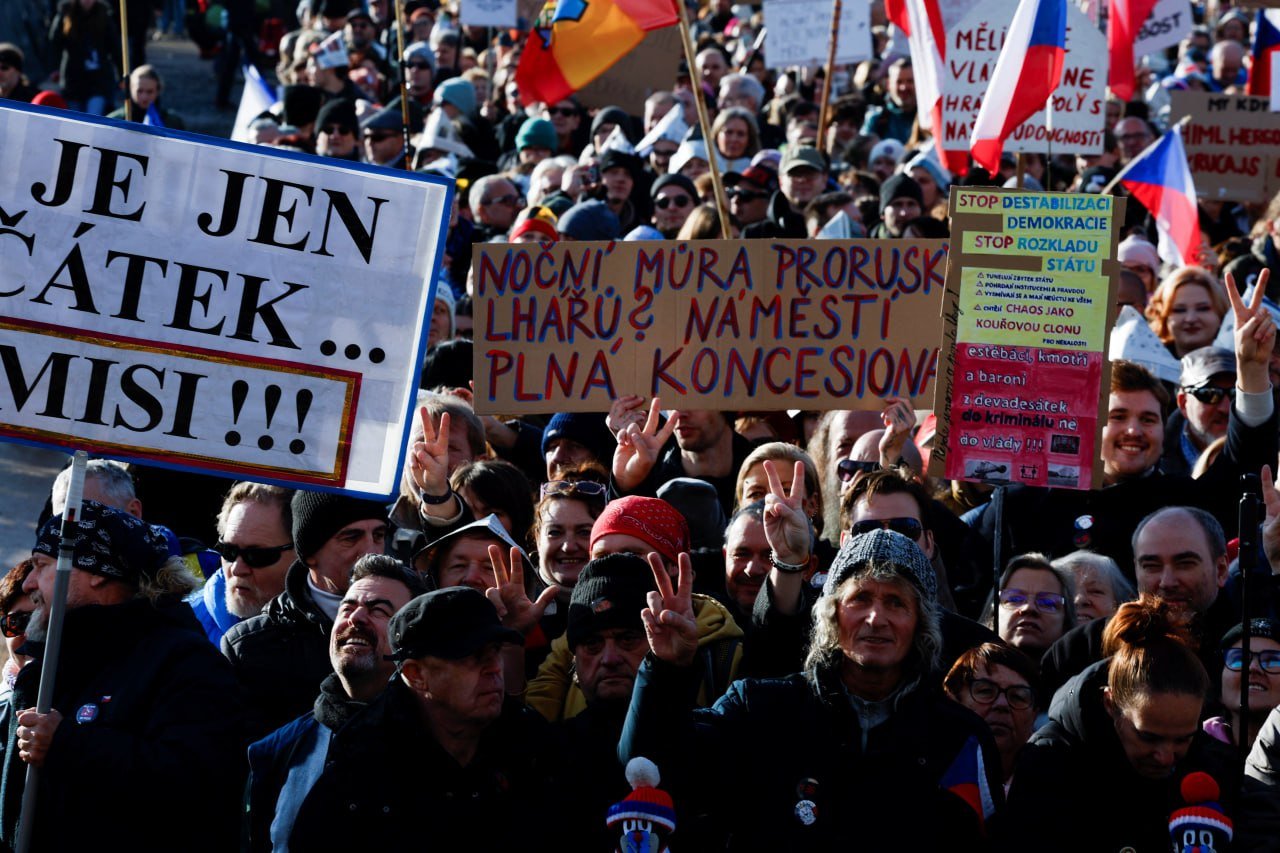
An estimated 350,000 to 400,000 people assembled at Letná Park in the Czech capital on November 15 to protest against Prime Minister Andrej Babiš’s government’s proposed overhaul of public television and radio funding. The organisers estimated the turnout at around 400,000, making it one of the largest demonstrations in the country since the 1989 Velvet Revolution.
The immediate trigger was a Czech government proposal to abolish compulsory broadcasting fees paid by households and replace them with direct funding from the state budget. But the demonstration was about much more than how public television and radio collect their money. It raised a fundamental question about the relationship between political power and independent media.
The protesters fear that making public broadcasters dependent on annual government budgetary allocations could expose them to political pressure and weaken their ability to scrutinise those in power.
The Czech government rejects the allegation that its proposal is designed to influence editorial decisions. It argues that the existing funding arrangement needs reform. However, the opposition from journalists, civil society organisations and ordinary citizens reflects a wider concern about the institutional safeguards necessary to protect media independence.
READ: Nvidia Board Rejects Jensen Huang’s Return as CEO Amid Record Earnings
When media funding becomes a question of democracy
Under the existing arrangement, Czech households pay a combined monthly broadcasting fee of 205 koruna — 150 koruna for Czech Television and 55 koruna for Czech Radio. The system provides the two public broadcasters with a dedicated source of revenue outside direct government budget allocations.
The proposed replacement would transfer their funding to the national budget. Critics argue that this could give the government greater leverage over their financial future, even if there are no immediate changes to editorial policies.
The concern is not without significance. Financial independence is an important component of editorial independence. A broadcaster may enjoy formal freedom to report critically, but that freedom becomes vulnerable if its resources can be reduced or withheld by political authorities.
The proposed changes have also raised concerns about an estimated 15% reduction in funding, with possible consequences for programming, employment and news coverage.
Babiš has denied seeking political control over public broadcasters. His government maintains that the reform is a legitimate restructuring of the funding mechanism. The proposed legislation, however, has yet to complete the parliamentary process.
🇨🇿 Hundreds of thousands of people protested in Prague against the plans of the government of Babis to transfer independent public media to state funding.
The Czech government wants to abolish the monthly fee for their work (205 crowns per household), reduce funding by about 15% and freeze it for several years. The bill has already passed its first reading in parliament.
The opposition believes that this will become an instrument of political control over the media, as in Hungary. Of particular concern is the fact that Babis himself was the owner of MAFRA, one of the largest media groups in the Czech Republic.
The prime minister denies any intention to subordinate broadcasters to the state and explains the reform as a desire to reduce citizens’ costs.
— Savchenko Volodymyr (@SavchenkoReview) November 15, 2026
Why the scale of the protest matters
Perhaps the most important aspect of the Prague demonstration was the participation of people who were not journalists or media professionals.
Students, academics, artists, civil society groups, opposition supporters and ordinary citizens joined the rally. Their presence suggested that the defence of independent media had become a broader public concern rather than an occupational issue confined to newsrooms.
This is an important distinction for democracies across the world.
When journalists protest against restrictions on their freedom, governments can sometimes portray their demands as an attempt to protect professional or commercial interests. When large sections of society join them, the argument changes. Press freedom becomes a question of citizens’ rights, democratic accountability and access to independent information.
The Prague demonstration also followed a one-day strike by employees of Czech Television and Czech Radio on November 3. Media workers had warned that the proposed funding changes could undermine the institutions’ independence and financial stability.
The protests have attracted international attention because the dispute touches on principles that extend beyond the Czech Republic.
A message for democracies worldwide
The Czech experience carries particular relevance at a time when public-service broadcasters in several countries face questions about political interference, financial pressure, ownership concentration and declining public trust.
The mechanisms may differ, but the underlying challenge is often similar: how can the media hold governments accountable when political authorities have the ability to influence the institutions’ financial or regulatory environment?
The European Media Freedom Act, which entered into force in 2024, seeks to address some of these concerns. It requires EU member states to safeguard the editorial and functional independence of public-service media and ensure adequate, sustainable and predictable funding.
The Czech controversy has therefore become a test of how these principles are translated into national policy.
The wider lesson is that press freedom cannot survive on constitutional guarantees and statutory protections alone. It also requires independent institutions, transparent funding arrangements, professional journalism and an informed public willing to defend them.
The scale of the Prague rally demonstrated that citizens can mobilise when they believe the independence of public institutions is at stake. It also challenged the assumption that media freedom is an issue that concerns only those working in the news industry.
There is a larger democratic principle involved. Independent journalism gives citizens the information they need to assess government performance, question official claims and make informed political choices. Weakening that independence ultimately affects the public’s ability to hold those in power accountable.
The Czech government’s proposal may still undergo changes during the legislative process, and the ultimate outcome remains uncertain. The demonstration, however, has already established that the proposed reform will face substantial public scrutiny.
For countries where journalists confront political pressure, media organisations struggle with financial independence and public debate is increasingly polarised, Prague offers an important example.
Defending press freedom cannot be left to the press alone. When citizens recognise that an independent media is essential to their own democratic rights, they can become its strongest line of defence.