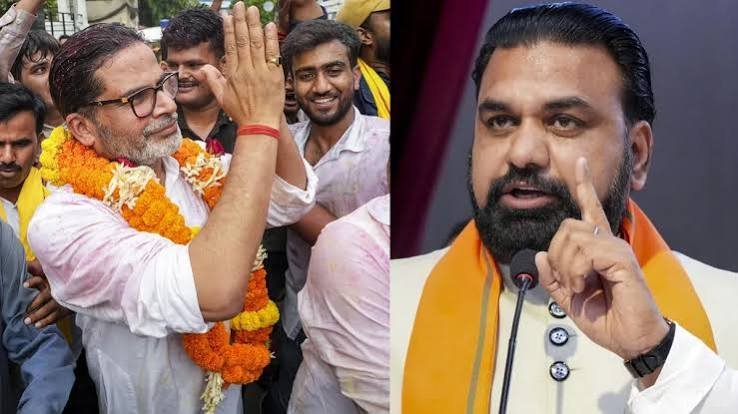
Prashant Kishor’s decisive victory in the BJP’s Bankipur stronghold has intensified political scrutiny of Chief Minister Samrat Choudhary, with the defeat being seen as an early test of his government’s performance.
BY PC Bureau
PATNA, August 3: Prashant Kishor’s stunning victory in the Bankipur Assembly bypoll has done more than hand the Jan Suraaj Party its biggest electoral breakthrough—it has triggered uncomfortable questions within the BJP over the leadership of Bihar Chief Minister Samrat Choudhary, whose government now faces its first major political setback since taking office.
Kishor defeated BJP candidate Neeraj Kumar Sinha by a commanding margin of nearly 19,000 votes, polling over 63,000 votes against the BJP’s roughly 44,000, while the RJD finished a distant third. The result ended the BJP’s uninterrupted control of Bankipur, one of its most prestigious urban constituencies, after nearly three decades.
The bypoll was necessitated after BJP national president Nitin Nabin vacated the seat following his election to the Rajya Sabha.
A Fortress Falls
The significance of the result extends far beyond the loss of a single Assembly seat.
Formerly known as Patna West, Bankipur has long been regarded as the BJP’s ideological and organisational nerve centre in Bihar. The constituency was represented for years by Kishore Prasad Sinha, followed by his son Nitin Nabin, making it one of the safest seats in the party’s electoral map.
The BJP invested enormous political capital in retaining the constituency. Senior leaders campaigned extensively, while Nitin Nabin personally led the election effort. Several prominent BJP leaders, including former Union minister Ravi Shankar Prasad, are registered voters in the constituency, underlining its symbolic importance.
Against this backdrop, Kishor’s victory is being viewed not merely as an electoral upset but as a rejection of the BJP’s campaign in one of its strongest bastions.
Pressure Mounts on Samrat Choudhary
Although the defeat does not threaten the NDA government’s numerical majority in the Bihar Assembly, it is expected to intensify scrutiny of Chief Minister Samrat Choudhary’s leadership.
Choudhary became Bihar’s first BJP Chief Minister on April 15, 2026, ending years in which the party had played junior partner to the JD(U). His elevation was projected as the beginning of a new political chapter for the BJP in Bihar.
Less than four months later, however, the loss of Bankipur has handed the Opposition a powerful political narrative.
Within political circles, the result is already being interpreted as an early referendum on the BJP government’s performance, particularly on issues of governance, law and order, unemployment and corruption.
While BJP leaders have publicly accepted the verdict and congratulated Kishor, the defeat is likely to trigger an internal review of both the campaign strategy and the government’s public perception.
Kishor’s Direct Message to the BJP
“The mandate that has emerged from Bankipur today, signifies more than just the election of an MLA. The people of Bankipur have sent a message to the BJP’s central leadership to appoint someone better than Samrat Choudhary as the Chief Minister of Bihar”: Bankipur MLA-elect and…
— The New Indian Express (@NewIndianXpress) August 3, 2026
After his victory, Kishor framed the result as a message from the people rather than merely an electoral triumph.
“The people of Bihar have sent a message to the BJP that Bihar deserves a capable Chief Minister with integrity,” he said.
He clarified that the BJP was free to choose any leader—including someone from the Kushwaha community—but argued that Bihar needed a government focused on governance rather than political symbolism.
“The issue is not caste. The issue is character, honesty and competence. Bihar needs better schools, employment opportunities, less corruption and an end to migration,” Kishor said.
Throughout the campaign, Kishor consistently argued that Bihar’s politics had remained trapped in caste calculations while ignoring development.
His victory has strengthened that argument.
Governance Under the Microscope
The Bankipur verdict also comes after months of criticism directed at the Choudhary government over governance and policing.
The government’s handling of the Bharat Bhushan Tiwari encounter case became one of the most controversial episodes of its tenure.
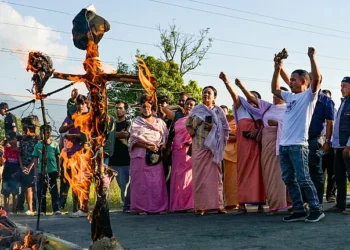
Tiwari was killed in a police encounter in Bhojpur district in June amid allegations from his family that he had surrendered before being shot. Portions of the incident were livestreamed, triggering widespread outrage.
Kishor visited the bereaved family, demanded action against senior police officers and accused the government of encouraging excessive use of force.
Although the state government ordered a judicial inquiry and suspended several officials, Opposition parties continued to portray the incident as evidence of deteriorating law and order.
Critics have also accused the government of attempting to replicate Uttar Pradesh’s “bulldozer justice” model without strengthening institutional accountability.
Questions Within the BJP
Political observers believe the defeat may also revive discussions about Choudhary’s standing within sections of the BJP organisation.
Unlike many senior BJP leaders who rose through the party’s ranks, Choudhary has had a long political journey, having previously been associated with the Samata Party, RJD and JD(U) before joining the BJP in 2017.
Opponents have frequently cited this political trajectory to argue that he lacks the deep organisational roots enjoyed by many veteran BJP leaders in Bihar.
While there is no indication of any immediate leadership challenge, the Bankipur result is expected to strengthen voices within the party calling for a reassessment of both governance and political strategy ahead of the Assembly elections.
READ: Prashant Kishor’s Win Could Rewrite Bihar’s Caste Politics
A New Political Force Emerges
For Prashant Kishor, the victory represents the first major electoral validation of the Jan Suraaj Party, launched after his two-year statewide padyatra.
The win establishes him not merely as India’s best-known election strategist but as a politician capable of converting public support into electoral success.
Kishor has promised to demonstrate visible development in Bankipur within the first three months of his tenure as MLA, saying he wants the constituency to become a model of governance.
Whether those promises translate into results remains to be seen.
One bypoll does not determine the outcome of the next Assembly election, nor does it automatically translate into a crisis for the government.
However, defeats often acquire significance because of where they occur.
For the BJP, losing Bankipur—a constituency synonymous with the party’s rise in urban Bihar—is politically and psychologically damaging.
For Samrat Choudhary, the verdict is likely to increase expectations that his government must deliver tangible improvements in governance, law and order, employment and public services before facing voters again.
For Prashant Kishor, it marks the transformation of Jan Suraaj from a political experiment into a credible electoral challenger.
The battle for Bihar’s future has only begun, but the fall of Bankipur has ensured that it will now be fought on a far more competitive political landscape.