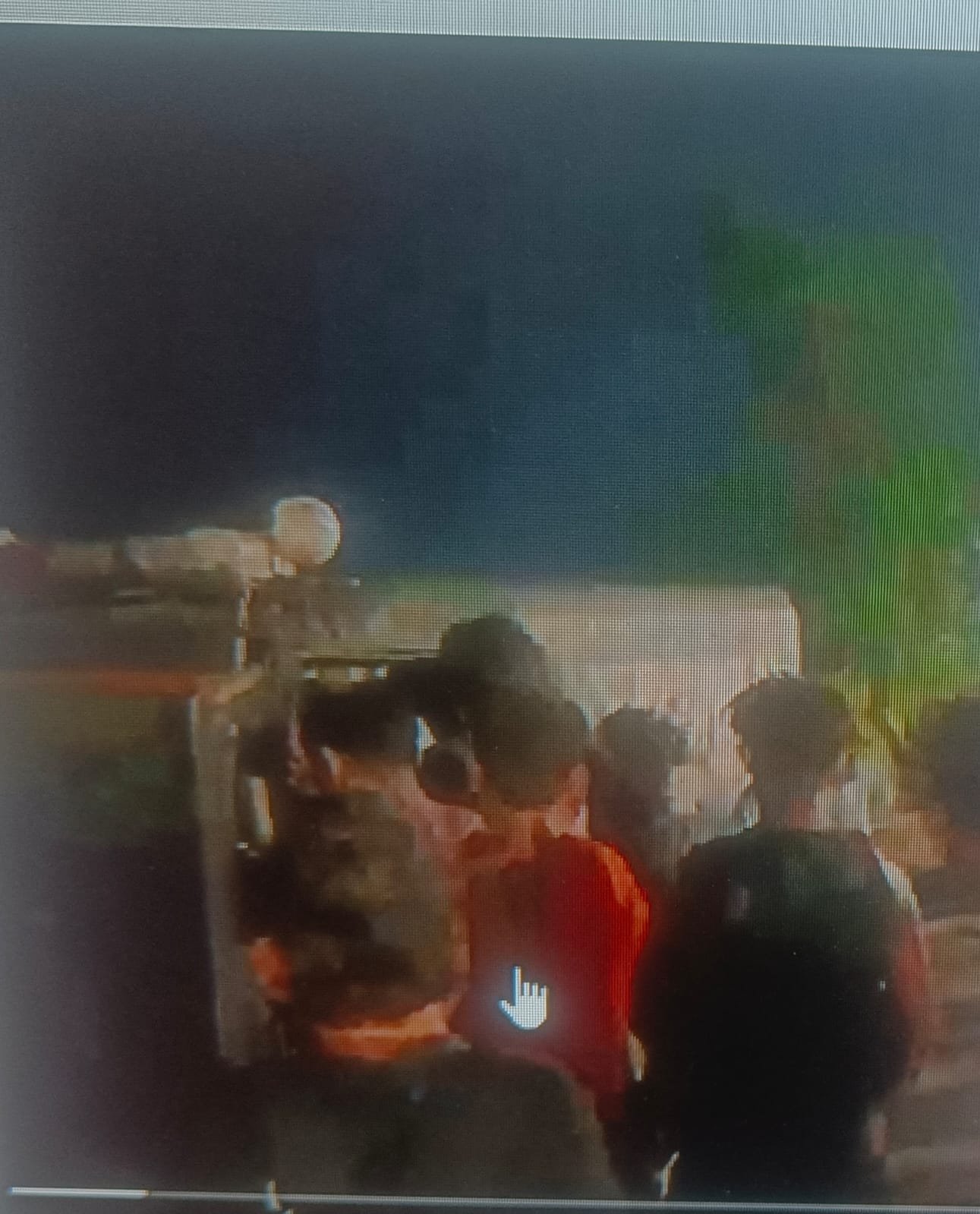
The incident, however, has also become the subject of conflicting claims. While eyewitness accounts circulating online allege that police personnel were assaulted after intervening in a dispute involving Kanwariyas, Meerut Police have disputed that version, insisting the clash was between two groups of Kanwariyas and dismissing reports that police officers were beaten or stripped of their uniforms. However, the video strongly contradicts the Meerut SP’s version.
Regardless of the competing narratives, the disturbing visuals have once again raised uncomfortable questions about law and order during one of north India’s largest annual religious pilgrimages.
Disturbing Scenes Captured on Camera
The video, first shared by journalist Piyush Rai on X, shows a man dragegd out froma police van. He is attempting to flee towards a sugarcane field before being surrounded by a group of kanwariyas armed with sticks. He is beaten after falling to the ground, while others continue striking him amid loud abuse. His clothes appear torn as the assault continues.
Other clips from the same incident show additional men being chased and attacked. Several social media accounts claimed that the victims were police personnel who had tried to intervene after a road altercation involving Kanwariyas. The videos clearly show the mob dragging mens from a police vehicle, assaulted them and damaged their uniforms before they managed to retreat and call for reinforcements.
Meerut Police have rejected those claims.
SP City Vinayak Bhosale stated that reports suggesting police personnel were beaten or their uniforms torn were “incorrect.” According to the official version, the confrontation occurred around midnight when two groups of Kanwariyas clashed with each other. Police, he said, reached the spot only to separate the groups. Early reports also indicated that no FIR had immediately been registered, with authorities describing many of the viral claims as misleading.
Whether the victims were police personnel or civilians, the images of a large mob wielding sticks against individuals in the middle of a public road have generated widespread outrage and renewed scrutiny of violence associated with the Kanwar Yatra.
A Familiar Pattern
The Meerut episode is far from an isolated controversy.
Incidents involving sections of Kanwariyas have repeatedly made headlines after minor road accidents or alleged “desecration” of a kanwar escalated into mob violence. Cars, buses and trucks have been vandalised, windscreens smashed and motorists assaulted across several districts of western Uttar Pradesh and along the Delhi-Haridwar route.
Videos have shown highways being blocked for hours, vehicles being attacked after accidental contact with pilgrims, and, in some instances, goods looted from from damaged trucks following collisions.
Each year, these incidents trigger the same debate: where does religious sensitivity end and criminality begin?
The irony, critics argue, is that few religious events receive as much administrative support as the Kanwar Yatra.
यूपी पुलिस को ऑफीशियली भाजपा का कोई प्रकोष्ठ ज्वाइन कर लेना चाहिए…कौन से पुलिस मैनुअल में लिखा है कि पुलिस पुजारी का काम करेगी…कांवड़ियों पर फूल छिड़केगी..सत्ता की गुलामी के आगे वर्दी की गरिमा गिरवी रखी जा चुकी है… pic.twitter.com/H5pZ1Jixxw
— Pragya Mishra (@PragyaLive) August 3, 2026
Schools and colleges in several districts—including Meerut and Muzaffarnagar—have been temporarily closed to facilitate the movement of pilgrims. Traffic is diverted across major highways, dedicated routes are created, temporary police posts established and thousands of security personnel deployed.
Senior government officials routinely greet Kanwariyas, while top police offices are seen showering petals on them and massaging their feet. The state machinery invests enormous resources to ensure the pilgrimage proceeds smoothly.
Yet when violence erupts, critics contend that enforcement often appears hesitant, delayed or inconsistent, creating the perception that aggressive behaviour by a small section of participants carries few immediate consequences.
Devotion and Disorder
The Kanwar Yatra remains one of Hinduism’s most significant annual pilgrimages. Millions of devotees undertake arduous journeys to collect holy water from the Ganga and offer it at Shiva temples, observing rituals of austerity, discipline and faith.
The overwhelming majority complete the pilgrimage peacefully.
Look how the kanwariyas beat up policemen in Meerut. This is Talibanisation of Hindu religion by leaders who claim to be protectors of India’s culture and traditions. Shame pic.twitter.com/fLgqYF9Aun
— Navin Upadhyay (@Navinupadhya) August 3, 2026
At the same time, the character of parts of the yatra has changed dramatically over the years. Massive DJ systems mounted on trucks, deafening music, road blockades and elaborate processions have become common features. Social media has also been flooded with videos of dancers performing on moving platforms during the pilgrimage, prompting criticism from many Hindu religious leaders and devotees who argue that such displays undermine the spiritual character of the event.
For many observers, the contrast is difficult to ignore: a pilgrimage rooted in penance and restraint increasingly shares headlines with scenes of vandalism, intimidation and public disorder.
READ: Bankipur’s 28-Point Swing: A Wake-Up Call for Modi and Shah
READ: Prashant Kishor Win Raises Prospect of Cong–Jan Surraj Tie-Up
The Real Challenge
It would be both unfair and inaccurate to judge millions of pilgrims by the actions of a violent minority.
Most Kanwariyas undertake the yatra with devotion and return home without incident. However, the repeated emergence of videos showing assaults, destruction of property and confrontations with police has created a damaging public perception that cannot simply be dismissed as isolated episodes.
Large crowds, political sensitivities and uneven enforcement of the law can embolden mob behaviour. When even minor disputes risk escalating into collective violence, public confidence in the rule of law inevitably suffers.
Faith deserves respect. Religious processions deserve administrative support. But neither can become a shield for criminal conduct.
Those who assault individuals, vandalise property or attack law-enforcement personnel—if investigations establish that such offences occurred—must face the same legal consequences as anyone else. Consistent and impartial enforcement of the law remains the only way to safeguard both public order and the sanctity of one of India’s most important religious pilgrimages.
Until that balance is firmly maintained, disturbing videos like the one from Daurala will continue to shape public perceptions of the Kanwar Yatra far more than the quiet devotion of the millions who undertake it peacefully.