A win in the BJP’s long-time stronghold would give Jan Suraaj its biggest electoral breakthrough and strengthen Kishor’s claim that Bihar’s youth are looking beyond traditional identity politics.
BY Navin Upadhyay
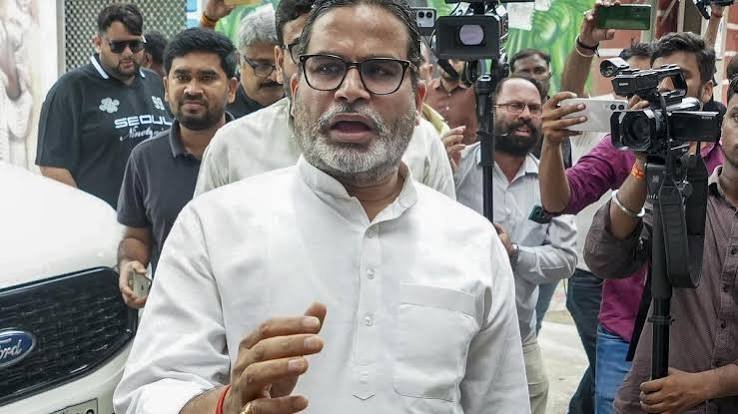
PATNA: If the counting trends hold until the final round, Prashant Kishor’s victory in the Bankipur Assembly bypoll could emerge as one of the most politically significant developments in Bihar in recent years—not merely because he would have defeated the BJP in one of its safest urban constituencies, but because it would challenge the long-held belief that elections in the state are won primarily through caste arithmetic.
As counting continued on Monday, the Jan Suraaj Party founder maintained a comfortable lead over BJP candidate Neeraj Kumar Sinha in a constituency that has remained a BJP fortress for nearly three decades. PK was leading by over 7, 5000 votes witha vote share of 49 percent. While the final outcome was yet to be declared, Kishor’s sustained advantage throughout the counting process has already triggered debate over whether Bihar’s electoral politics is beginning to move beyond traditional social equations.
Bankipur, one of Patna’s most prominent urban Assembly constituencies with nearly 3.8 lakh voters, has historically been shaped by caste loyalties. The seat has long been considered a Kayastha-dominated constituency, with sizeable populations of Bhumihars, Rajputs, Yadavs, Muslims, Vaishyas, Dalits, Kurmis and Kushwahas. Brahmins constitute only a small fraction of the electorate, estimated at around 4-5 percent, making them far from a decisive voting bloc.
That demographic reality makes Kishor’s performance particularly noteworthy.
A Kanyakubj Brahmin from Rohtas district, Kishor could not have relied on caste consolidation in his favour. If the present trend culminates in a victory, it would suggest that he succeeded in attracting support across communities rather than within his own caste—a rare feat in Bihar’s intensely identity-driven political landscape.
Throughout the campaign, Kishor consciously avoided conventional caste messaging. Instead, he centred his campaign on issues such as governance, education, unemployment, corruption, infrastructure and administrative accountability. His speeches repeatedly argued that Bihar had remained trapped in caste politics for decades while falling behind on development indicators.
That message appears to have resonated, particularly among younger urban voters.
The bypoll was held after BJP national president Nitin Nabin vacated the seat following his election to the Rajya Sabha. The BJP mounted an aggressive campaign, with senior leaders camping in the constituency and relying on Nabin’s long-standing influence to retain the seat. Yet the relatively low voter turnout of around 34 percent, coupled with reports of voter dissatisfaction and allegations by Jan Suraaj of administrative pressure on its workers, created conditions for an unexpectedly competitive contest.
If Kishor eventually crosses the finish line, the implications could extend well beyond a single Assembly seat.
It would mark the first major electoral success for the Jan Suraaj Party, launched by Kishor after completing his two-year statewide padyatra. More importantly, it would lend credibility to his argument that Bihar’s electorate—especially urban and younger voters—is increasingly willing to reward governance-based politics over traditional caste alignments.
Political analysts caution that one by-election alone cannot overturn decades of entrenched voting behaviour. Caste continues to play a decisive role across much of Bihar, and both the NDA and the Mahagathbandhan continue to distribute tickets and build alliances based on carefully calibrated social equations.
Even so, a Bankipur victory would be difficult to dismiss as an isolated event.
READ: Prashant Kishor Tightens Grip on Bankipur as BJP Trails
The CONSTITUENCY has been synonymous with the BJP for decades. Nitin Nabin inherited the political legacy of his father, Kishore Prasad Sinha, and went on to win the seat repeatedly, often by overwhelming margins. Defeating the BJP here would therefore carry symbolic weight far beyond the numerical significance of a single Assembly seat.
It could also reshape the political narrative ahead of the Bihar Assembly elections. For years, Kishor has been viewed primarily as a master election strategist who engineered victories for other leaders. A victory in Bankipur, if the current trend persists, would establish him as a politician capable of converting his ideas into electoral success.
Whether this represents the beginning of a broader political shift will become clear only in future elections. But if the ongoing trends are reflected in the final result, Bankipur may be remembered as the constituency where Bihar’s politics showed the first credible signs that governance, development and aspirations can, at least in some urban pockets, compete with—and perhaps even outweigh—the state’s deeply rooted caste calculus.